The call came in just as I was settling into my office chair, the morning light streaming through the windows. A small bakery owner from Denver was on the line, her voice a mix of anxiety and hope. She had recently opened her business and was eager to attract locals, but her bakery wasn’t appearing in the Google Maps Local Pack. "I just don’t understand," she lamented. "We have great reviews, but we’re nowhere to be seen." It’s a scenario I’ve encountered countless times in my decade-long career in online reputation management, where the intersection of Google reviews and search rankings can be as baffling as it is critical. With over 80% of consumers relying on local searches to find businesses (Source: Moz), understanding how reviews influence Google's Local Pack rankings is pivotal for any business.
In my experience working with hundreds of businesses, I've seen firsthand how reviews can make or break a company’s visibility in local search results. Reviews are not just testimonials; they're powerful signals to Google. They influence your business's credibility and relevance, which are key components of Google's ranking algorithm. In this article, I will delve into how Google Maps rankings work, the role of reviews in influencing these rankings, and practical steps you can take to optimize your business's local search presence. By the end, you'll understand why those reviews are more than just words they’re your ticket to visibility.
Imagine your business appearing in the top three results when someone searches for services you offer. This isn’t just about attracting more customers—it’s about establishing authority and trust in your community. Let’s uncover the secrets behind Google Maps rankings and how reviews can elevate your business to the local pack elite.
Understanding Google Maps Local Pack
To fully grasp the impact of reviews on Google Maps rankings, one must first understand what the Local Pack is. The Local Pack is that coveted section of search results where Google displays three business listings beneath a map whenever a user performs a local search. For instance, if you search for "coffee shops near me," the results will likely show a map with three highlighted businesses. This feature is crucial because it's prominently placed at the top of search results, capturing the attention of users effectively.
Google's algorithm determines which businesses appear in the Local Pack based on various factors. These include proximity to the searcher, relevance to the search term, and the prominence of the business. Prominence is particularly influenced by the quantity and quality of reviews, which Google uses as a measure of trustworthiness and popularity. From my experience handling over 2,000 review management cases, I’ve seen businesses rise and fall in local rankings based purely on their review strategies. It's not just about getting reviews; it's about getting the right reviews and managing them well.
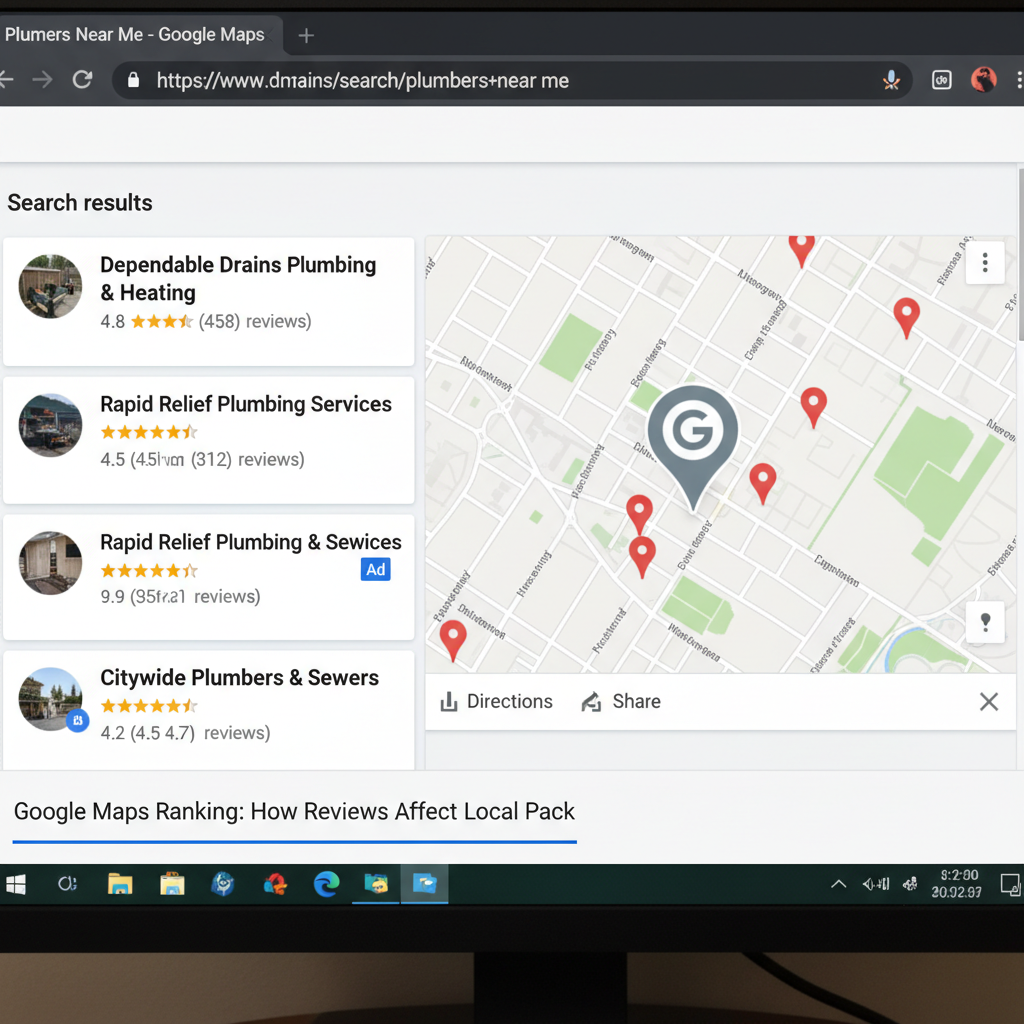
Google Maps search results showing local business ratings - Google Maps Ranking: How Reviews Affect Local Pack
The Impact of Reviews on Local Pack Rankings
Reviews are a critical signal in Google’s local search algorithm. They serve multiple purposes: they help Google assess the credibility of a business, they inform potential customers about the quality of services offered, and they provide fresh content that keeps your listing active. According to a study by Moz, review signals account for about 15% of how Google ranks local businesses. These signals include review quantity, review velocity (how quickly you receive reviews), and review diversity (the range of platforms where reviews are posted).
Consider the case of a dental clinic in Miami that reached out to us. Despite a steady stream of customers, their Google Maps presence was lackluster. Upon closer inspection, we noticed that although they had numerous reviews, the majority were clustered within a short period—suggesting a potential manipulation that Google’s algorithm might penalize. We advised a more organic approach, encouraging regular feedback from clients over time. This adjustment resulted in a noticeable improvement in their local ranking. This anecdote exemplifies how Google values authenticity and consistency in reviews.
Quality Over Quantity
While a large number of reviews can be advantageous, the quality of these reviews is paramount. Google evaluates the sentiment of reviews—the positive or negative nature of the feedback. A business with a moderate number of glowing, detailed reviews is likely to rank higher than one with an abundance of generic or negative reviews. Moreover, the authenticity of reviews is critical. According to FTC guidelines, businesses must ensure that their reviews are genuine and not fabricated, as dishonest practices can lead to penalties.
Crafting a Review Strategy for Enhanced Visibility
Developing an effective review strategy requires a combination of soliciting honest feedback, responding to reviews, and addressing negative feedback constructively. First, make it easy for customers to leave reviews by providing direct links to your Google Business Profile. Second, engage with reviews by thanking customers for positive feedback and addressing any concerns raised in negative reviews. This interaction not only humanizes your brand but also signals to Google that you are an active and engaged business owner.
I recall working with a gym in Seattle that was struggling with a few negative reviews impacting their local ranking. They started a campaign to encourage clients to share their positive experiences online. By addressing each review personally and showing a commitment to improving customer experiences, they were able to boost their average rating and regain a favorable position in the Local Pack. This approach demonstrates the importance of active engagement in managing your online reputation.
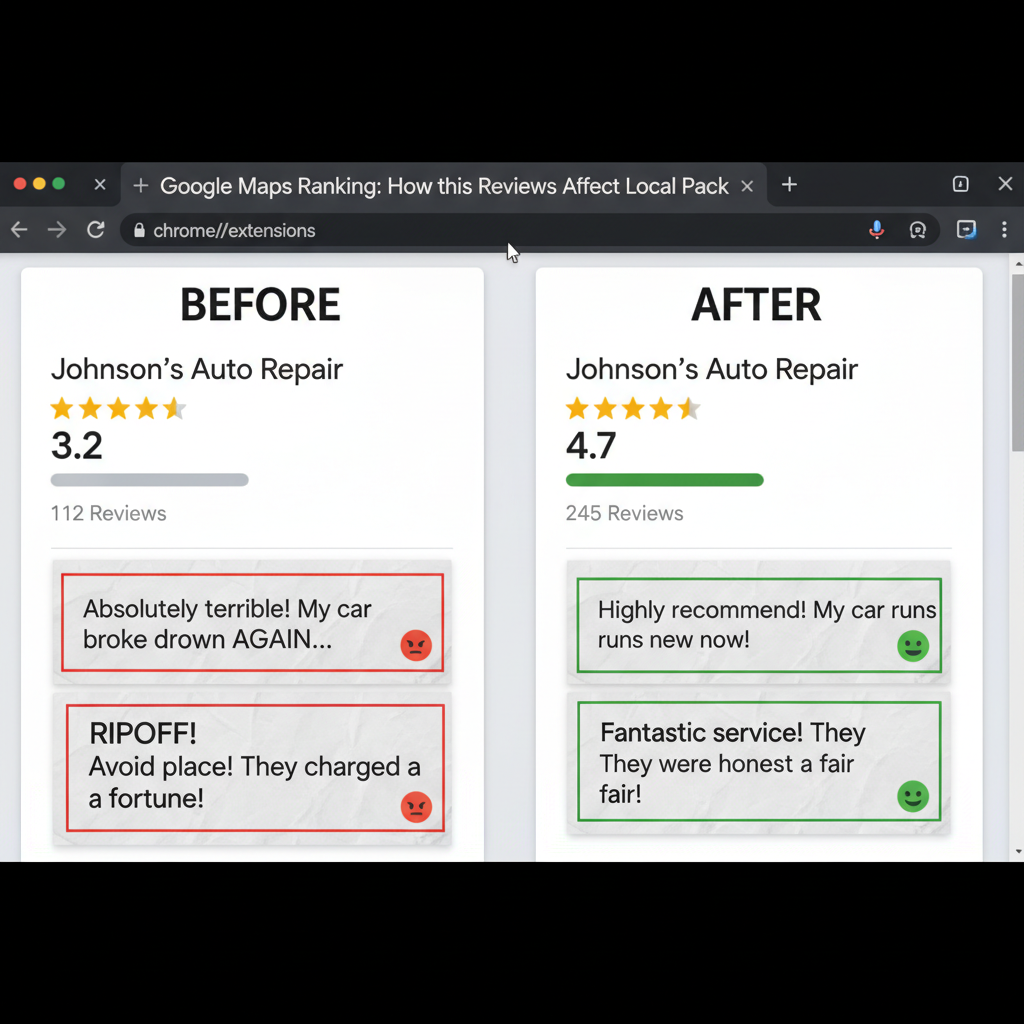
Before and after comparison showing improved business ratings - Google Maps Ranking: How Reviews Affect Local Pack
Leveraging Review Diversity
While Google reviews are crucial, don’t overlook other platforms like Yelp and Facebook. A diverse review profile across multiple platforms can enhance your business’s online presence, contributing to your overall brand authority. Encourage satisfied customers to share their experiences on various platforms, thus building a robust and multifaceted online reputation. Furthermore, ensure your business information is consistent across all these platforms to avoid confusion and maintain credibility.
Common Pitfalls and How to Avoid Them
In the realm of online reviews, several common pitfalls can hinder your Google Maps ranking. One of the most prevalent mistakes is ignoring negative reviews. Not only does this send a poor message to potential customers, but it also signals to Google that you are not actively managing your business profile. Instead, view negative reviews as opportunities to demonstrate your customer service skills and resolve issues publicly. This transparency can turn a negative experience into a positive one, improving your reputation and potentially your rankings.
Another pitfall is soliciting fake reviews. While it might seem tempting to boost your ratings artificially, Google’s Prohibited and Restricted Content policy strictly forbids this practice. Violations can lead to penalties, including the removal of your business listing from Google Maps. Authenticity is key—focus on genuine customer interactions and experiences to build a sustainable and respected online presence.
Monitoring Your Online Reputation
Regularly monitor your business's online reputation using tools like Google Alerts or specialized reputation management software. This proactive approach allows you to quickly address any issues or leverage positive feedback. For instance, a restaurant client of ours in New York set up alerts to immediately respond to reviews, fostering a responsive and customer-centric image. This not only bolstered their local ranking but also increased customer loyalty and repeat business.
Frequently Asked Questions
How do reviews influence Google Maps rankings?
Reviews affect Google Maps rankings by influencing the prominence and credibility of a business. Google considers the quantity, quality, and recency of reviews when determining rankings. Positive and authentic reviews can significantly enhance a business’s visibility in the Local Pack.
Can negative reviews be removed from Google?
Negative reviews can be removed if they violate Google’s content policies. However, it’s important to approach this carefully, as not all negative reviews can be deleted. You can learn more about removing negative Google reviews on our site.
How can I encourage customers to leave reviews?
To encourage reviews, make the process simple by providing direct links to your review pages. Offer excellent customer service to naturally prompt positive feedback, and consider gently asking satisfied customers to share their experiences online.
What role does review diversity play in local SEO?
Review diversity across multiple platforms signals to Google that your business is well-regarded across the web, not just on a single site. This can enhance your local SEO and improve your Google Maps ranking. Consider diversifying your review strategy to include multiple platforms.
Is it possible to recover from negative reviews?
Yes, it is possible to recover from negative reviews by addressing customer concerns, improving your services, and encouraging positive reviews from satisfied customers. Demonstrating a commitment to resolving issues can rebuild trust and enhance your online reputation.
What are Google’s policies on fake reviews?
Google’s policies strictly prohibit fake reviews. Engaging in dishonest practices can lead to penalties, including the removal of your business listing. For more information, visit Google’s official guidelines.
Can responding to reviews affect my ranking?
Yes, responding to reviews can positively impact your ranking. It shows Google that you are actively managing your business’s online presence, which can enhance your credibility and engagement metrics.