Last month, I received a call from John, a small business owner in Austin, who was dismayed over a recent one-star review on his Google Business Profile. His pristine 4.9-star rating had plummeted to 4.4 overnight. John's question was one I've encountered countless times in my career: "How many positive reviews do I need to offset this negative one?" It's a common dilemma faced by many businesses, big and small, across various industries. I remember similar cases, like the boutique hotel in Denver that faced a similar predicament and successfully regained its reputation. From my experience working with hundreds of businesses in online reputation management, I realized that understanding this balance is crucial for maintaining a robust digital footprint. In this article, we'll explore the nuances of how many positive reviews are typically needed to counterbalance a single negative one, delve into strategies to encourage positive feedback, and discuss why this matters for your business's online presence. Keep reading to learn insights that could mean the difference between potential customers choosing you or the competitor down the street.
Understanding the Impact of Negative Reviews
The significance of a single negative review can often be underestimated. In a digital landscape where 93% of consumers read online reviews before purchasing (according to Search Engine Journal), a negative comment can be a formidable obstacle. These reviews not only lower your overall star rating but can profoundly affect consumer perception, potentially costing you business. The psychological impact of negative reviews is rooted in a concept known as negativity bias, which suggests that people tend to focus more on negative experiences than positive ones. For businesses, this means that a single negative review can disproportionately affect consumer perception compared to several positive reviews. The challenge lies in overcoming this inherent bias with a sufficient number of positive reviews to effectively mitigate the damage.
Calculating the Number of Positive Reviews Needed
So, how many positive reviews does it take to offset a single negative one? The exact number can vary depending on the existing volume and average rating of reviews. Let's consider an example: if your business has 20 reviews with an average rating of 4.5 stars, a single one-star review can drop your average significantly. To recover, you might need five to ten new five-star reviews to get back to your original average. This is based on the arithmetic mean, which calculates the new average by dividing the total star count by the total number of reviews. Tools like online reputation calculators can provide a more precise estimate by considering your specific situation.
From experience, we often advise clients that it takes approximately four to ten positive reviews to neutralize one negative review, depending on the existing review count and average rating. This is not a strict rule but rather a guideline to help businesses understand the scale of effort required. The more reviews you have, the less impact a single negative one will have, and vice versa.
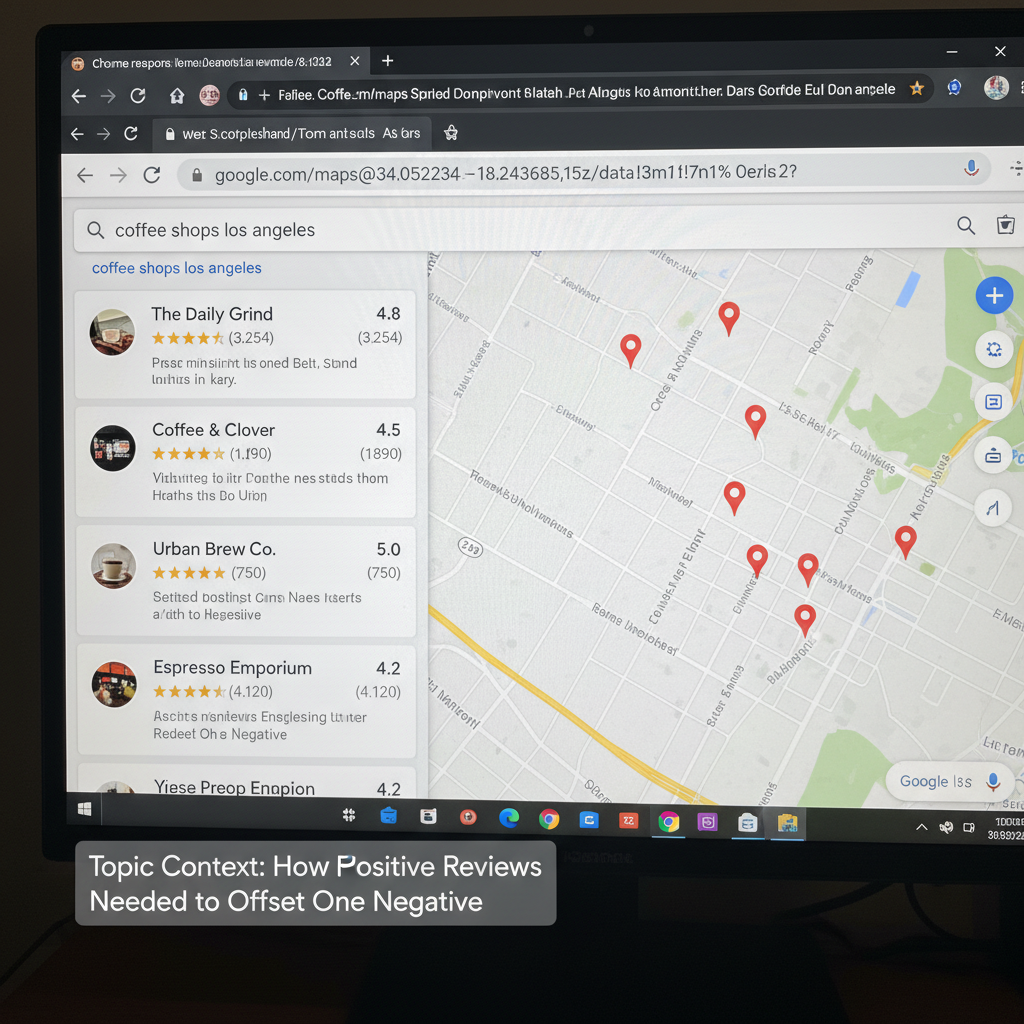
Google Maps search results showing local business ratings - How Many Positive Reviews Needed to Offset One Negative
Encouraging Positive Reviews: Proven Strategies
Having understood the impact of reviews and how many are needed to offset a negative one, the next step is encouraging more positive feedback. One effective strategy is to simply ask for reviews from satisfied customers. This can be done through follow-up emails, post-purchase surveys, or even at the checkout counter. Providing incentives, such as discounts or loyalty points, can also motivate customers to leave a positive review.
However, it's crucial to adhere to Google's policies, as incentivizing reviews can violate their guidelines, potentially leading to penalties or removal of reviews. Google's Prohibited and Restricted Content policy is clear about not offering incentives in exchange for reviews. Instead, focus on delivering exceptional service and gently prompt customers to share their experiences online. Engaging with your customer base on social media platforms and building a community around your brand can also naturally increase the number and quality of reviews. By fostering a connection with your audience, you create a loyal customer base more likely to support your business publicly.
The Role of Customer Experience
Creating a positive customer experience is fundamental to generating positive reviews. This goes beyond merely meeting customer expectations; it's about exceeding them. I recall a client, a local bakery, who managed to transform their business through personalized customer service. By remembering regular customers' names and preferences, they not only improved customer loyalty but also saw a marked increase in positive reviews. In today's competitive market, businesses that invest in creating memorable experiences are more likely to see those efforts reflected in their reviews.
Additionally, handling negative reviews adeptly is crucial. Responding professionally and promptly to negative feedback can sometimes transform a dissatisfied customer into a loyal advocate. It demonstrates your commitment to customer satisfaction and can even influence potential customers who read both the negative review and your response. According to a Harvard Business Review study, businesses that respond to reviews, whether positive or negative, tend to see an increase in their overall ratings.
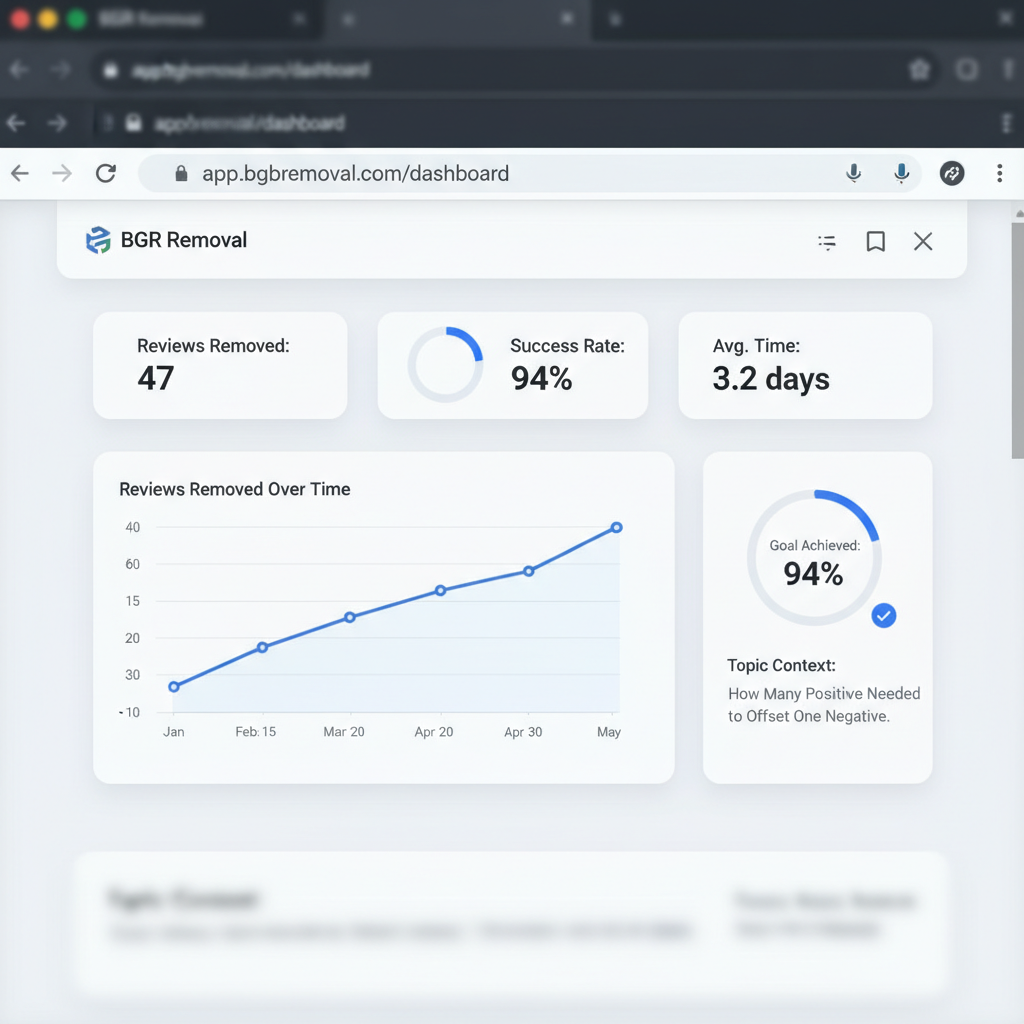
Dashboard showing review removal results and success metrics - How Many Positive Reviews Needed to Offset One Negative
Leveraging Technology for Review Management
In our digital age, technology can be a powerful ally in managing online reviews. Automated tools and platforms like ReviewTrackers or Yotpo can help businesses monitor reviews across various platforms, respond promptly, and analyze trends over time. These tools often provide insights into customer sentiment and highlight areas for improvement, allowing businesses to address potential issues before they escalate into negative reviews.
Moreover, using structured data and Schema Markup can enhance how your reviews appear in search engine results. Structured data helps Google understand the content of your site better, which can lead to enhanced search results features, such as review snippets. Incorporating this into your website can improve visibility and attract more potential customers, highlighting positive reviews effectively.
The Broader Impact on Business Reputation
Beyond star ratings and averages, the broader impact of reviews on your business reputation and customer trust is profound. Positive reviews can enhance your credibility and attract new customers, while a pattern of negative feedback can deter potential clients and damage long-term business prospects. From my experience, businesses that actively manage their online reputation tend to see not only higher ratings but also increased customer engagement and loyalty.
It's also important to consider the potential legal implications of negative reviews. In some cases, reviews may be defamatory or false, impacting your business unjustly. Understanding how to remove fake reviews or delete bad reviews in line with Google's policies can be crucial in protecting your business's reputation. Engaging a professional reputation management service can provide the expertise needed to navigate these challenges effectively.
Ultimately, maintaining a positive online reputation requires ongoing effort and attention to detail. By understanding the dynamics of reviews and employing strategic measures to encourage positive feedback, businesses can effectively manage their online presence and foster trust with their customers.
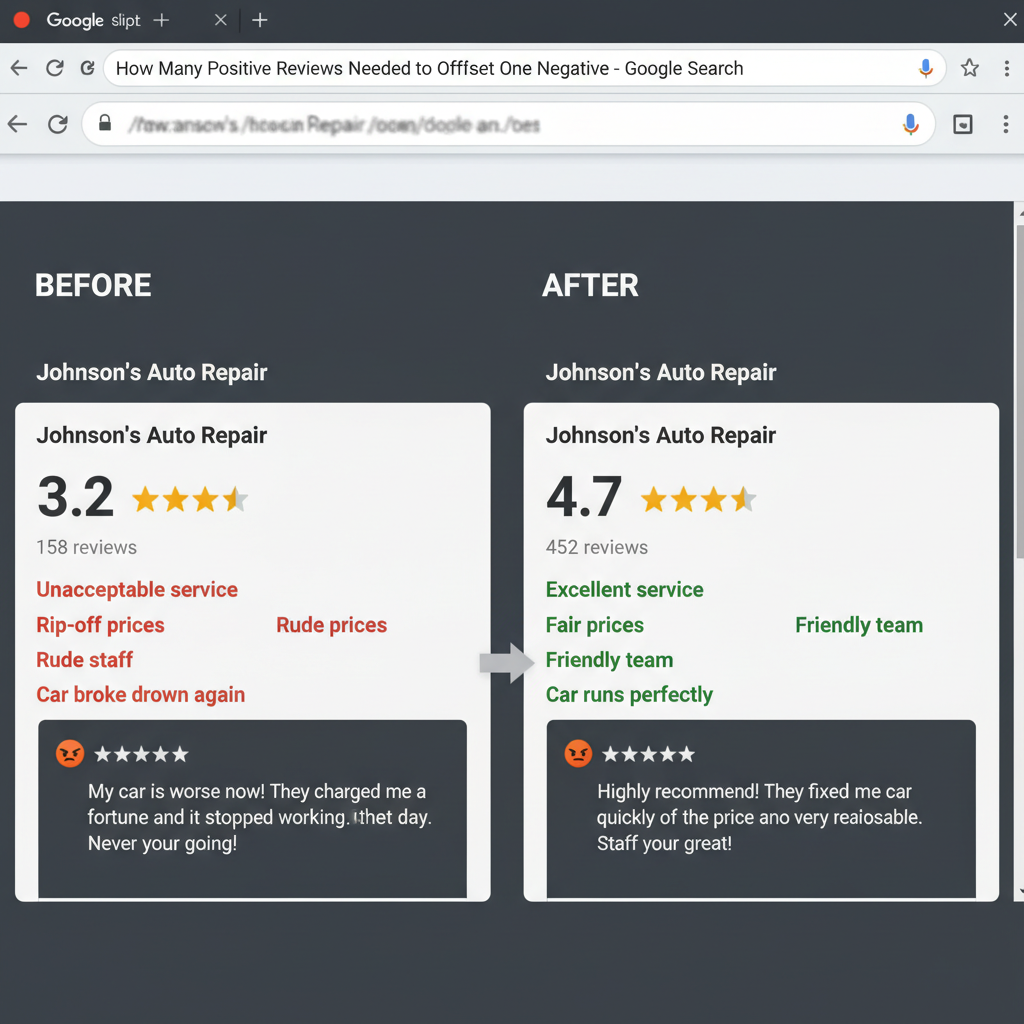
Before and after comparison showing improved business ratings - How Many Positive Reviews Needed to Offset One Negative
Frequently Asked Questions
How do negative reviews affect my business?
Negative reviews can lower your overall rating and deter potential customers, as they often focus more on negative experiences due to negativity bias. This can affect your reputation and ultimately impact sales.
How many positive reviews do I need to offset one negative review?
The number varies, but typically it takes between four to ten positive reviews to offset one negative one, depending on your current review volume and average rating.
Can I offer incentives for positive reviews?
While incentives can encourage reviews, they may violate Google's Prohibited and Restricted Content policy. It's safer to focus on delivering excellent customer service and gently asking for reviews.
What should I do when I receive a negative review?
Respond promptly and professionally, addressing the customer's concerns. Demonstrating your commitment to customer satisfaction can help mitigate the impact of a negative review.
How can I improve my business's online reputation?
Focus on delivering exceptional customer experiences, actively manage and respond to reviews, and consider using technology to monitor and analyze customer feedback.
What if a negative review is false or defamatory?
It's important to report such reviews to the platform they're on, providing evidence if possible. Engaging a professional service can help ensure the review is removed legally and efficiently.
Are there tools to help manage online reviews?
Yes, tools like ReviewTrackers or Yotpo can help monitor and manage reviews, providing insights for improving customer satisfaction and addressing issues promptly.