The email came on a brisk Monday morning. A tech startup founder from San Francisco was at his wit's end his company’s Google Business Profile was brimming with reviews, yet he struggled to pinpoint specific feedback on their latest product launch. If only there was a way to search Google reviews by keyword, his team could swiftly address critical issues, optimize their offerings, and enhance customer satisfaction. This scenario is far from unique; in today's digital age, businesses are increasingly aware that their online reputation can be their greatest asset or their Achilles' heel. The ability to navigate and analyze Google reviews effectively can make a substantial difference in strategic decision-making.
For many business owners and marketers, the challenge lies in sifting through an overwhelming sea of online feedback. Imagine trying to extract insights from hundreds of reviews without a streamlined approach it’s akin to finding a needle in a haystack. From my years of experience in online reputation management, we understand the profound impact that targeted review analysis can have on a business's trajectory. This article aims to demystify the process of searching Google reviews by keyword, offering step-by-step guidance and expert insights tailored to the needs of savvy business professionals.
In the following sections, we will delve into practical methods to enhance your review analysis capabilities. You'll learn how harnessing the power of keyword searches can not only save time but also uncover valuable customer sentiments that can drive your business forward. We’ll also explore why this skill is more critical than ever in maintaining and improving your online reputation. Prepare to unlock a treasure trove of insights hidden within your Google reviews.
The Importance of Google Reviews in Business Strategy
Google reviews are more than just digital notes left by customers; they are a vital element of your business's online persona. According to a study by BrightLocal, 87% of consumers read online reviews for local businesses in 2022, with the number steadily climbing as more people turn to the internet for decision-making. These reviews are not only influential in shaping potential clients’ perceptions, but they also have a significant impact on local SEO rankings. Positive reviews can enhance visibility, while negative ones can lead to decreased trust and revenue.
The value of these reviews is further emphasized by Google's own documentation, which highlights that user-generated content can significantly affect your business's search engine visibility. By understanding how to effectively search through these reviews using specific keywords, you can identify recurring themes, address customer concerns, and leverage positive feedback to bolster your brand reputation.
In my experience, businesses that actively engage with their reviews responding to both positive and negative feedback tend to see improved consumer trust and loyalty. This engagement is not merely about public relations; it’s about creating a dialogue that can lead to actionable improvements. Whether you're a small business owner or a corporate marketer, mastering the art of keyword analysis in Google reviews is an indispensable tool in your arsenal.
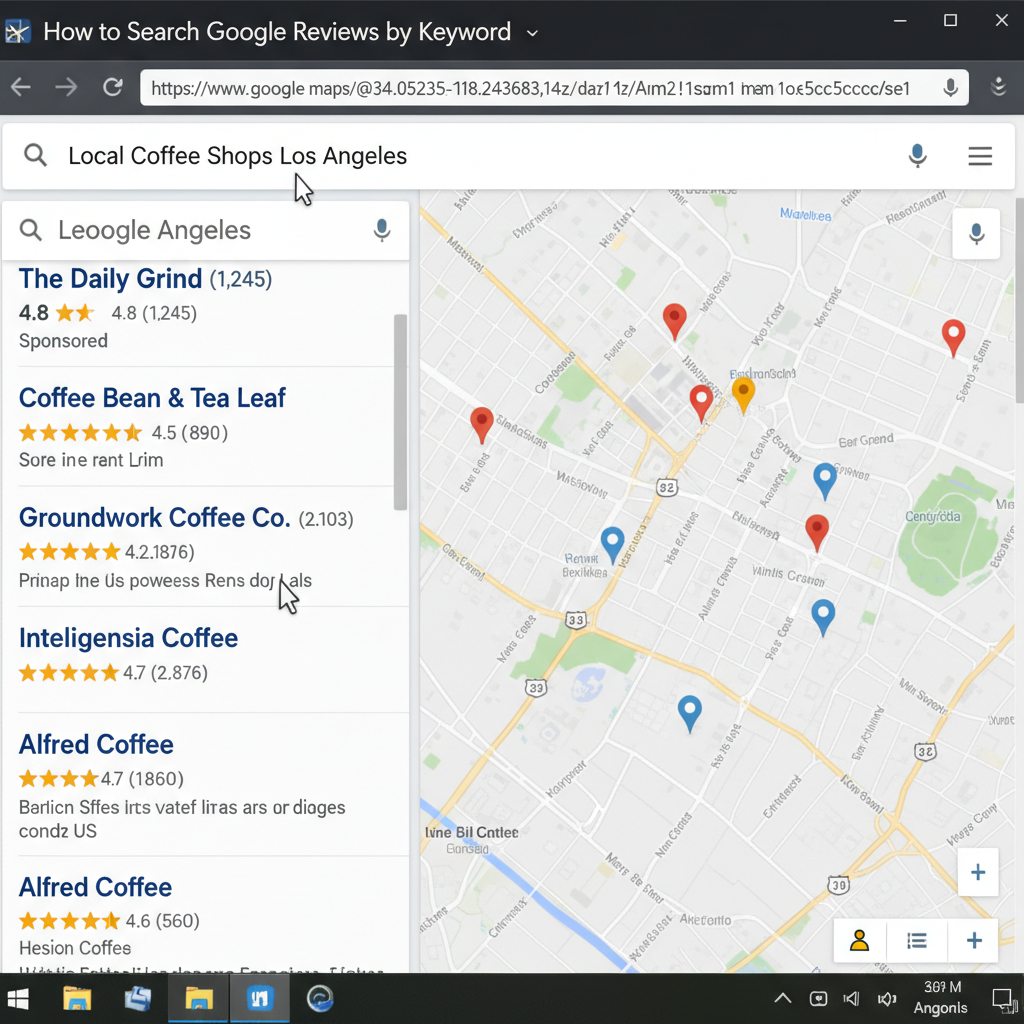
Google Maps search results showing local business ratings - How to Search Google Reviews by Keyword
How to Search Google Reviews by Keyword: A Step-by-Step Guide
When it comes to filtering Google reviews by specific keywords, there's no direct built-in feature provided by Google. However, there are several effective methods you can employ to achieve this goal. Let's explore these techniques to help you efficiently sift through your reviews and uncover actionable insights.
Method 1: Using Google Chrome's Page Search
The most straightforward way to search for keywords within your Google reviews is by using the browser's search functionality. Here's how you can do it:
Open your Google Business Profile reviews page.
Press Ctrl + F (Windows) or Command + F (Mac) to open the search bar in your browser.
Enter the keyword you're interested in. The browser will highlight all instances of the keyword, allowing you to quickly navigate through the relevant reviews.
This method is effective for small to medium-sized businesses with a manageable number of reviews. For larger datasets, however, more sophisticated tools may be required.
Method 2: Leveraging Google Reviews API
For businesses with a technical team, utilizing the Google Places API can be a powerful way to parse and analyze reviews programmatically. This method requires some coding knowledge but can yield comprehensive insights. Through the API, you can retrieve review data in a structured format and use text analysis tools to filter reviews by keywords.
Method 3: Third-Party Tools and Software
Several third-party platforms offer robust solutions for keyword analysis in reviews. Tools like ReviewTrackers and Yext can aggregate reviews from multiple platforms, including Google, and provide advanced filtering capabilities. These platforms often offer additional features such as sentiment analysis and trend reporting, which can further enrich your understanding of customer feedback.
By implementing these methods, businesses can efficiently and effectively analyze their reviews, saving time and gaining deeper insights into customer feedback. The right approach will depend on your specific needs, resources, and technical expertise.
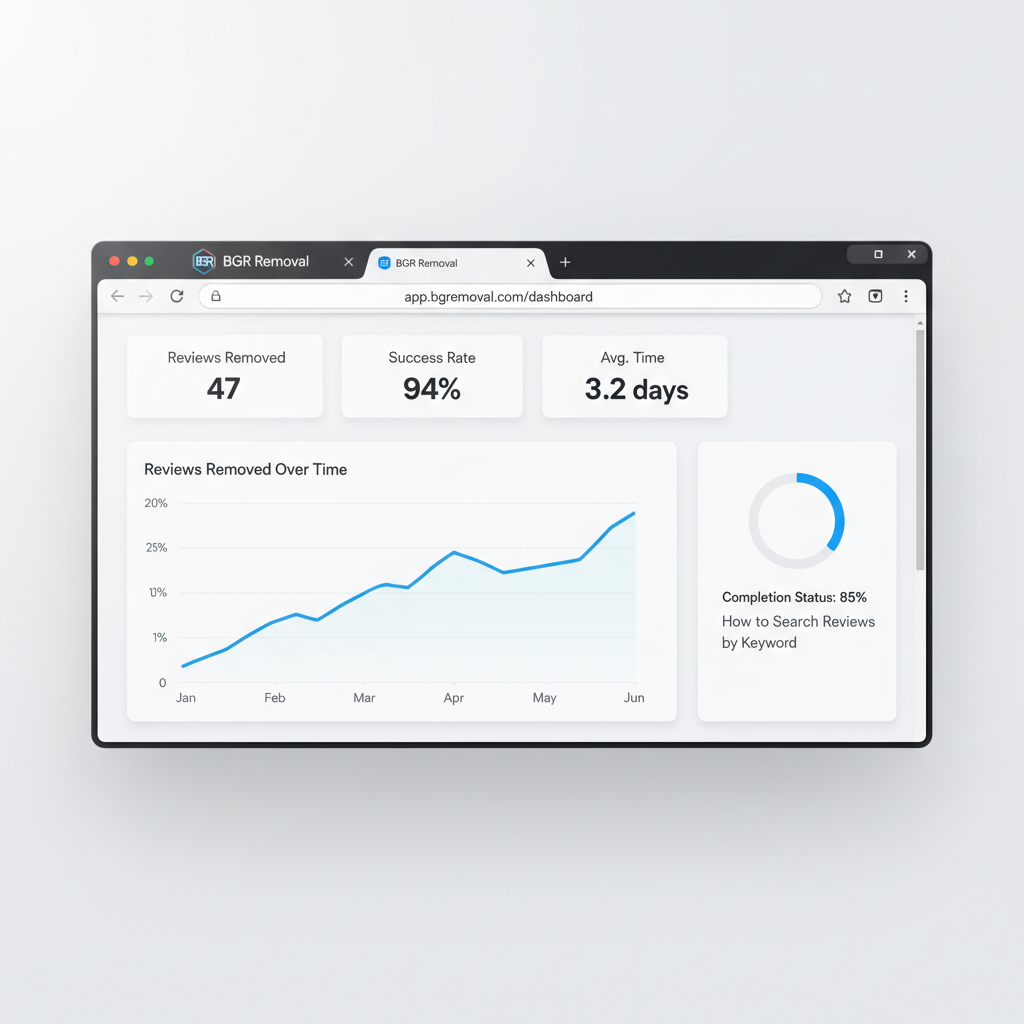
Dashboard showing review removal results and success metrics - How to Search Google Reviews by Keyword
Real-World Applications of Keyword Analysis in Google Reviews
Understanding how to search Google reviews by keyword is not just a technical exercise it has real-world implications for business strategy and operations. Let's consider a few scenarios where businesses have successfully leveraged this skill to their advantage.
Consider a scenario where a retail chain noticed a dip in customer satisfaction scores across several locations. By using keyword searches in their Google reviews, they identified recurring complaints about long wait times and unhelpful staff. Armed with this information, the chain implemented targeted training programs and optimized staffing schedules, resulting in a notable improvement in customer satisfaction and an uptick in sales.
In another instance, a restaurant in New York City used keyword analysis to track mentions of specific menu items. They discovered that customers frequently praised their new vegan dish, leading the restaurant to feature it more prominently in their marketing campaigns. This strategic shift not only boosted sales but also attracted a new customer demographic interested in plant-based options.
These examples illustrate the power of targeted review analysis in driving positive business outcomes. By focusing on the specific language and themes that customers use, companies can make informed decisions that align with consumer expectations and market trends.
The Challenges and Limitations of Keyword Searches in Google Reviews
While the benefits of searching Google reviews by keyword are clear, there are also challenges and limitations to consider. One primary issue is the potential for keyword analysis to miss nuanced feedback that doesn't explicitly use the targeted terms. For example, a review might describe a poor customer service experience without ever using the word "service." This highlights the importance of complementing keyword searches with broader sentiment analysis techniques.
Another challenge is the sheer volume of data. Large businesses with numerous locations may have thousands of reviews to sift through, making manual keyword searches impractical. In such cases, automated solutions become essential. However, these tools can be costly, and not all businesses have the budget or technical expertise to implement them effectively.
Privacy and ethical considerations also play a role. Businesses must ensure that their data analysis practices comply with privacy regulations and respect customer confidentiality. Transparency about how customer feedback is used can further build trust and encourage more honest reviews.
Despite these challenges, the rewards of effectively leveraging Google reviews are significant. By understanding the limitations and adopting a balanced approach, businesses can mitigate risks and maximize the value of their online feedback.
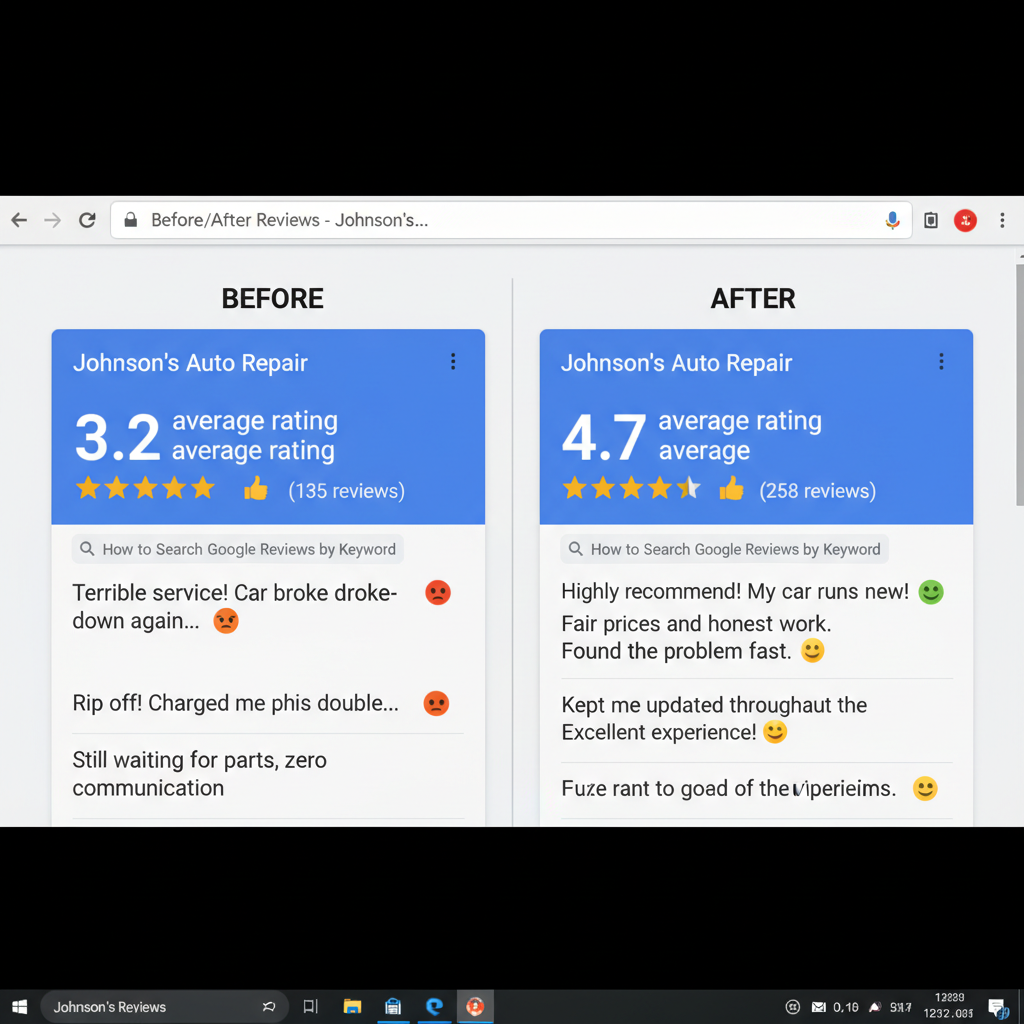
Before and after comparison showing improved business ratings - How to Search Google Reviews by Keyword
Frequently Asked Questions
How do I search for specific words in Google reviews?
You can use the Ctrl + F (Windows) or Command + F (Mac) function on your browser to search for specific words on the Google reviews page. This method highlights all instances of the keyword within the page.
Can I use third-party tools to analyze Google reviews?
Yes, there are several third-party tools like ReviewTrackers and Yext that offer advanced capabilities for analyzing Google reviews, including keyword searches and sentiment analysis.
Is there a way to automate Google review analysis?
Automation can be achieved through the Google Places API or third-party platforms that provide APIs for review data aggregation and analysis. This requires technical expertise or software solutions.
Why is keyword analysis important in Google reviews?
Keyword analysis helps businesses identify recurring themes and customer sentiments in reviews, enabling them to address issues, improve services, and enhance their online reputation.
What are the limitations of keyword searches in reviews?
Keyword searches may miss nuanced feedback and can be challenging with large datasets. Complementary tools and techniques, such as sentiment analysis, can provide a more comprehensive understanding.
How do Google reviews affect SEO?
Google reviews contribute to local SEO rankings. Positive reviews can improve visibility, while negative reviews can detract from a business's online reputation and search engine performance.
Are there privacy concerns with analyzing Google reviews?
Businesses must comply with privacy regulations and ensure transparency in how they use customer feedback. Ethical analysis respects customer confidentiality and encourages honest reviews.
In conclusion, the ability to search Google reviews by keyword is an invaluable skill that can transform how businesses interact with customer feedback. By employing the techniques outlined in this article, companies can efficiently harness the insights embedded in their reviews, leading to more informed decision-making and a stronger online reputation. Whether you're a small business owner or part of a large corporation, integrating these strategies into your operations can drive meaningful improvements and foster lasting customer relationships. For those eager to dive deeper into online reputation management, exploring services like remove negative Google reviews and fake review removal can further enhance your approach to maintaining a stellar digital presence.