
I remember a particular Monday morning when a local bakery owner from New York, who had recently expanded her business online, called me in a state of panic. Over the weekend, she had received a sudden influx of negative reviews on her Google Business Profile. As she explained the situation, it became clear these reviews were unfounded, almost certainly the work of a competitor trying to tarnish her hard-earned reputation. But her story is not unique in the digital age, online reviews are more than just words they are the lifeblood of local businesses.
For any business owner who's ventured into the world of local SEO, the importance of reviews cannot be overstated. They are one of the most significant ranking factors on search engines like Google, directly influencing how a business is perceived by potential customers. My experience, spanning over a decade in the field of online reputation management, has taught me that reviews can make or break a local SEO strategy. They not only impact search engine rankings but also shape consumer trust and engagement.
In this article, you will learn about the critical role reviews play in local SEO, how they impact your business's visibility, and what actionable steps you can take to harness their power effectively. We'll delve into Google's policies, explore industry statistics, and share real-world examples to illustrate these concepts. As we navigate through these insights, you'll discover why managing reviews is as crucial as optimizing your website's content and how you can leverage them to gain a competitive edge in your market.
So, let's dive in and uncover how reviews can elevate your local SEO strategy and help you build a resilient online presence that withstands the challenges of a digital-first world.
The Importance of Reviews in Local SEO
Local SEO is all about ensuring that your business is visible to potential customers in your geographic area when they search for relevant products or services. It's about connecting your business's unique offerings with the needs of local consumers through search engines like Google. Within this ecosystem, reviews have emerged as a pivotal factor that can significantly influence your business's local search rankings. According to a Moz survey, reviews account for approximately 15.44% of how Google ranks local businesses.
Reviews serve multiple purposes: they build trust, offer social proof, and allow businesses to engage with their customers. A study by BrightLocal found that 87% of consumers read online reviews for local businesses, with 79% trusting them as much as personal recommendations. This trust translates directly into search engine algorithms, which view reviews as a credible signal of your business's reputation. From my experience working with hundreds of businesses, I've observed that those with a higher number of positive reviews tend to rank better in local search results.
However, it's not just the quantity of reviews that matters; the quality and recency of reviews are equally important. Google's algorithm prioritizes fresh, relevant content, and reviews are no exception. This means that consistently receiving new reviews can help maintain your business's ranking over time. Furthermore, reviews contribute to the click-through rate (CTR) on local pack results a critical factor in boosting your online visibility.
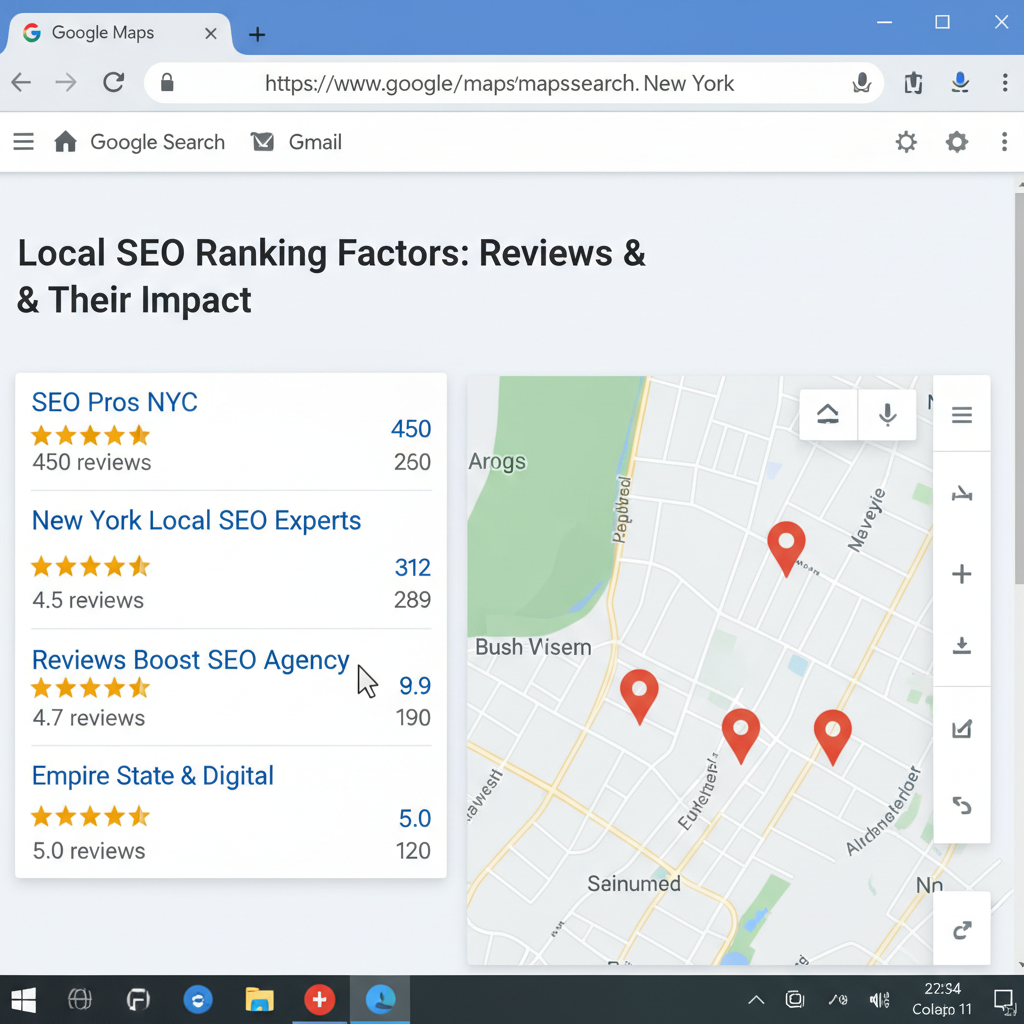
Google Maps search results showing local business ratings - Local SEO Ranking Factors: Reviews & Their Impact
Real-World Impact of Reviews
Consider the case of a small Italian restaurant in Chicago that I worked with last year. Despite having excellent food and service, they were struggling to attract new customers. After conducting an SEO audit, we discovered that their online presence was marred by a few negative reviews that were prominently displayed. We implemented a comprehensive strategy to encourage satisfied customers to leave positive feedback, and within months, their Google Business Profile was thriving with glowing reviews. As a result, their local search rankings improved significantly, and foot traffic increased by 30% within six months.
This example underscores the impact reviews can have not just on rankings but also on a business's bottom line. Reviews are a form of user-generated content that Google values highly because they reflect authentic customer experiences. They provide insights into what customers appreciate and where improvements can be made, offering businesses a roadmap for enhancing their services. Additionally, responding to reviews—both positive and negative—demonstrates to customers that you value their feedback and are committed to providing excellent service, which can further enhance your reputation.
Understanding Google's Review Policies
Google has specific guidelines for reviews, outlined in their Prohibited and Restricted Content policy. These guidelines are designed to ensure that reviews are genuine and helpful to other users. Key aspects of the policy include prohibiting fake reviews, spam, and any content that violates Google's terms, such as hate speech or offensive language.
It's important for business owners to monitor their reviews regularly and report any that violate these policies. Google's review removal process allows you to flag inappropriate reviews, which are then reviewed by a team to determine if they should be removed. From our experience, most businesses find this process straightforward, but it requires vigilance and a proactive approach.
Moreover, businesses should understand that incentivizing positive reviews is against Google's guidelines. While it might be tempting to offer discounts or freebies in exchange for reviews, this practice can lead to penalties and damage your credibility. Instead, focus on providing exceptional service that naturally encourages customers to share their positive experiences.
Strategies for Leveraging Reviews in Your SEO Strategy
Given the significant impact reviews have on local SEO, it's crucial to develop a strategy for managing and leveraging them effectively. Here are some actionable steps you can take:
Encourage Customer Reviews: Train your staff to ask customers for reviews at the point of sale or after they have received your service. You can also send follow-up emails or texts with direct links to your review pages.
Respond to Reviews: Engage with your customers by responding to reviews promptly and professionally. Thank them for positive feedback and address any concerns raised in negative reviews with a constructive approach.
Monitor Your Online Reputation: Use tools like Google Alerts or reputation management software to stay informed about new reviews and mentions of your business online.
Highlight Positive Reviews: Showcase positive reviews on your website and social media channels to build trust with potential customers.
Handle Negative Reviews Wisely: Instead of ignoring or disputing negative reviews aggressively, use them as an opportunity to improve your services and demonstrate your commitment to customer satisfaction.
Implementing these strategies not only helps improve your local SEO ranking but also enhances your overall business reputation. By fostering a positive review culture, you can create a cycle of continuous improvement and customer engagement, which ultimately drives growth and success.
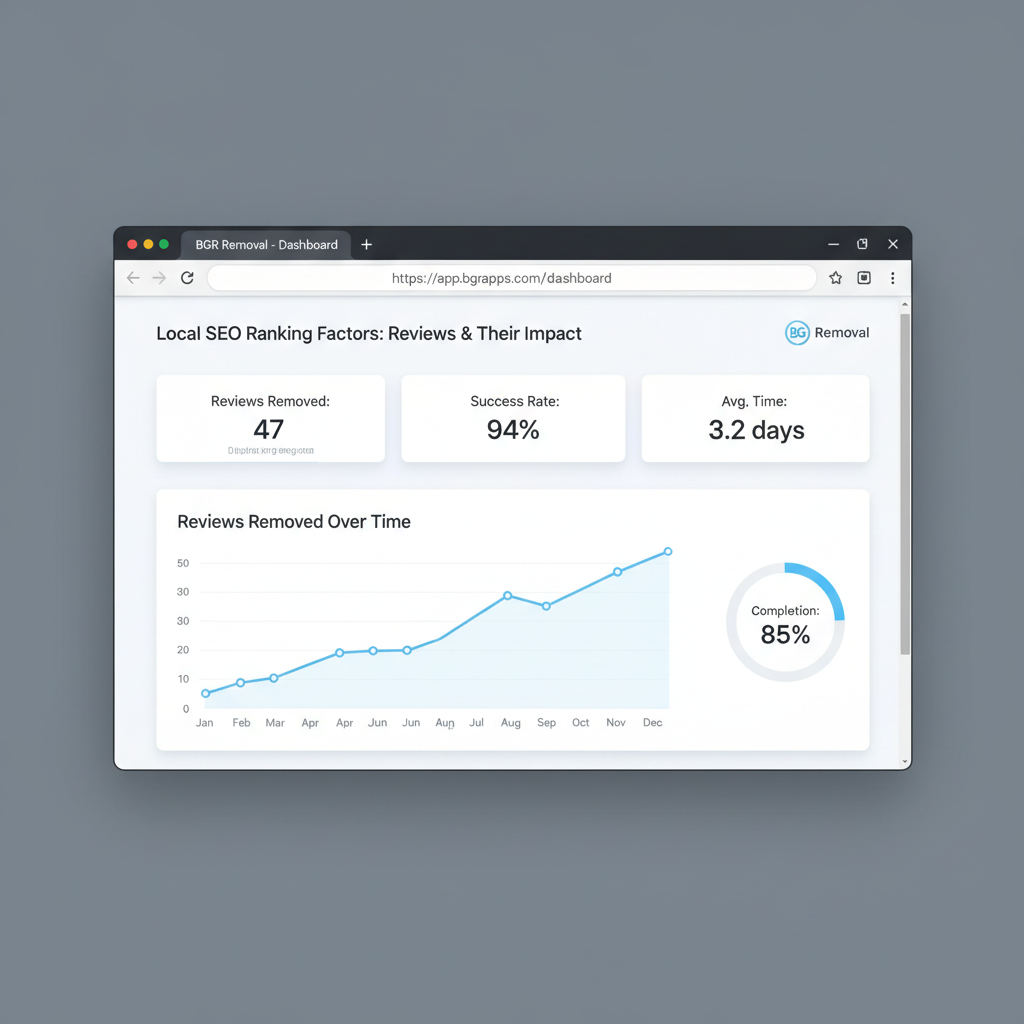
Dashboard showing review removal results and success metrics - Local SEO Ranking Factors: Reviews & Their Impact
The Role of Third-Party Review Sites
While Google reviews are crucial, they are not the only platform that matters. Third-party review sites like Yelp, TripAdvisor, and industry-specific platforms also play a significant role in shaping your business's online reputation. These sites often appear prominently in search results and attract a different segment of the audience.
For instance, a local hotel I worked with found that while their Google reviews were excellent, their TripAdvisor profile had been neglected, resulting in lower ratings. By encouraging guests to leave reviews on TripAdvisor and responding to existing feedback, they improved their profile's ratings and saw a corresponding increase in bookings.
Maintaining a consistent and positive presence across multiple platforms is essential for a comprehensive local SEO strategy. Each platform has its own guidelines and audience, so it's important to tailor your approach accordingly. Additionally, diversifying your review sources can protect your business from the impact of negative reviews on any single platform.
Conclusion: Harnessing Reviews for Local SEO Success
In the competitive landscape of local SEO, reviews are not just a supplementary factor—they are a cornerstone of successful online visibility and consumer trust. By understanding their impact and implementing a strategic approach to managing reviews, you can significantly enhance your business's reputation and search engine rankings.
From encouraging customer feedback to responding to reviews and leveraging third-party platforms, the steps you take to harness reviews will create a robust foundation for your local SEO strategy. Remember that the goal is not just to accumulate positive reviews but to cultivate genuine relationships with your customers that reflect in their feedback and loyalty.
As you navigate the dynamic world of local SEO, always prioritize authenticity and customer satisfaction. In doing so, you'll build a resilient online presence that stands the test of time—and the ever-changing algorithms of search engines.
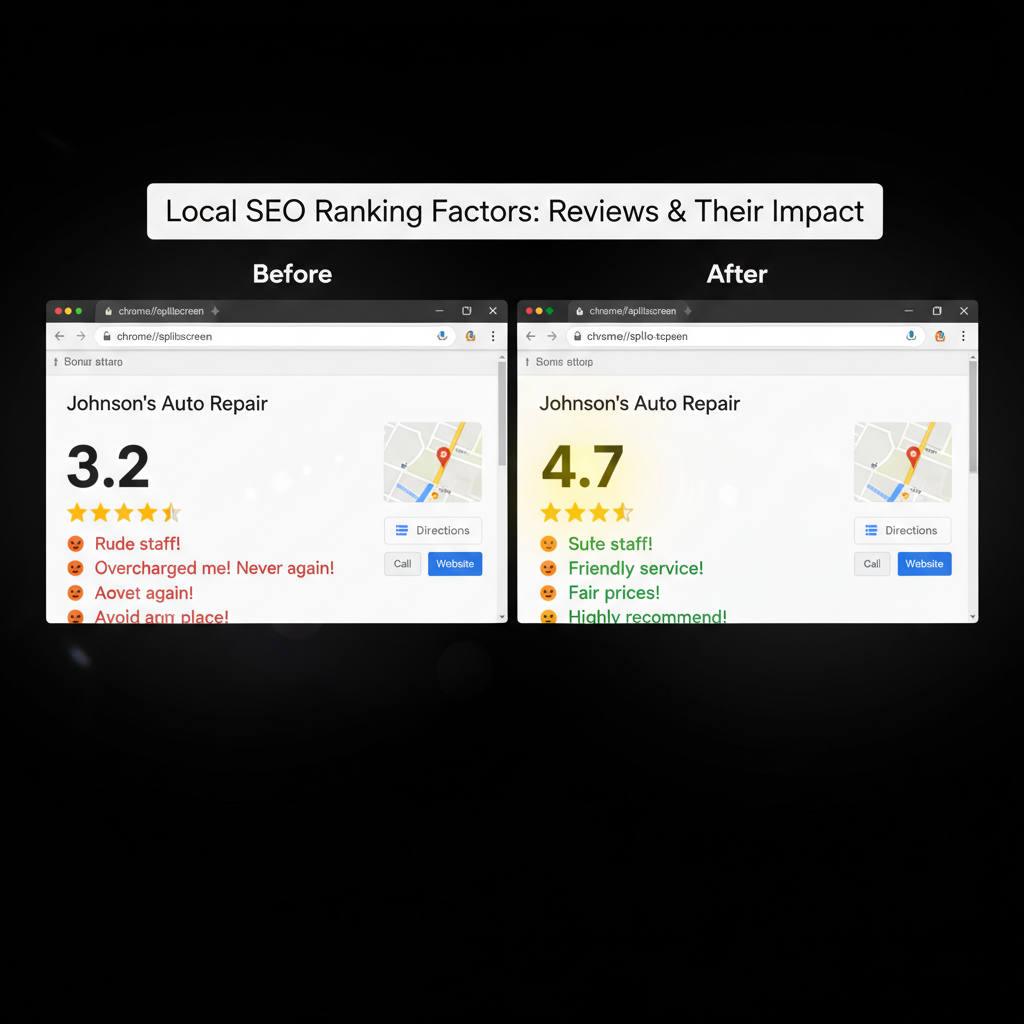
Before and after comparison showing improved business ratings - Local SEO Ranking Factors: Reviews & Their Impact
Frequently Asked Questions
How do reviews impact local SEO?
Reviews impact local SEO by influencing search engine rankings and consumer trust. They serve as a signal of credibility and quality to search engines, which can improve your business's visibility in local search results.
What should I do if I receive a fake review?
If you receive a fake review, you should report it to Google or the relevant platform, explaining why it violates their guidelines. You can also respond diplomatically to clarify the situation for other potential customers.
Can negative reviews harm my SEO ranking?
While a few negative reviews might not drastically harm your ranking, a pattern of negative feedback can lower your overall rating and impact consumer trust. It's important to address negative reviews constructively.
Are third-party review sites important for local SEO?
Yes, third-party review sites are important as they contribute to your business's online reputation and may appear in search results. Maintaining positive profiles across multiple platforms is beneficial for your SEO strategy.
How can I encourage more customers to leave reviews?
Encourage reviews by directly asking satisfied customers, providing excellent service, and simplifying the review process through follow-up emails or texts with direct links to your review pages.
Is it against Google's guidelines to pay for positive reviews?
Yes, paying for positive reviews is against Google's guidelines. It's important to focus on genuine customer experiences instead of incentivizing feedback, as this can lead to penalties.
What are the best practices for responding to reviews?
Best practices include responding promptly and professionally, thanking customers for positive feedback, addressing concerns raised in negative reviews constructively, and using the opportunity to improve your services.