I received a distressed email from a small boutique hotel owner in San Francisco. She had just stumbled upon a scathing review on her Google Business Profile, accusing her establishment of poor service and subpar cleanliness claims she knew to be false. Her heart sank as she imagined potential guests reading and believing these words. After working together to craft a thoughtful response, she not only salvaged her online reputation but turned a potential disaster into an opportunity for growth. Instances like these abound in the digital age, where one negative review can feel like a public trial by fire. As someone who has spent over 8 years helping businesses manage their online reputations, I can attest to the anxiety that comes with negative feedback but also the power of a well-crafted response to rebuild trust. In this article, we'll explore proven strategies and templates for responding to negative reviews, ensuring your business not only survives the digital scrutiny but thrives amid it. Whether you're a seasoned entrepreneur or new to the online business landscape, understanding these practices is crucial for maintaining your brand's integrity in the face of public criticism.
In the sprawling digital marketplace, the user's primary search intent when looking up "responding to negative reviews" is often informational and transactional. Businesses are eager to learn effective techniques for managing reputational impacts but also seek guidance on how to implement these strategies practically. This guide will delve into various aspects of responding to negative feedback—starting from understanding the emotional and psychological dynamics at play to practical templates and real-life examples. We'll also address common pitfalls and how to avoid them, thereby empowering you to handle criticism like a seasoned pro.
Understanding the Dynamics of Negative Reviews
Negative reviews are an inevitable part of doing business, much like taxes or regulatory compliance. They can arise from genuine dissatisfaction, misunderstandings, or, sometimes, malicious intent. I recall a case with a local café that was hit by a series of severe reviews following a temporary staffing issue. The reviews were emotionally charged, detailing long wait times and cold meals. By understanding the root cause of these complaints, we were able to address them directly, turning a series of unfortunate events into a learning and growth opportunity for the café.
When confronted with a negative review, it's essential to recognize the emotional impact it carries, both for the reviewer and the business owner. Emotionally charged language in reviews often reflects a deeper issue that needs addressing. According to a study by Search Engine Journal, about 68% of consumers trust online reviews as much as personal recommendations, underscoring the significant influence these reviews wield. Approaching them with an understanding of their potential to sway public opinion is key to crafting an effective response.
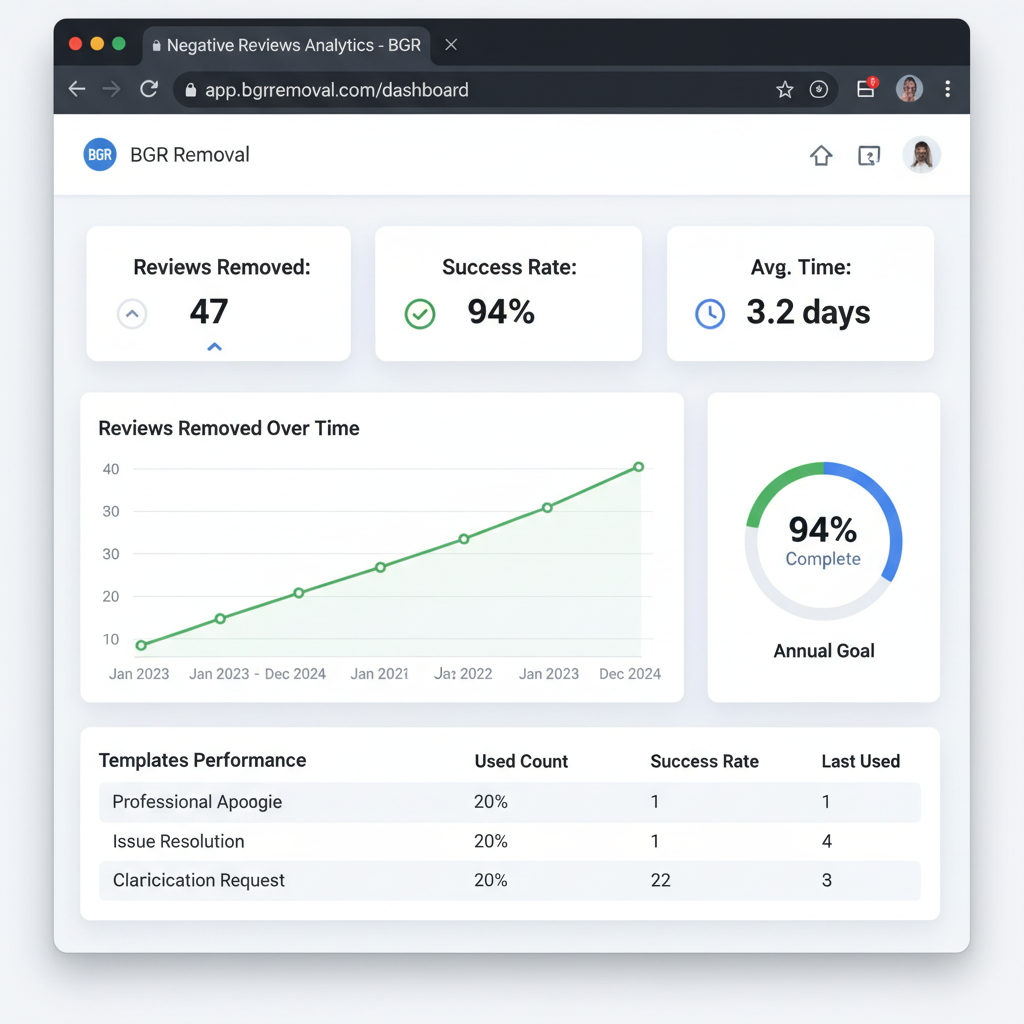
Dashboard showing review removal results and success metrics - Responding to Negative Reviews: Templates & Best Practices
Best Practices for Responding to Negative Reviews
From my extensive experience working with hundreds of businesses, I've found that the initial response to a negative review sets the tone for all subsequent interactions. Here are some best practices to guide you:
Respond Promptly: Timeliness shows customers you value their feedback and are actively engaged in improving their experience. Aim to respond within 24-48 hours.
Stay Professional and Courteous: Even when a review feels unfair or unfounded, maintaining a calm and professional tone is crucial. This reflects positively on your brand and can often defuse tension.
Acknowledge the Issue: Start by acknowledging the customer's experience. This doesn't mean admitting fault but rather showing empathy and understanding.
Offer a Solution or Compensation: Where appropriate, offer a direct solution or compensation. This could be a refund, a replacement, or a discount on the next purchase, depending on the nature of the complaint.
Take the Conversation Offline: Provide a contact method to discuss the issue further. This helps to resolve the issue privately and efficiently.
For instance, when handling a review where a customer complained about a faulty product, a prompt acknowledgment followed by a direct offer to replace the item helped not only resolve the issue but also won the customer over, turning them into a brand advocate.
Crafting Responses: Templates for Different Scenarios
Every negative review is unique, necessitating a tailored response. Below are templates for common scenarios that you can modify to fit your needs:
Template for a Service Complaint
Dear [Customer's Name],
Thank you for your feedback. We apologize for the inconvenience you faced during your visit. Providing excellent service is our priority, and your experience fell short of our expectations. We have addressed this with our team to prevent future occurrences. We would love the opportunity to make it right. Please contact us at [contact information] to discuss how we can assist you further.
Best regards,
[Your Name]
Template for a Product Issue
Hi [Customer's Name],
We are sorry to hear about your experience with [product]. Your satisfaction is important to us, and we want to resolve this issue. Please reach out to us at [contact information], and we'll be happy to replace the item or refund your purchase.
Thank you for bringing this to our attention.
[Your Name]
Template for a Malicious or Fake Review
Hello [Customer's Name],
We take all feedback seriously and strive to provide the best service possible. We are unable to find any records of your visit or transaction. Could you please provide us with more details at [contact information] so we can address your concerns appropriately?
Thank you,
[Your Name]
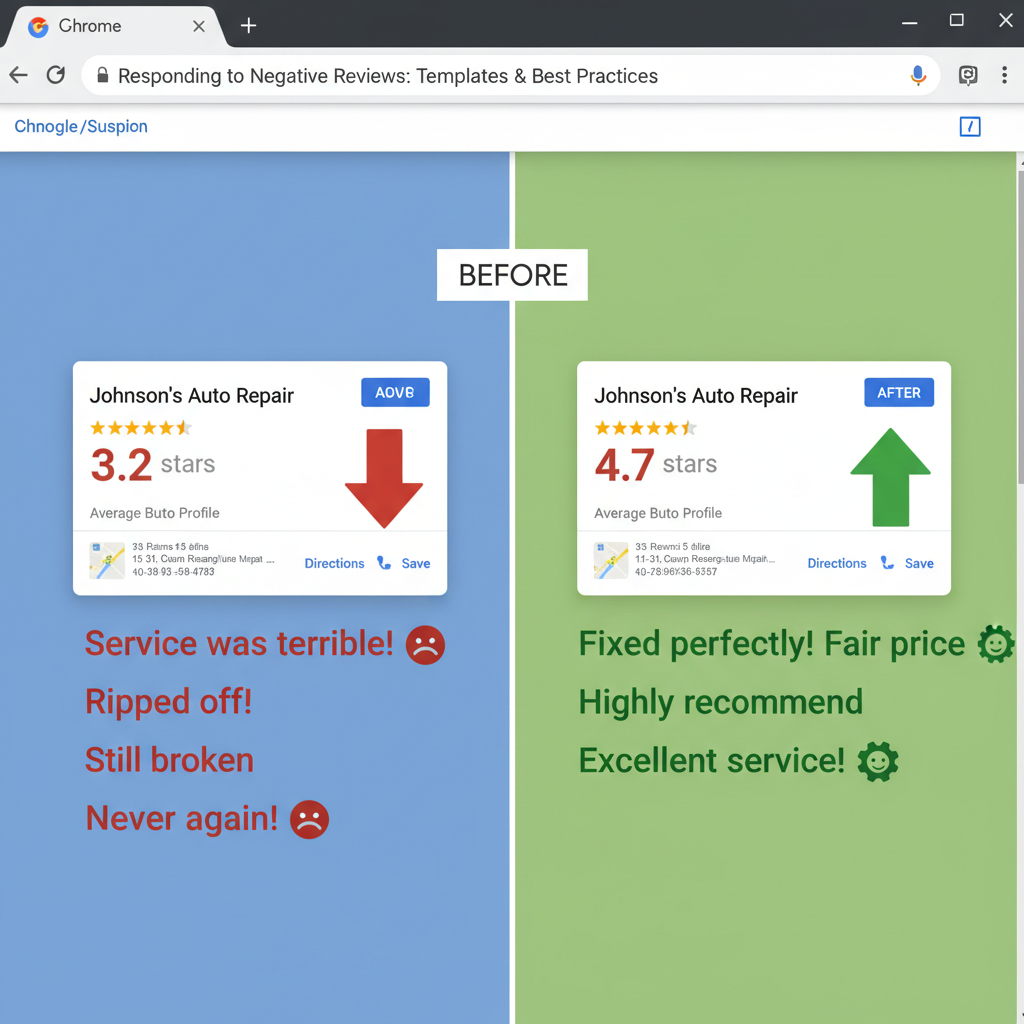
Before and after comparison showing improved business ratings - Responding to Negative Reviews: Templates & Best Practices
Turning Criticism into Opportunity
Negative reviews, while daunting, can be invaluable learning tools. They offer insights into areas for improvement and customer expectations that may not be immediately obvious. By addressing them thoughtfully, you can not only resolve immediate issues but also strengthen your business in the long term. I remember a case involving a tech startup that faced harsh criticism over a buggy software release. By engaging with their users, acknowledging the issues, and quickly rolling out fixes, they not only regained customer trust but also improved their product significantly.
Moreover, the public nature of online reviews provides a platform for demonstrating transparency and commitment to customer satisfaction. Businesses that openly address criticism often earn more respect and trust from potential customers. According to Harvard Business Review, companies that respond to at least 25% of their online reviews earn 35% more revenue. This statistic underscores the tangible benefits of active engagement with your customer base.
Common Mistakes to Avoid
While responding to negative reviews is crucial, it's equally important to avoid certain pitfalls that could exacerbate the situation. Here are some common mistakes to steer clear of:
Ignoring the Review: Silence can be interpreted as indifference or guilt. Always address legitimate concerns.
Being Defensive: A defensive response can escalate tensions. Instead, focus on understanding and resolving the issue.
Using Generic Responses: Personalized replies show genuine care and attention, whereas generic responses can seem disingenuous.
Arguing in Public: Prolonged arguments in a public forum can damage your brand's reputation. Always take detailed discussions offline.
By avoiding these mistakes, you ensure that your responses contribute positively to your business's reputation.
The Long-Term Benefits of Effective Review Management
Consistent and thoughtful management of negative reviews yields long-lasting benefits, including improved customer loyalty, enhanced brand reputation, and increased revenue. A strategic approach to handling reviews can also provide a competitive edge. For instance, a restaurant chain that consistently responded to both positive and negative feedback saw a marked increase in return customers and a higher overall rating on review platforms.
In conclusion, while negative reviews are an inescapable aspect of modern business, they also offer a unique opportunity to connect with customers and improve your operations. By implementing the best practices and templates discussed here, you can turn potential setbacks into stepping stones for success. For further assistance, explore our negative review removal services or contact our team for personalized advice.
Frequently Asked Questions
How quickly should I respond to a negative review?
Ideally, you should respond within 24-48 hours. Prompt responses show that you value customer feedback and are committed to resolving issues.
What tone should I use when responding to negative reviews?
Maintain a professional, courteous, and empathetic tone. Avoid being defensive or argumentative, as this can escalate the situation.
Can I delete negative reviews from my business profile?
While you cannot delete negative reviews directly, you can report fake or inappropriate reviews to Google for removal. Learn more about our fake review removal services.
What if a customer refuses to resolve their complaint offline?
Continue to respond publicly with professionalism, offering solutions and showing willingness to address their concerns. This demonstrates your commitment to customer satisfaction to other potential customers.
Should I respond to every negative review?
Yes, responding to every negative review, where appropriate, shows that you are attentive to customer feedback and dedicated to improving your service.
How do I handle fake reviews?
Identify and report fake reviews to the review platform for removal. Consider engaging with our fake review removal service for assistance.
Is it necessary to respond to positive reviews?
While not necessary, responding to positive reviews enhances customer relationships and encourages more engagement. It shows appreciation for customer feedback.