Have you ever wondered why some businesses seem to effortlessly build stellar online reputations while others struggle to maintain a positive image? I remember a conversation with a client, a boutique hotel owner in San Francisco, who was perplexed by a sudden influx of negative reviews tarnishing her previously impeccable online presence. She had no idea where they were coming from or how to address them effectively. This scenario is a common one in my line of work, where I've spent over a decade assisting businesses in navigating the complexities of online reputation management. In today’s digital age, maintaining a vigilant eye on what is being said about your brand online is not just beneficial; it’s essential.
For business owners, the task of monitoring reviews across multiple platforms can seem daunting, yet it is this vigilance that can make the difference between thriving and merely surviving. From my experience working with hundreds of businesses, I’ve found that the right review monitoring tools can be game-changers. These tools can provide real-time alerts, offer comprehensive analytics, and even help craft strategies to manage both positive and negative feedback. In this article, we will explore the importance of these tools, how they work, and why they are indispensable for any business serious about its online reputation. By the end, you'll have a clearer understanding of how to leverage these tools to protect and enhance your brand’s image.
In the following sections, we will delve into the mechanics of review monitoring tools, showcasing their capabilities and limitations. You'll learn about specific tools that are industry leaders, how they fit into a broader reputation management strategy, and the tangible impacts they can have on your business. So, whether you're new to the concept or looking to fine-tune your existing strategy, stay with us as we navigate the landscape of online reviews.
The Role of Review Monitoring Tools in Reputation Management
In an era where digital footprints are as significant as physical ones, the role of review monitoring tools in reputation management cannot be overstated. These tools serve as the watchtowers that alert businesses to changes and trends in their online sentiment. From my years of experience, I've seen how proactive monitoring can avert crises before they snowball and enhance customer loyalty by addressing concerns swiftly. By tapping into these insights, businesses can transform feedback into actionable strategies that bolster their brand image.
At their core, review monitoring tools consolidate feedback from various platforms into a centralized dashboard, allowing for efficient management. This aggregation not only saves time but also provides a holistic view of customer sentiment, enabling businesses to identify patterns and recurring issues. For instance, a restaurant chain I worked with utilized such a tool to discover consistent complaints about wait times across multiple locations. This insight led them to implement operational changes that significantly improved customer experience and reflected positively in subsequent reviews.
Moreover, these tools often come equipped with analytical capabilities that offer deeper insights into customer behavior and preferences. They can track metrics such as review frequency, average rating, and sentiment analysis, providing businesses with a nuanced understanding of their standing in the market. While the technology behind these tools is sophisticated, it’s their applicability in real-world scenarios that truly underscores their value.
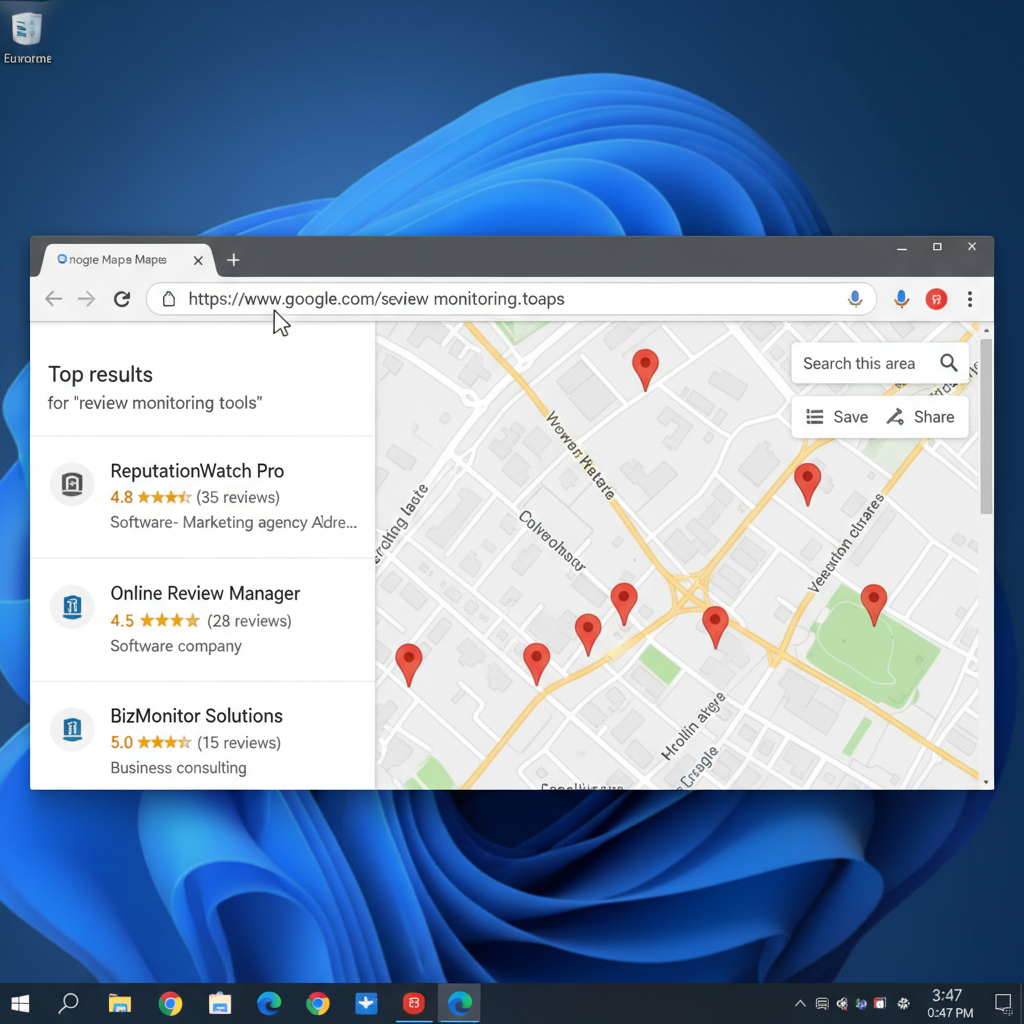
Google Maps search results showing local business ratings - Review Monitoring Tools: Track Your Online Reputation
Popular Review Monitoring Tools: A Comparative Analysis
Choosing the right review monitoring tool can be as critical as using one. Over the years, I’ve evaluated numerous tools, each with unique features and capabilities. Among the most popular are platforms like Birdeye, ReviewTrackers, and Yotpo, all of which offer robust solutions tailored to different business needs.
Birdeye, for instance, provides a comprehensive suite of services that goes beyond just monitoring. It enables businesses to manage reviews, send out surveys, and even engage in direct communication with customers—all from a single interface. The platform’s integration capabilities are noteworthy, allowing businesses to link their Google My Business profiles and other social media accounts seamlessly, thus ensuring that no feedback goes unnoticed.
ReviewTrackers, on the other hand, is renowned for its powerful analytics and reporting features. It excels in providing businesses with the data they need to understand their customers better, with features like sentiment analysis and competitor benchmarking. One of my clients, a national retail chain, utilized ReviewTrackers to compare their customer feedback against competitors, identifying key areas for improvement that were critical in fine-tuning their customer service strategies.
Yotpo is particularly favored in the e-commerce sector for its ability to collect and showcase customer reviews directly on product pages, thereby enhancing consumer trust and boosting conversion rates. Its user-generated content tools are among the best, designed to amplify positive customer experiences and turn satisfied buyers into brand advocates.
These tools, while diverse in their offerings, share a common goal: to empower businesses with the insights needed to protect and enhance their reputations. By understanding what each tool offers, businesses can better select one that aligns with their specific needs and objectives.
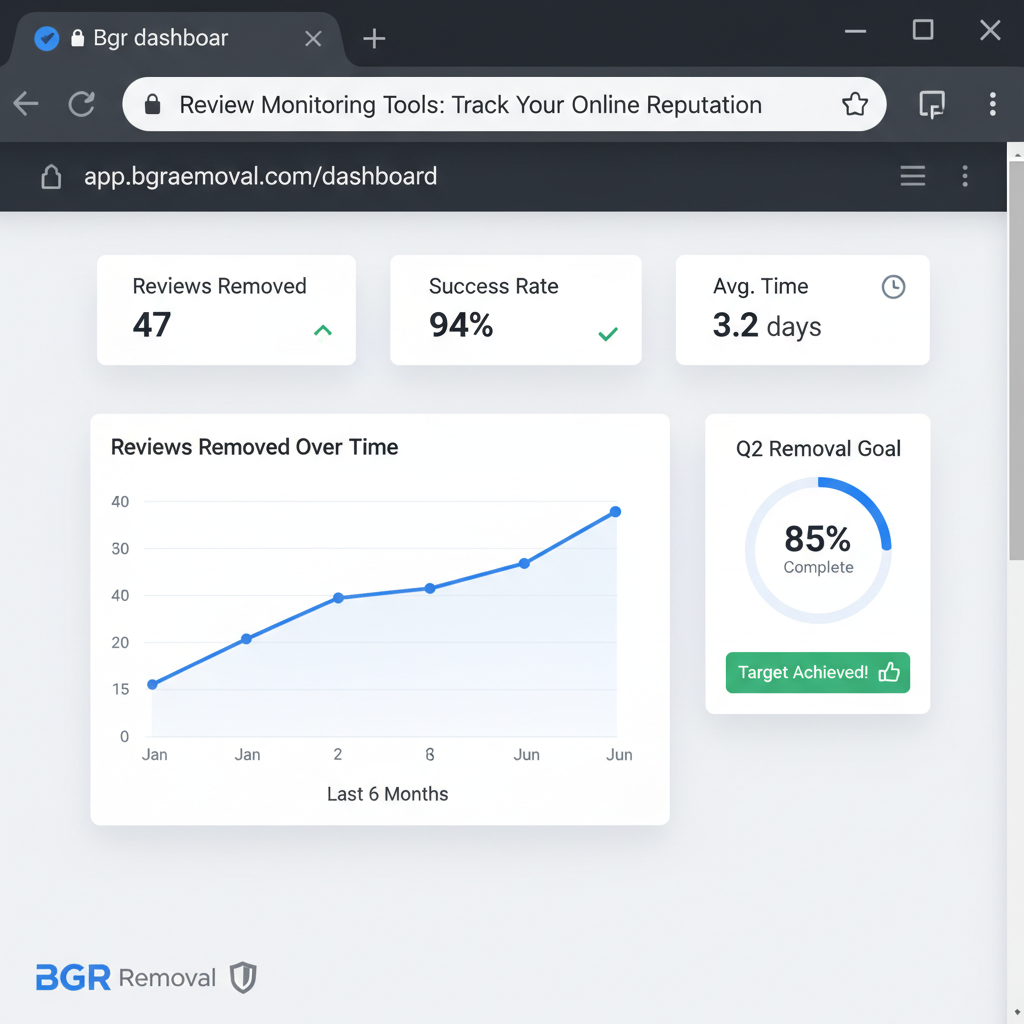
Dashboard showing review removal results and success metrics - Review Monitoring Tools: Track Your Online Reputation
Why Real-Time Monitoring Matters
In the fast-paced world of online reviews, timing is everything. Real-time monitoring is not just a feature; it’s a necessity. I recall working with a hospitality brand that was able to mitigate a potentially damaging situation by responding to a negative review within minutes of it being posted. This swift response not only placated the dissatisfied guest but also demonstrated to other potential customers that the brand was committed to customer satisfaction.
Real-time monitoring tools provide instant alerts whenever a new review is posted, enabling businesses to act quickly. This capability is crucial in managing customer expectations and preventing negative experiences from escalating. According to a study by Search Engine Journal, businesses that respond to reviews within 24 hours are 33% more likely to see improved customer perception and increased sales as a result of their responsiveness.
Yet, real-time monitoring is about more than just damage control. It offers opportunities to celebrate positive feedback and reinforce brand loyalty. By acknowledging and thanking customers for their praise, businesses can foster a community of advocates who amplify their brand message organically. In most cases, this positive reinforcement loop can lead to an increase in repeat business and referrals, which are invaluable in any industry.
Integrating Review Monitoring into Your Broader Strategy
Monitoring reviews is just one piece of the reputation management puzzle. To truly leverage the power of reviews, businesses must integrate this monitoring into a broader strategy that includes engagement, resolution, and promotion. From my extensive experience, the businesses that thrive are those that view reviews not just as feedback, but as a vital component of their marketing and customer service strategies.
Engagement with reviewers, whether positive or negative, builds a narrative of a brand that cares and listens. This engagement should be sincere and personalized, addressing specific points raised by reviewers. In one memorable case, a tech startup I advised began using personalized responses to reviews to humanize their brand. This approach not only improved customer relationships but also increased brand equity.
Resolution of issues highlighted in reviews is equally critical. Businesses must have processes in place to address and resolve complaints efficiently. This not only appeases dissatisfied customers but also demonstrates to potential customers that the business is proactive and accountable. According to the Better Business Bureau, transparent resolution of complaints is one of the key factors in maintaining trust with consumers.
Finally, promoting positive reviews and leveraging them in marketing efforts can significantly enhance brand perception. Tools like Yotpo can help businesses showcase testimonials and build social proof, which is a powerful influencer in consumer decision-making. By integrating review monitoring into these broader strategies, businesses can create a cohesive approach to reputation management that is both reactive and proactive.
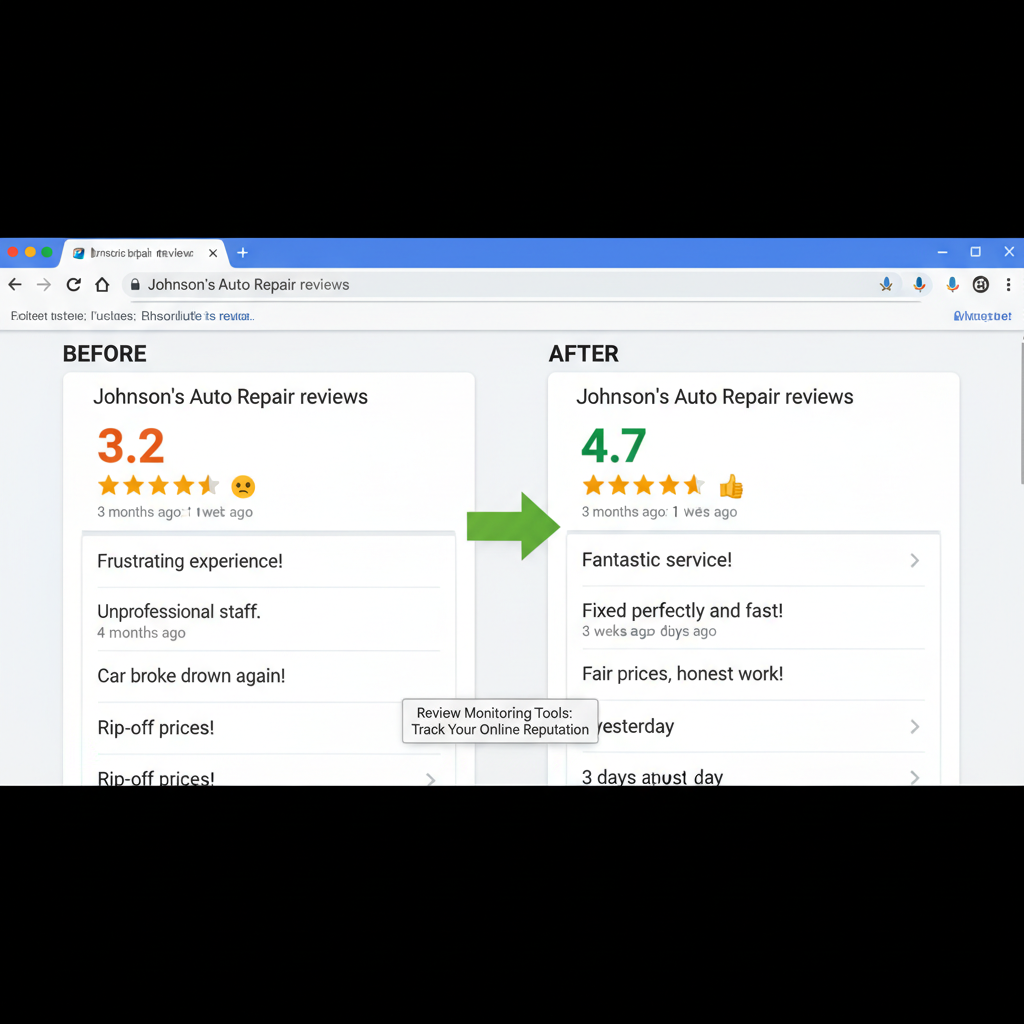
Before and after comparison showing improved business ratings - Review Monitoring Tools: Track Your Online Reputation
Frequently Asked Questions
What are review monitoring tools?
Review monitoring tools are software platforms designed to track and manage online reviews from various sources such as Google, Yelp, and Facebook. They provide insights into customer sentiment and help businesses respond promptly to feedback.
How do review monitoring tools work?
These tools aggregate reviews from multiple platforms into a single dashboard, providing real-time alerts and analytics. This allows businesses to monitor trends, identify issues, and engage with customers more effectively.
Why is real-time monitoring important?
Real-time monitoring is crucial because it allows businesses to address customer feedback promptly, which can prevent negative reviews from impacting the brand and enhance customer satisfaction by showing responsiveness.
Can small businesses benefit from these tools?
Absolutely. Small businesses can greatly benefit from review monitoring tools by maintaining a positive online presence, addressing customer concerns quickly, and leveraging positive reviews to build credibility and attract new customers.
Are there free review monitoring tools available?
Yes, there are basic versions of review monitoring tools that are free, such as Google Alerts. However, these may not offer the comprehensive features and analytics that paid tools provide, which are often necessary for in-depth reputation management.
What features should I look for in a review monitoring tool?
Key features to look for include real-time alerts, sentiment analysis, integration with multiple review platforms, customizable reporting, and response management capabilities. These features ensure a robust approach to monitoring and managing reviews.
How can I choose the right tool for my business?
Consider your business size, industry, and specific needs. Evaluate tools based on their features, ease of use, pricing, and customer support. It's often helpful to take advantage of free trials to determine which tool best meets your requirements.