
Just last Saturday, I found myself in a bustling café in downtown Seattle, sipping on a perfectly crafted cappuccino. The owner, a long-time client of ours, approached me with an intriguing question: "How can I ensure that my business is the first one customers find when they use voice search?" In an era where people are increasingly asking their smart devices for recommendations and local businesses, this query is quite pertinent. If you're a local business owner, just like my café friend, you're likely pondering the same thing. With the rise of voice-activated technology, optimizing for voice search is no longer a futuristic concept but a present necessity. Our team at BGR Removal has been immersed in digital marketing trends for over a decade, and we've seen firsthand how businesses can significantly benefit from voice search optimization.
In this comprehensive guide, we'll explore why voice search matters for local businesses, how it differs from traditional SEO, and actionable strategies to put your business on the voice search map. We'll delve into the specifics of optimizing your Google Business Profile and leveraging local keywords, ensuring your business is ready to capture the attention of voice search users. By the end of this article, you'll have a clear understanding of how to get started and why it's crucial for your business's growth. Ready to make your business voice-search-friendly? Let's dive in.
Understanding the Rise of Voice Search
Voice search is no longer a novelty; it's a rapidly growing trend changing how consumers interact with technology. According to a report by Search Engine Journal, nearly 58% of consumers have used voice search to find local business information in the past year. Devices like Amazon Echo, Google Home, and Apple's Siri have become household staples, making voice search a significant player in the digital landscape. For local businesses, this means adapting to a new mode of customer interaction.
Voice search differs from traditional text-based search in several key ways. First, voice queries tend to be more conversational and longer than typed searches. This shift necessitates that businesses optimize their content to match natural language patterns. Secondly, voice search results often prioritize local information, meaning local businesses have a unique opportunity to capture the attention of nearby consumers. Understanding these nuances is critical for any business aiming to optimize for voice search and stay ahead of the competition.
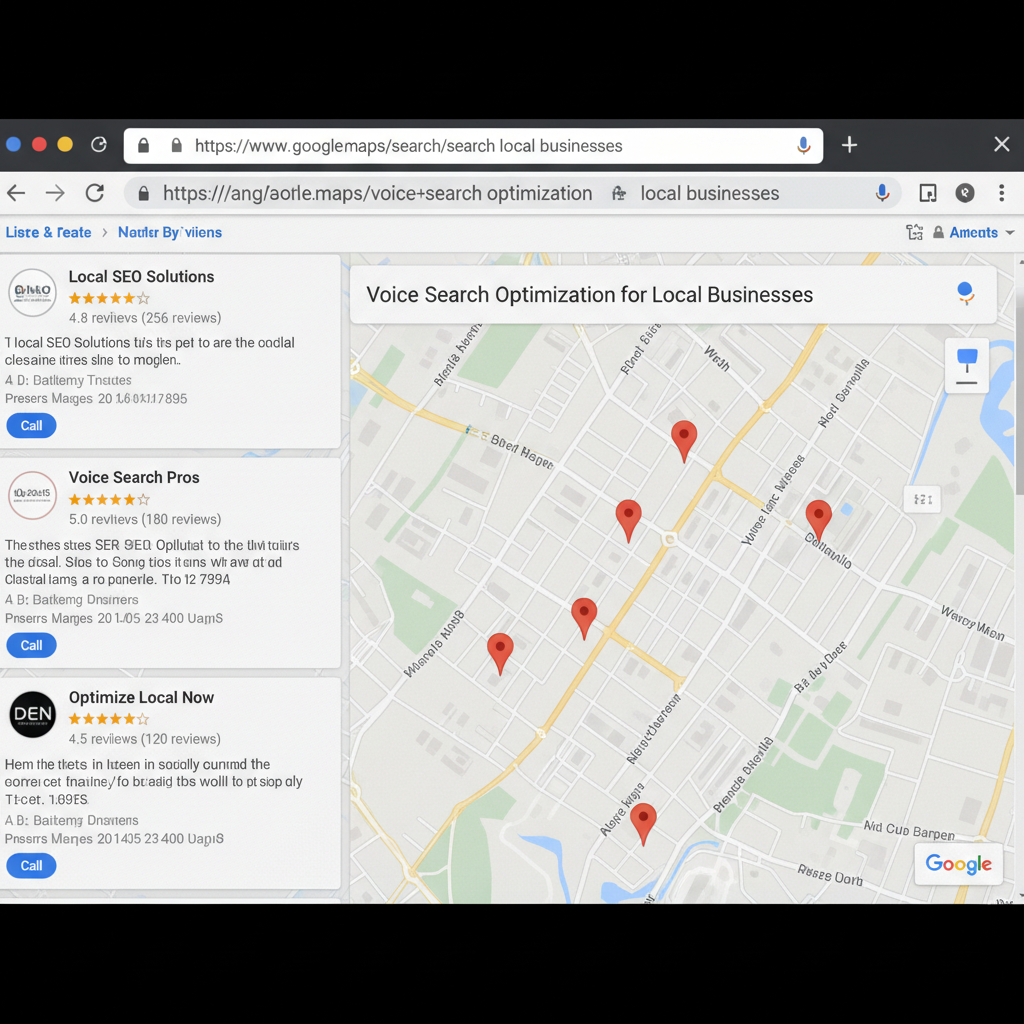
Google Maps search results showing local business ratings - Voice Search Optimization for Local Businesses
Key Strategies for Voice Search Optimization
From my experience working with hundreds of businesses on digital optimization, I've found that a few key strategies can significantly enhance your voice search presence. One of the first steps is optimizing your Google Business Profile, a crucial factor in local SEO. Make sure your business information is up-to-date and accurate, as Google's algorithms heavily rely on this data to deliver local search results. Additionally, regularly updating your profile with posts and photos can improve visibility.
Incorporating long-tail keywords that reflect natural language is another effective strategy. Voice searches tend to be more specific and conversational, so tailoring your content to meet these queries is vital. For example, instead of optimizing for "Italian restaurant," you might use "best Italian restaurant for family dinner in downtown Seattle." This specific phrasing aligns with the way people speak to their devices.
Moreover, focusing on local SEO is paramount. Ensure your business appears in local directories and listings, and encourage satisfied customers to leave reviews. Positive reviews not only improve your business’s credibility but also enhance its likelihood of being featured in voice search results. Remember, voice searches often prioritize businesses with strong local signals and high ratings.
Utilizing Structured Data and FAQs
Structured data, or schema markup, plays a crucial role in enhancing your business's online presence, particularly for voice search. By adding structured data to your website, you help search engines better understand your content, increasing the chances of appearing in voice search results. This markup can include information about your business’s location, hours, and services, which voice assistants can easily retrieve.
Incorporating a comprehensive FAQ section on your website is another beneficial tactic. Voice search users frequently ask specific questions, and having detailed FAQs can position your business as a trusted source of information. Make sure these FAQs incorporate natural language queries your customers might use, such as "What are your business hours?" or "Do you offer vegan options?" This alignment with customer inquiries boosts the likelihood of your content being selected as the top voice search result.
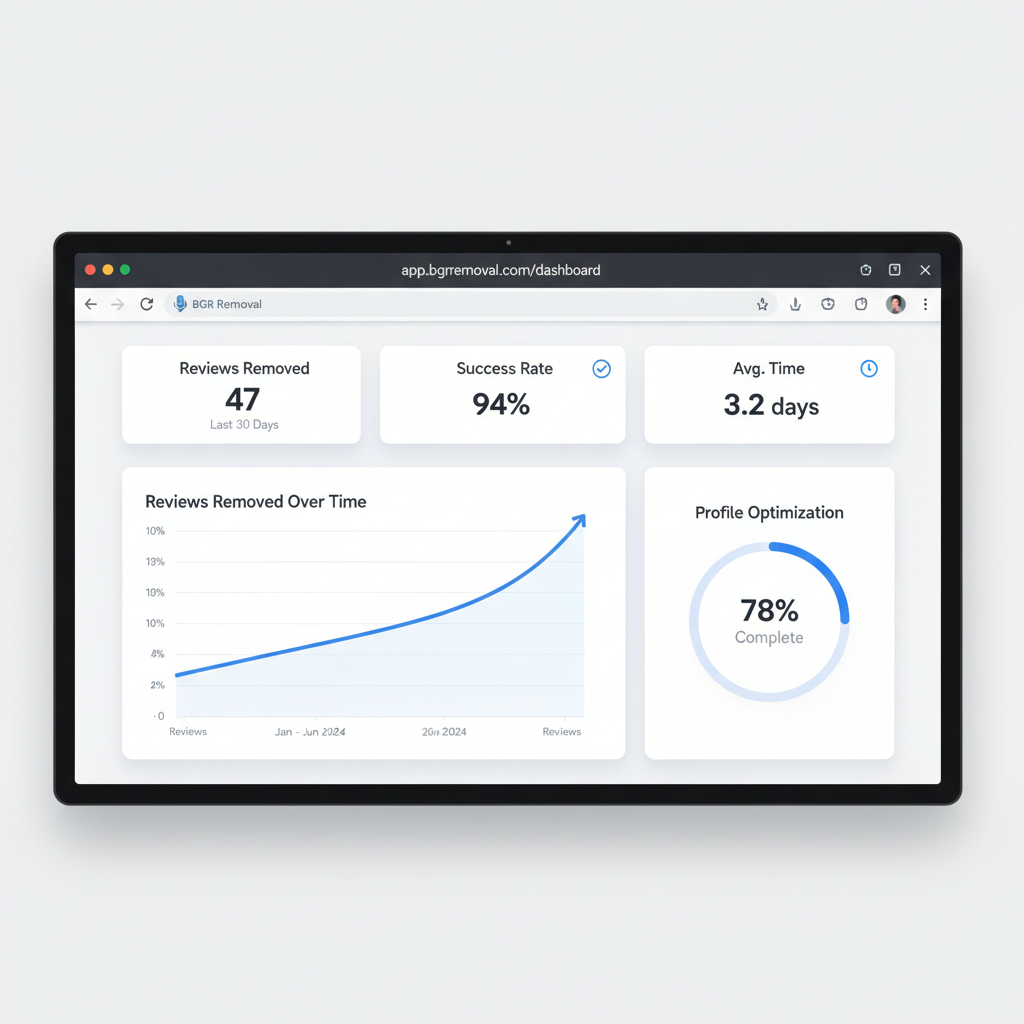
Dashboard showing review removal results and success metrics - Voice Search Optimization for Local Businesses
Measuring the Impact of Voice Search Optimization
Once you've implemented voice search optimization strategies, it's crucial to measure their impact. Tools like Google Analytics and Search Console can provide valuable insights into how your website performs in voice search. Pay attention to the increase in mobile and voice-oriented queries, and adjust your strategies accordingly.
From my past projects, I've noticed that businesses that actively monitor their voice search performance can make more informed decisions about where to direct their SEO efforts. Voice search is a dynamic field, with user behavior constantly evolving. Regularly reviewing your analytics ensures you stay aligned with the latest trends and consumer expectations.
Common Challenges and How to Overcome Them
While voice search optimization offers numerous benefits, it's not without challenges. One common issue is the complexity of accurately identifying the right keywords to target. Voice searches vary significantly in phrasing and intent, making it essential to conduct thorough keyword research. Utilize tools like Google's Keyword Planner to identify potential voice search phrases and incorporate them into your content.
Another challenge is staying updated with the rapidly changing voice search landscape. As technology evolves, so do the algorithms and criteria that determine voice search results. Keeping abreast of these changes requires ongoing education and adaptation. Subscribing to industry publications, such as Moz's SEO Blog, can provide valuable insights and updates on best practices in voice search optimization.
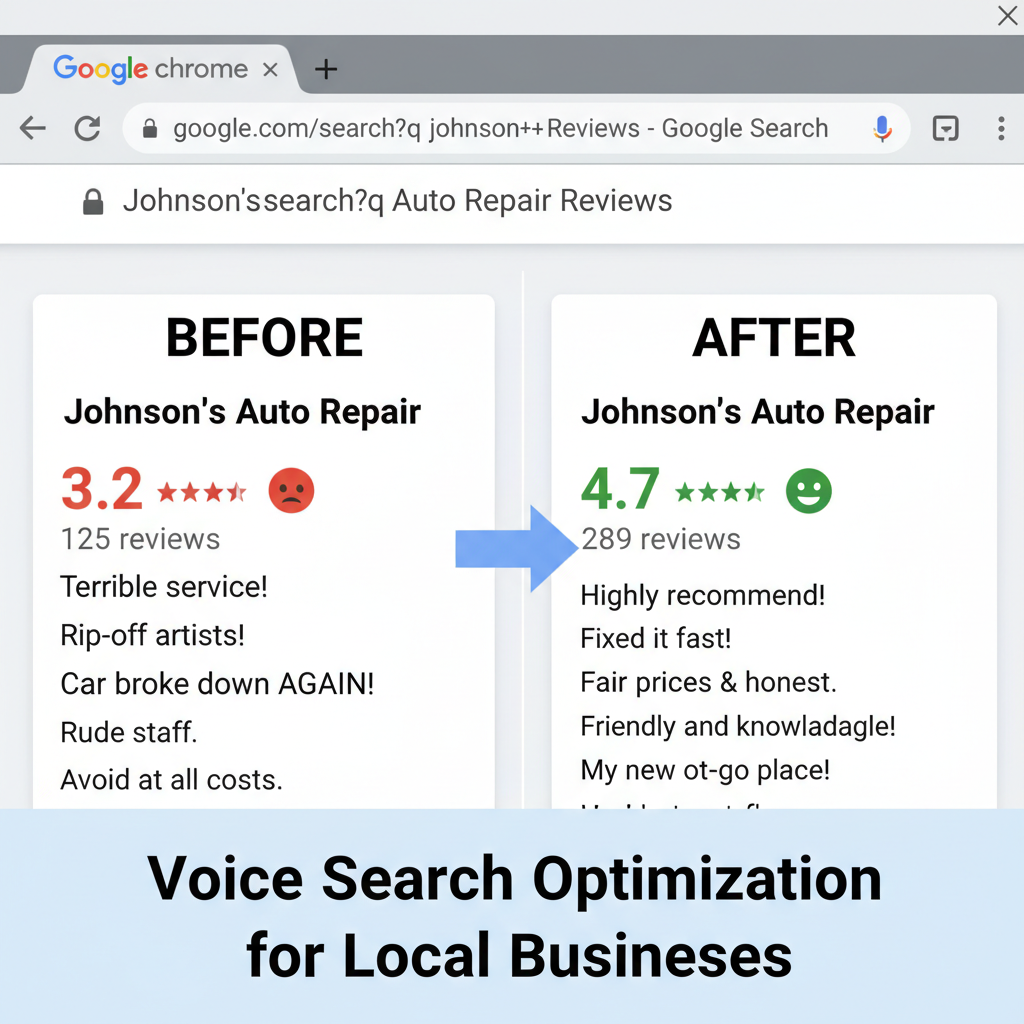
Before and after comparison showing improved business ratings - Voice Search Optimization for Local Businesses
Frequently Asked Questions
What is voice search optimization?
Voice search optimization involves tailoring your online content to improve its visibility in voice search results. This includes using natural language keywords, optimizing local SEO, and ensuring your Google Business Profile is accurate and complete.
How is voice search different from traditional search?
Voice search queries tend to be longer and more conversational than traditional text searches. They often prioritize local results and are usually conducted via mobile devices or smart speakers.
Why is voice search important for local businesses?
Voice search is crucial for local businesses because it often prioritizes results based on proximity and relevance. Optimizing for voice search helps local businesses attract nearby customers actively seeking their services.
How can I optimize my content for voice search?
To optimize for voice search, focus on natural language keywords, enhance your local SEO efforts, and ensure your Google Business Profile is up-to-date. Additionally, incorporating structured data and FAQs on your website can improve voice search visibility.
What tools can help with voice search optimization?
Tools like Google's Keyword Planner, Google Analytics, and Search Console are invaluable for voice search optimization. They help identify voice search trends and measure the effectiveness of your strategies.
How do I measure the success of my voice search optimization efforts?
Monitor metrics such as increased visibility in mobile and voice search queries using analytics tools. Regularly review your data to adapt your strategies and stay aligned with voice search trends.
What are the common challenges in voice search optimization?
Challenges include identifying the right keywords for voice searches and keeping up with the evolving voice search landscape. Staying informed through industry publications and continuous learning can help overcome these challenges.