It was the owner of a quaint bookstore in Portland. She was in distress, having just discovered a slew of negative reviews on her Google Business Profile reviews she suspected to be from a competitor. This scenario is not uncommon in my line of work. In my 8+ years assisting businesses with reputation management, I've encountered countless situations where the integrity of online reviews has been compromised, leaving business owners like her at their wits' end.
If you've ever faced such a situation, you know the weight it can carry. In today's digital age, over 87% of consumers read online reviews before making a purchase decision, according to BrightLocal's Local Consumer Review Survey. This makes fake or negative reviews a critical issue that can impact your business's bottom line significantly. Managing these reviews can feel like navigating a minefield, and the tools and strategies you employ are crucial to your success.
As part of the BGR Removal team, we've spent the past decade helping over 500 businesses restore their online reputations. Our expertise spans the nuanced landscape of Google's review policies, including the Prohibited and Restricted Content policy, which outlines what can and cannot be flagged for removal. In this article, we’ll dive deep into the pros and cons of using a Google Reviews Management Tool versus the traditional method of flagging reviews. Understanding these options can help you make informed decisions that protect your business's reputation and foster trust with your customers.
Before you make your choice, consider this: not all reviews are removable, and tools offer different capabilities compared to flagging. Keep reading to discover which approach might work best for your situation and how to effectively manage your online reviews.
Understanding Google Reviews Management Tools
Google Reviews Management Tools are platforms designed to help businesses monitor, analyze, and respond to reviews across various platforms, primarily focusing on Google. These tools often come equipped with features such as real-time alerts, sentiment analysis, and the ability to respond directly to reviews from within the platform. They provide a centralized dashboard that simplifies the management of reviews, especially for businesses with multiple locations or a high volume of customer feedback.
In my experience, these tools are invaluable for businesses that receive a high frequency of reviews. For instance, I recall assisting a national restaurant chain that struggled to keep up with the sheer volume of feedback they received. By implementing a comprehensive management tool, they were able to streamline responses, prioritize urgent reviews, and identify recurring themes in customer feedback. This not only improved their customer service but also helped them address issues proactively.
However, it's important to note that these tools do not directly influence the removal of reviews. Instead, they act as a strategic aid in managing your review landscape. The insights gained from these tools can guide a business in improving its services, addressing customer pain points, and enhancing overall customer satisfaction, which can indirectly lead to more positive reviews over time.
Moreover, these tools often integrate seamlessly with your existing CRM systems, allowing for a more holistic approach to customer relationship management. By using data-driven insights, you can tailor your services to meet customer expectations more effectively.
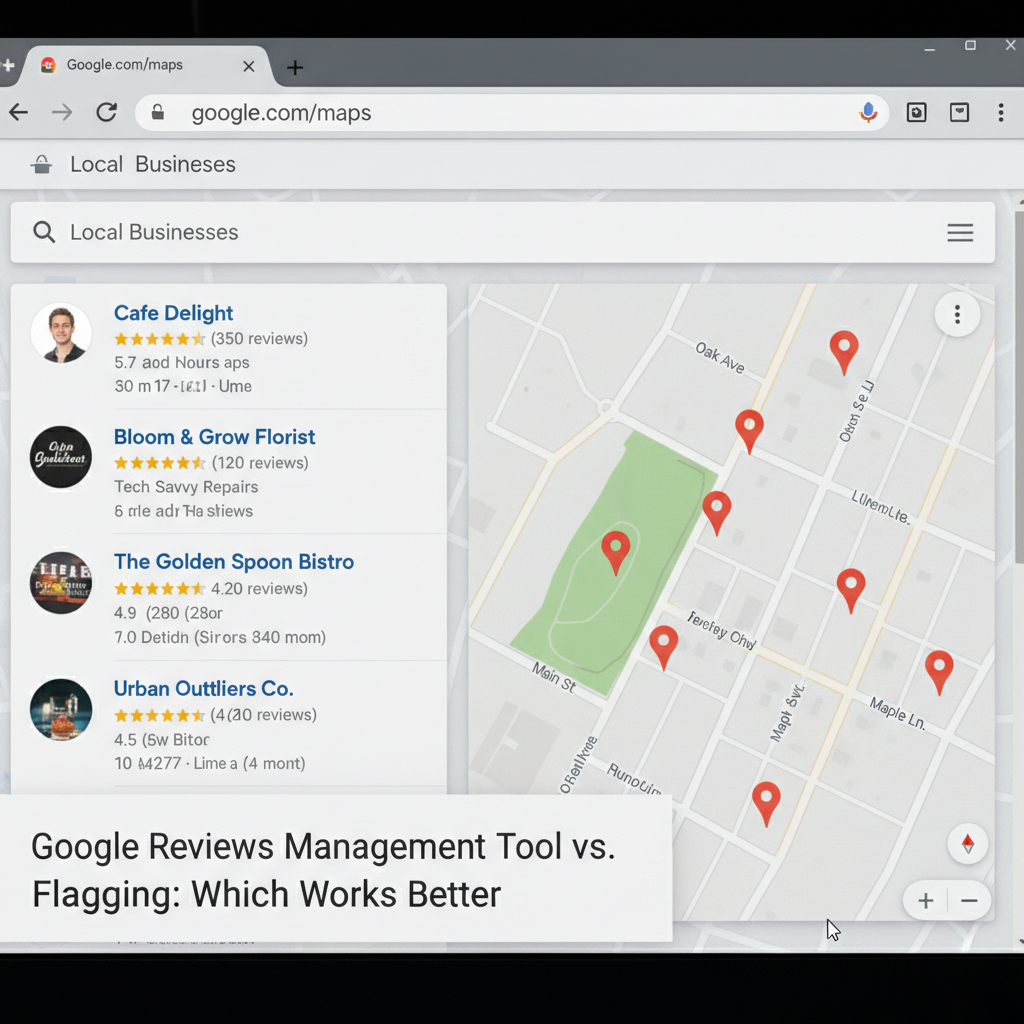
Google Maps search results showing local business ratings - Google Reviews Management Tool vs. Flagging: Which Works Better?
The Process and Limitations of Flagging Reviews
Flagging reviews is a manual process that involves reporting a review to Google for violating its policies, such as Google's Prohibited and Restricted Content policy. This process is typically used when a review is suspected to be fake, irrelevant, or inappropriate. Flagging requires you to identify the specific policy violation and submit a request for removal through your Google Business Profile.
One memorable case involved a hospitality client who had received a barrage of negative reviews following an unfortunate event at their resort. After carefully scrutinizing each review, we identified several that violated Google's policies. By flagging these reviews, we were able to have them removed, significantly mitigating the damage to the client's reputation.
However, the flagging process can be time consuming and does not guarantee immediate results. Google's review team assesses each flagged review individually, which can delay the resolution. According to our insights from the "How Long Does It Take Google to Remove a Review in 2026?", the process can take anywhere from a few days to several weeks.
Additionally, the burden of proof lies with the business. You must provide compelling evidence that the review violates Google's policies. This can be challenging, especially if the review is borderline or if the content is ambiguous. Businesses often find themselves in a frustrating cycle of flagging, waiting, and sometimes having to appeal decisions.
Comparing the Effectiveness of Tools vs. Flagging
When deciding between using a Google Reviews Management Tool and flagging, it’s essential to consider the nature of your business and the volume of reviews you handle. For businesses with a high volume of customer interactions, a management tool offers a proactive approach to maintaining a positive online presence. These tools provide a way to keep a pulse on customer sentiment and facilitate timely responses.
On the other hand, flagging is more of a reactive measure, suitable for addressing specific incidents of policy violations. It's a necessary step when dealing with harmful content that directly impacts your business's reputation. However, it should not be the sole strategy for managing reviews.
Our experience shows that the most successful businesses use a combination of both strategies. By leveraging the strengths of a management tool to foster positive interactions and using flagging as a corrective measure when necessary, businesses can maintain a balanced and healthy online reputation.
An illustrative example is a retail client we worked with, who utilized a management tool to monitor trends in their reviews. When they detected a sudden spike in negative feedback following a product recall, they were able to swiftly address the concerns, while also flagging reviews that were particularly damaging and unfounded. This dual approach allowed them to maintain consumer trust and mitigate potential fallout.

Dashboard showing review removal results and success metrics - Google Reviews Management Tool vs. Flagging: Which Works Better?
Best Practices for Google Reviews Management
To maximize your efforts in managing Google reviews, consider these best practices:
Regular Monitoring: Keep track of reviews on a daily basis to catch any negative trends early.
Timely Responses: Acknowledge both positive and negative reviews promptly to show customers you value their feedback.
Data Analysis: Use insights from management tools to understand customer sentiment and make informed business decisions.
Clear Policy Understanding: Familiarize yourself with Google's review policies to effectively identify reviews that can be flagged.
Engage Positively: Encourage satisfied customers to leave reviews, and address negative experiences with empathy and solutions.
Incorporating these practices into your review management strategy can significantly enhance your business's online reputation. For more detailed strategies, consider exploring our reputation management best practices.
Conclusion: Which Approach Should You Choose?
Ultimately, the choice between a Google Reviews Management Tool and flagging depends on your business's unique needs and challenges. If you handle a large volume of reviews and aim to proactively manage your reputation, investing in a management tool may be beneficial. However, if you are primarily concerned with addressing specific incidences of review manipulation or non-compliance, then flagging remains a necessary component of your strategy.
Remember, maintaining a positive online reputation is an ongoing process that requires vigilance, adaptability, and a strategic approach. By combining the strengths of both tools and flagging, you can ensure a comprehensive defense against the potential pitfalls of online reviews.
For businesses unsure of where to start, consulting with experts like our BGR Removal team can provide clarity and assistance in navigating this complex landscape. Whether you need help with removing negative Google reviews or understanding what reviews can be removed, we're here to support your business's reputation management efforts.
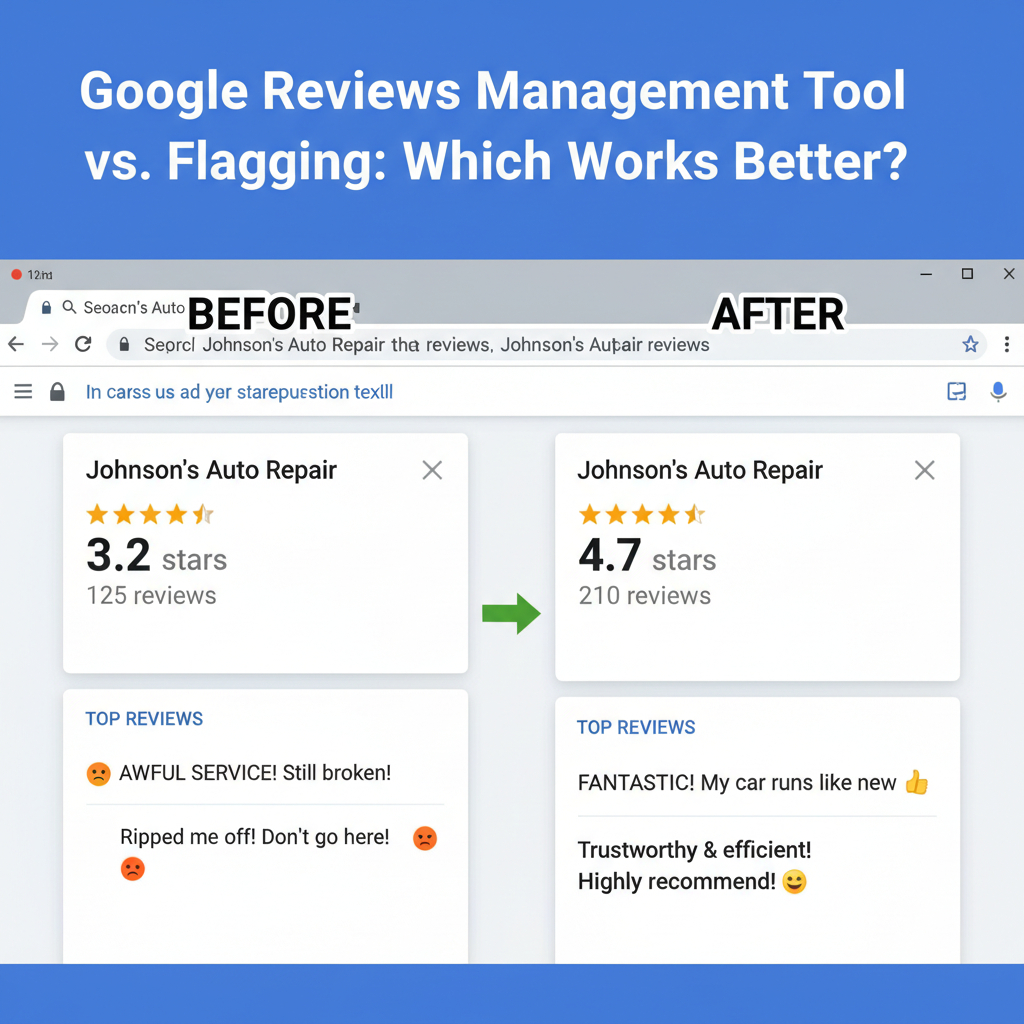
Before and after comparison showing improved business ratings - Google Reviews Management Tool vs. Flagging: Which Works Better?
Frequently Asked Questions
What is the main advantage of using a Google Reviews Management Tool?
A Google Reviews Management Tool offers businesses the ability to monitor and respond to reviews in real-time, providing insights into customer sentiment and allowing for proactive management of their online reputation.
Can flagging reviews guarantee their removal?
Flagging reviews does not guarantee removal. Each flagged review is individually assessed by Google, and only those that violate their policies are removed. The process can be lengthy and requires clear evidence of a policy violation.
How can I effectively use both tools and flagging in my strategy?
Integrate a management tool to monitor and respond to reviews promptly, and use flagging for specific cases of policy violations. This dual approach ensures comprehensive management of your online reputation.
What are some common pitfalls to avoid when managing Google reviews?
Avoid ignoring reviews, delaying responses, and failing to analyze feedback trends. Engaging with customers promptly and positively is key to maintaining a good reputation.
Is there a cost associated with using a Google Reviews Management Tool?
Yes, these tools typically require a subscription fee. However, they can offer significant value in terms of time savings and improved customer relationship management.