Earlier this year, I sat down with a small business owner named David, whose frustration was palpable. With a thriving café in downtown Denver, he'd recently been blindsided by a series of reviews that seemed to stem from a single disgruntled customer. This barrage of negative feedback not only threatened his stellar 4.8-star rating but also risked damaging his hard-earned reputation. From my experience working with hundreds of businesses, I knew that navigating Google’s content policy for reviews could be a daunting task for business owners like David.
If you're reading this, chances are you've faced a similar challenge, perhaps even feeling helpless as questionable reviews pile up on your Google Business Profile. The rules governing what can and cannot be posted are shaped by Google’s comprehensive content policies. Understanding these policies is crucial for anyone looking to maintain their business's online integrity. From my position as part of a team with over a decade of experience in reputation management, I can assure you that knowledge of these guidelines is not just advantageous—it's essential.
This article will unravel the complexities of Google's content policy for reviews as of 2026, offering insights into the nuances that can make or break a business's digital footprint. You’ll learn about prohibited practices, how to flag inappropriate content effectively, and the best practices for maintaining a positive online image. Moreover, understanding these guidelines will help you strategize better responses to reviews, preserving your business's credibility in the ever-competitive online marketplace. Let's dive into the intricacies of what Google expects from reviews and how you can align your business practices accordingly.
Understanding Google's Content Policy for Reviews
Google’s review content policy is an integral component of maintaining a fair and trustworthy platform for both businesses and consumers. This policy, governed by the Google Business Profile Help, delineates what’s acceptable and what isn’t when it comes to Google reviews. At its core, the policy is designed to ensure that reviews are genuine reflections of customer experiences, free from conflicts of interest and inappropriate content.
The policy explicitly prohibits reviews that contain deceptive or misleading content, which can include fake reviews, reviews written by employees posing as customers, or incentivized reviews. Additionally, any content that could be considered offensive such as hate speech, harassment, or spam is strictly forbidden. Google's guidelines emphasize the importance of authenticity, encouraging users to share honest, unbiased accounts of their experiences.
For business owners, understanding these stipulations is not just about compliance it's about leveraging this knowledge to uphold the integrity of your review profile. When you’re aware of what constitutes a violation, you can better protect your business against malicious activity and potentially harmful reviews. In our extensive experience, businesses that actively monitor and manage their reviews are often more successful in maintaining a positive online reputation.
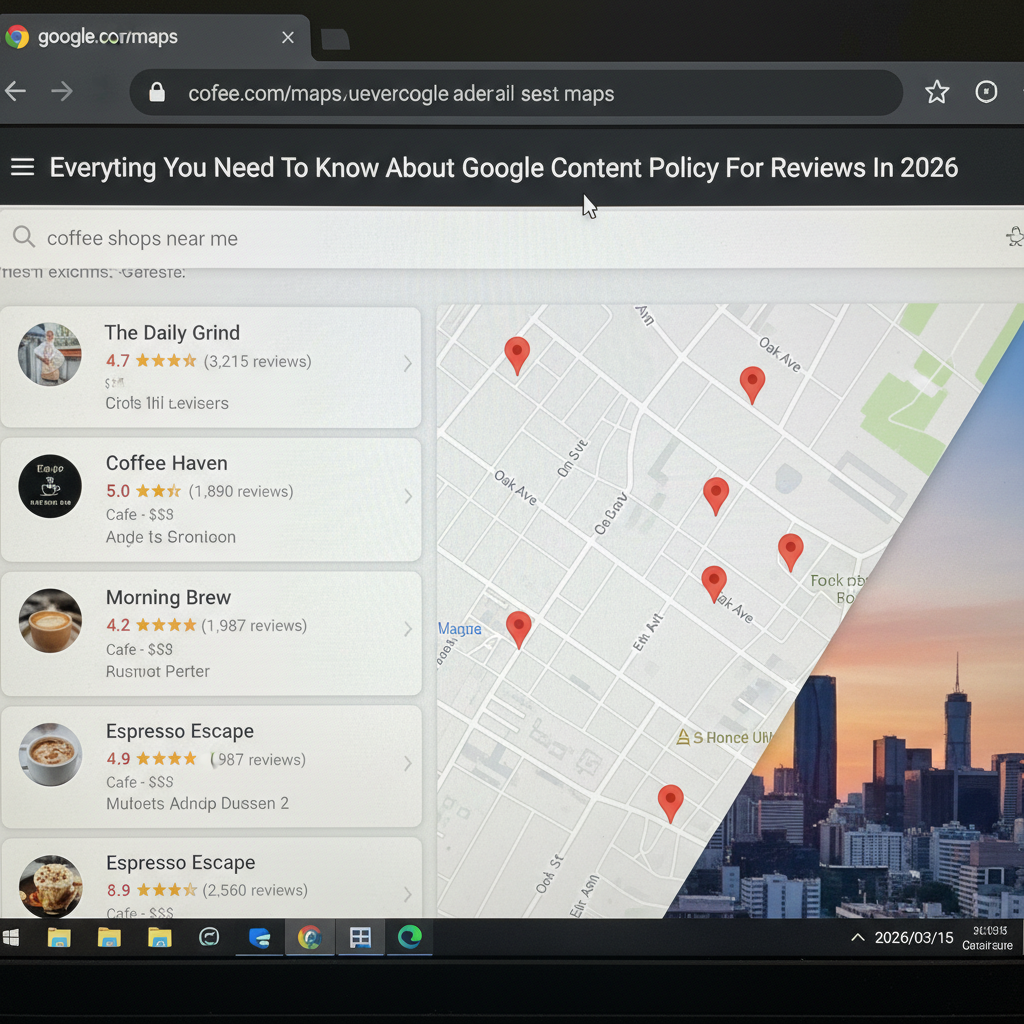
Img: Google Maps search results showing local business ratings - Everyting You Need To Know About Google Content Policy For Reviews In 2026
Flagging Inappropriate Reviews: A Step-by-Step Guide
One case that stands out in my career involved a tech startup in New York grappling with a slew of negative reviews from a competitor. The reviews were not only damaging but also blatantly against Google's content policies. The key to resolving this issue lay in understanding how to properly flag these reviews for removal.
Flagging a review is a straightforward process, though it requires careful attention to detail. First, navigate to your Google Business Profile and locate the review in question. Click on the three vertical dots next to the review, then select “Flag as inappropriate.” This action alerts Google to the potential policy violation, initiating the review process.
It’s crucial to provide a concise and clear explanation of why the review violates Google's policies. For instance, if it’s suspected that a competitor is behind the review, indicate evidence that supports this claim. From my experience, providing screenshots or other documentation can expedite the review process.
Once flagged, Google will evaluate the review based on its content policies. While most cases are resolved within a few business days, complex situations may require additional time. If your initial request is denied, Google allows for appeals, during which you can present additional information. Being persistent and methodical in your approach often yields the best results. Our detailed article on Google's review removal policy can offer further insights into this process.
The Role of Review Management in Protecting Your Business
Managing online reviews is not just about removing the bad ones—it's about cultivating a positive presence. A proactive review management strategy can help insulate your business from the occasional negative review. This involves not only responding appropriately to feedback but also encouraging satisfied customers to leave positive reviews.
In our work with over 500 businesses, we’ve found that those who actively encourage customer feedback tend to see a more balanced and genuine portrayal of their services online. This approach not only enhances visibility but also builds trust with potential customers who might be scrutinizing your business reputation. For example, one of our clients, a Miami-based dentist, saw a 40% increase in positive reviews after implementing a structured feedback mechanism.
Additionally, managing reviews effectively means responding to both positive and negative feedback professionally. This shows that you value customer input and are committed to improving your service. For guidance, you might explore our article on how to reply to bad Google reviews for practical examples and templates.
Finally, integrating a review monitoring tool can significantly streamline this process, providing alerts whenever new reviews are posted and offering insights into trends over time. By staying informed, you can act swiftly, maintaining the integrity of your business’s online reputation.
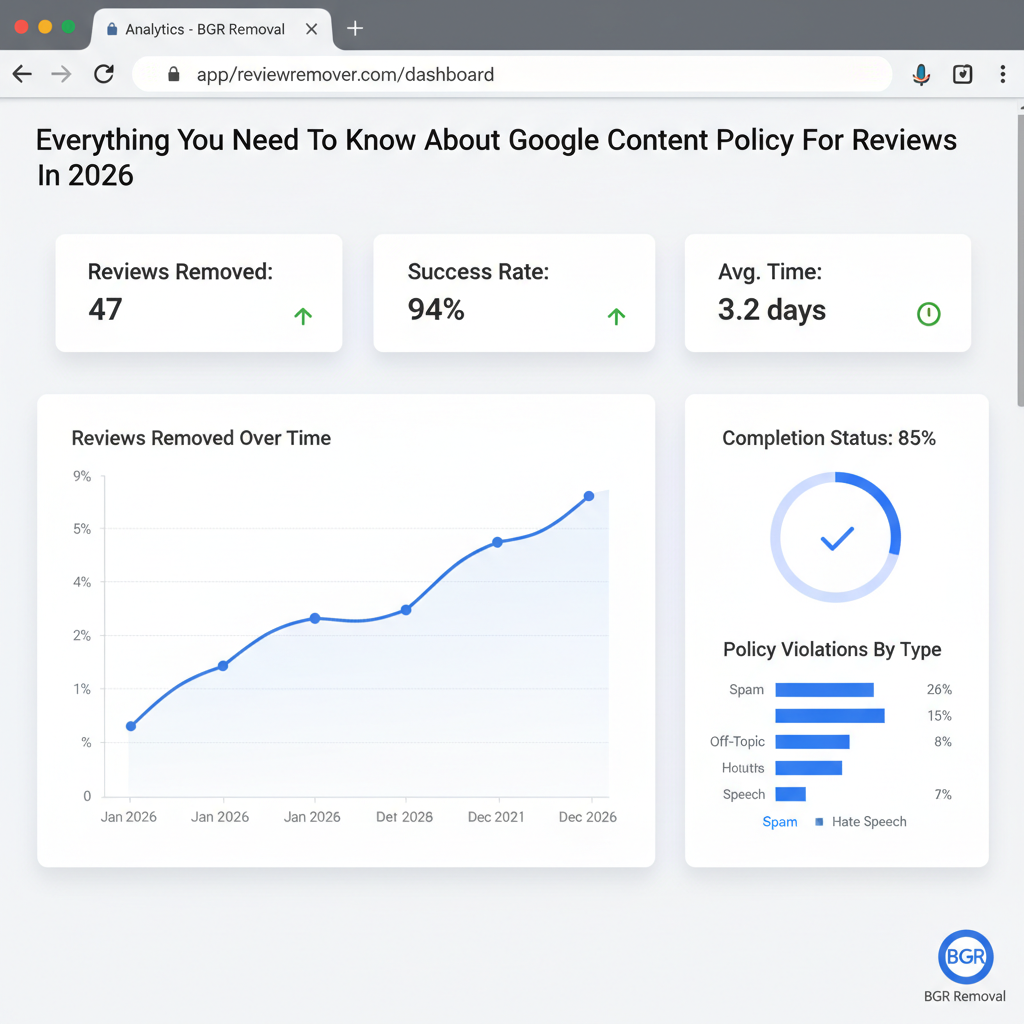
Dashboard showing review removal results and success metrics - Everyting You Need To Know About Google Content Policy For Reviews In 2026
Legal Considerations and Compliance
Understanding the legal landscape related to online reviews is crucial for businesses navigating Google’s policies. The Federal Trade Commission’s (FTC) guidelines on endorsements play a pivotal role in shaping what is permissible. These guidelines stress the importance of transparency and truthfulness in online reviews, aligning closely with Google's stance on authenticity.
For instance, businesses must avoid soliciting reviews in exchange for discounts, as this could be construed as a paid endorsement, violating FTC guidelines. Similarly, posting fake reviews can lead to significant legal repercussions, including fines and damage to both reputation and consumer trust.
Moreover, compliance is not just about avoiding negative outcomes; it's about fostering a culture of transparency and integrity. Businesses that adhere to these guidelines often find themselves better positioned in the marketplace, as consumers increasingly value honesty and authenticity. Therefore, understanding and implementing these legal considerations is integral to a successful review management strategy.
For more comprehensive coverage on Google's guidelines, our breakdown of what types of reviews can be removed provides an excellent resource for businesses looking to ensure compliance and build a robust online presence.
Dealing with Negative Reviews Constructively
While the knee-jerk reaction to negative reviews might be defensive, a more nuanced approach can yield better results. I remember a client, a restaurant owner in Los Angeles, who initially wanted to delete any bad reviews, but through strategic responses and transparency, he turned his critics into loyal customers.
When crafting responses to negative reviews, it's crucial to remain calm and professional. Acknowledge the customer's experience, apologize for any shortcomings, and offer a practical solution or compensation if appropriate. This not only helps in mollifying disgruntled customers but also showcases your commitment to customer satisfaction to prospective clients.
Furthermore, using negative reviews as a learning tool can be invaluable. By analyzing these reviews, you can identify common pain points and address them proactively, thereby enhancing your service offerings. Our article on responding to reviews effectively provides additional strategies and templates to help you navigate this often challenging aspect of business management.
Ultimately, handling negative reviews constructively can turn potential setbacks into opportunities for growth and improvement, reinforcing your brand's resilience and ability to adapt.
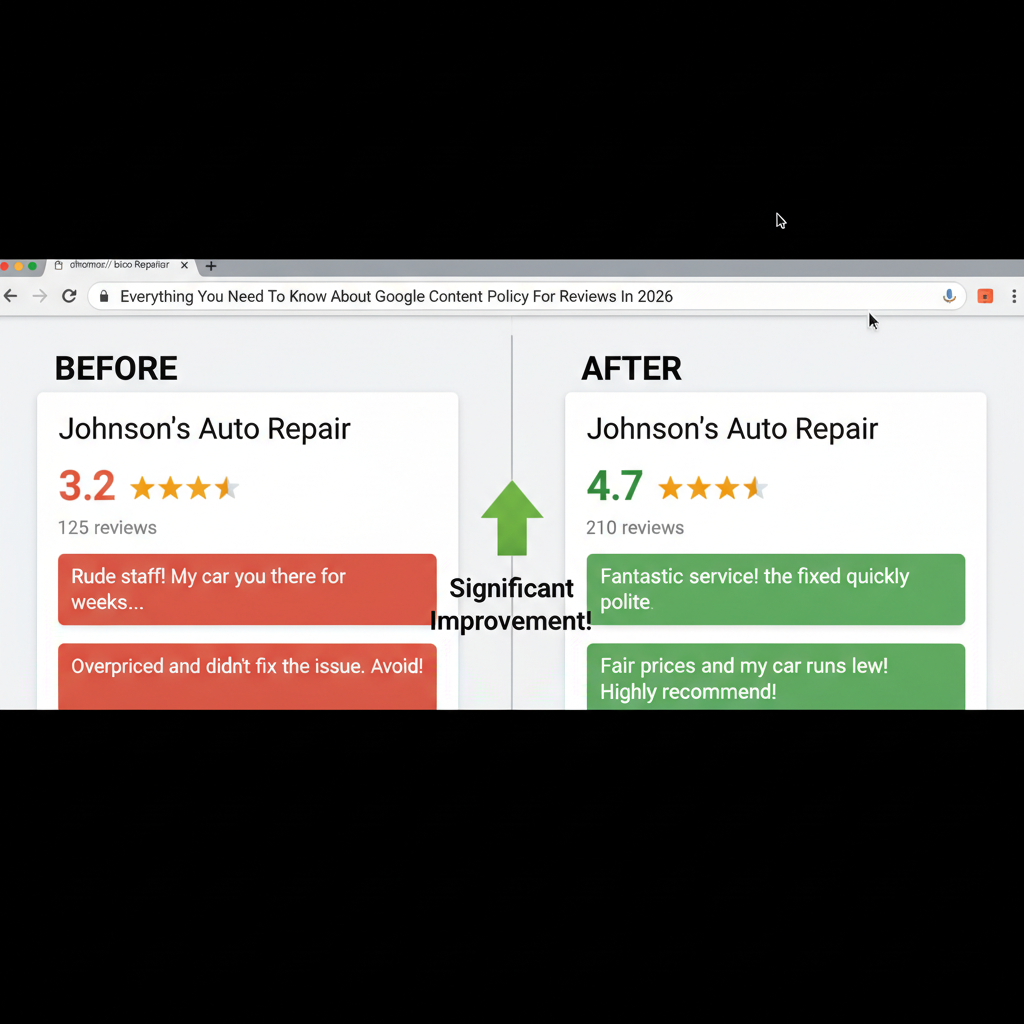
Before and after comparison showing improved business ratings - Everyting You Need To Know About Google Content Policy For Reviews In 2026
Frequently Asked Questions
What types of reviews does Google prohibit?
Google prohibits reviews that are deceptive, misleading, contain inappropriate content such as hate speech, harassment, and spam. Reviews must reflect genuine customer experiences and comply with the Google Business Profile guidelines.
How long does it take for Google to remove a flagged review?
Typically, Google reviews flagged as inappropriate are reviewed within a few business days. However, complex cases might require more time, especially if additional information or an appeal is involved.
Can I incentivize customers to leave positive reviews?
No, incentivizing reviews is against both Google’s and the FTC’s guidelines. Reviews should be unbiased and reflect genuine customer experiences. Offering incentives could result in penalties or removal of reviews.
What should I do if a competitor is posting fake reviews?
Flag these reviews as inappropriate and provide evidence to support your claim. Consistent documentation can aid Google's evaluation process. For more detailed steps, refer to our guide on Google’s review removal policy.
How can monitoring tools help manage reviews?
Review monitoring tools alert you to new reviews and provide insights into trends, helping you respond promptly and track your business's online reputation. They streamline the process and ensure you stay informed.