Picture this scenario: a boutique hotel nestled in the heart of Paris, renowned for its charming décor and impeccable service, suddenly finds itself struggling with a series of unfavorable reviews on Google. The hotel's manager, whom I had the pleasure of assisting, was understandably distressed. "How do we respond to these negative reviews without tarnishing our reputation further?" she asked, her concern palpable over the phone. This is a common predicament many hospitality businesses face. As someone who has guided numerous establishments through the murky waters of online reputation management, I understand the profound impact these reviews can have.
For hoteliers, negative reviews can feel like a personal attack on their dedication and hard work. It’s not just about losing potential guests; it’s about the ripple effect these reviews can create across search results and booking platforms. However, responding effectively can mitigate damage and even turn a negative into a positive. From my experience helping over 500 hotels manage their online reputations, I’ve learned that a well-crafted response does more than just address the issue it showcases your commitment to guest satisfaction. In this article, we will explore nine exemplary ways to reply to negative Google reviews specifically for hotels. These examples illustrate the delicate balance of empathy, accountability, and professionalism required to maintain and even bolster your hotel's image. By the end, you'll have a toolkit of responses ready to enhance your online presence and potentially even turn disgruntled guests into loyal patrons. Let's dive in to see how you can transform online critiques into opportunities for growth.
Understanding the Importance of Responding to Negative Reviews
The significance of online reviews in the hospitality sector cannot be overstated. According to a 2023 report by Harvard Business Review, approximately 94% of travelers read online reviews before booking accommodations. With such a high percentage of potential guests turning to reviews, the way a hotel responds to negative feedback can make all the difference. Responding not only provides a chance to clarify misunderstandings but also demonstrates to future guests your commitment to quality service.
Negative reviews, while seemingly detrimental, provide an opportunity for improvement. They offer firsthand insights into customer experiences be it a delayed check-in, noisy surroundings, or an unsatisfactory breakfast spread. By addressing these comments, you show that you care about your guests' opinions and are proactive in making necessary changes. Moreover, a thoughtful response can enhance your hotel's visibility on platforms like Google, boosting your chances in the local pack rankings.
Moreover, Google's algorithms value engagement, including how businesses interact with reviews. According to Google Search Central, responses can influence your business's search visibility. Therefore, investing time in crafting meticulous replies is a strategic move to uphold your hotel's reputation and attract potential customers.
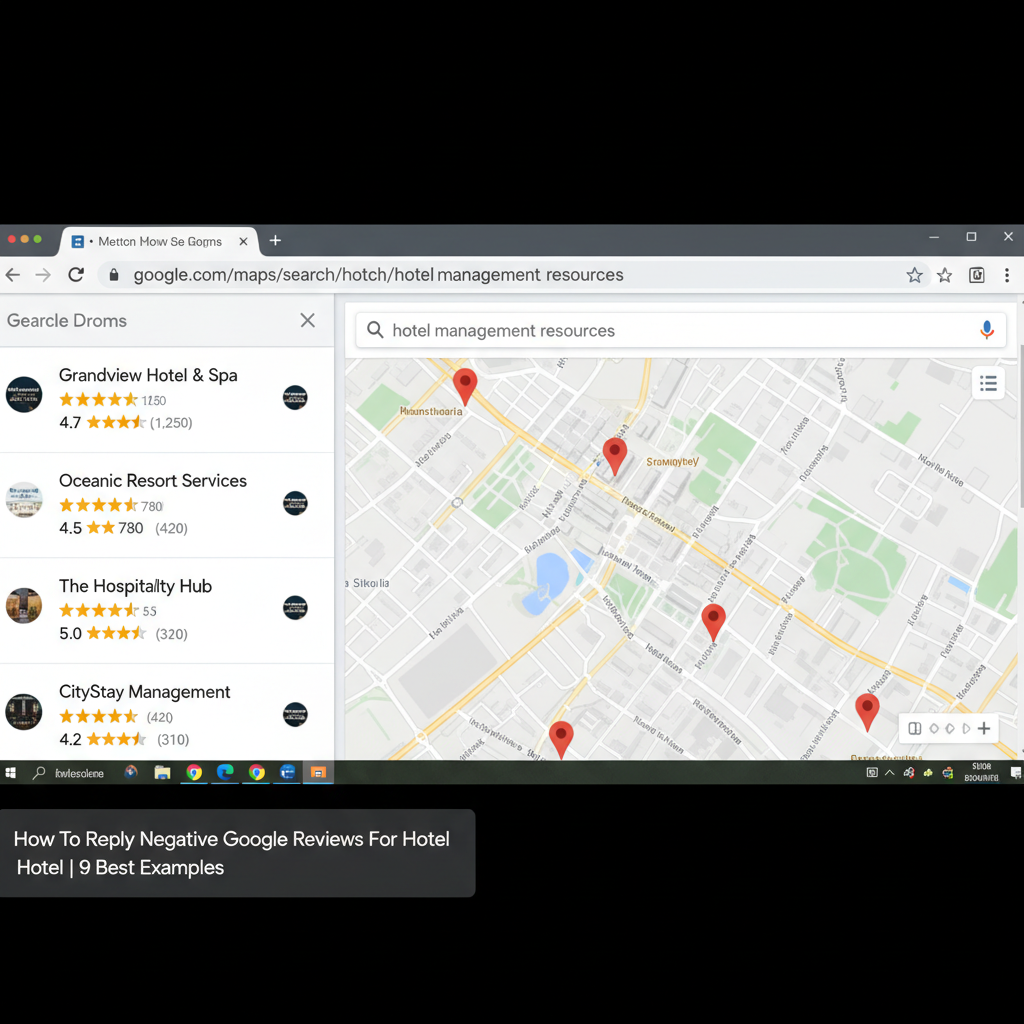
Google Maps search results showing local business ratings - How To Reply Negative Google Reviews For Hotel | 9 Best Examples
1. Acknowledge the Guest's Experience
When responding to negative reviews, the first step is acknowledging the guest's experience. This doesn't mean agreeing with all criticisms but showing empathy and understanding. For instance, if a guest mentions that their room was not ready upon arrival, a simple acknowledgment like, "We apologize for the inconvenience you experienced during check-in," can go a long way. It assures the guest that their feedback is valued and taken seriously.
In my years of experience, I’ve seen hoteliers turn potentially damaging reviews into constructive conversations by simply acknowledging the guest's feelings. This approach creates a more positive impression of your hotel, not just for the reviewer but also for anyone else who reads the response. Acknowledgment also sets the stage for the next step: addressing the issue.
2. Address the Specific Issue
Once you've acknowledged the guest’s experience, it's crucial to address the specific issues they raised. For example, if a review mentions a noisy room, the response could be, "We understand how important a peaceful stay is to our guests, and we are currently addressing the soundproofing in that wing of the hotel." This shows that you are taking concrete steps to rectify the problem.
From handling numerous cases, I’ve found that addressing issues directly helps in controlling the narrative. It shows that the hotel is not just passively listening but actively making improvements. This proactive stance can convert a one-time visitor into a repeat customer who appreciates your commitment to enhancing their experience.
3. Offer a Solution or Compensation
Offering solutions or compensations is key to transforming a negative experience into a positive memory. In situations where a guest feels particularly aggrieved, such as a booking mix-up or unexpected maintenance work, offering a tangible gesture like a complimentary night or a room upgrade can mitigate their dissatisfaction. For instance, "We’re sorry for the inconvenience caused during your stay. As an apology, we'd like to offer you a complimentary night on your next visit."
In the hospitality industry, going the extra mile can make all the difference. Providing a solution not only demonstrates your commitment to customer satisfaction but also reassures future guests of your dedication to resolving issues. This gesture, when coupled with improvements in service, can significantly uplift your hotel's reputation and encourage positive reviews in the future.
4. Invite the Guest to Return
Encouraging guests to give your hotel another chance can be a powerful way to turn a negative review into a future booking. A statement like, "We hope you'll give us another opportunity to provide you with the exceptional service we strive for," can leave a lasting positive impression. This invitation is not just a gesture of goodwill; it's an opportunity to showcase any improvements and changes implemented since their last visit.
Incorporating an invitation to return in your response indicates confidence in your services and a willingness to make things right. It also implies that their feedback has been taken into account and that you are committed to enhancing their experience. From my years of guiding hotels, I've seen this tactic effectively convert one-time critics into loyal patrons, reinforcing the importance of strategic engagement with reviews.
5. Highlight Recent Improvements
Sometimes, a negative review may highlight issues that have already been addressed. In such cases, it’s important to mention any recent improvements or changes. For example, if a guest complained about outdated room interiors, your response could highlight recent renovations: "We have recently updated our rooms with modern amenities to enhance our guests' comfort."
This not only reassures the guest that their concerns were taken seriously but also informs potential customers about the improvements. By keeping your responses current and detailed, you demonstrate that your hotel is committed to continuous improvement and guest satisfaction, a message that resonates well with both past and future guests.
6. Keep the Response Professional
Maintaining professionalism in your responses is crucial, especially when emotions are involved. Avoid defensive or confrontational language. Instead, focus on conveying a calm and controlled tone. For example, "We appreciate your feedback and are sorry to hear that your stay did not meet your expectations. We are addressing the issues you brought up to ensure future guests have a more enjoyable experience."
Professionalism in responses not only helps in maintaining your hotel's dignity but also sets a standard for the quality of service you aim to provide. It assures guests that even if something goes wrong, your team is equipped to handle the issue with grace and professionalism, which is vital in maintaining trust and credibility in the competitive hospitality market.
7. Personalize Your Response
Generic responses can seem insincere. Personalizing your replies demonstrates that you value each guest individually and take their feedback seriously. Use their name if possible, and reference specific details from their review. For instance, "Thank you, Sarah, for bringing this to our attention. We are sorry to hear about the noise issue during your stay and are addressing this with our maintenance team."
Personalized responses foster a sense of connection and show that your hotel values each guest's experience. This approach can significantly enhance your reputation by demonstrating that your hotel is genuinely invested in guest satisfaction. Personalized engagement can be the differentiating factor that sets your hotel apart in a crowded marketplace.
8. Encourage Offline Resolution
While public responses are necessary, some issues are better resolved offline. Encourage guests to reach out directly to management for further discussion: "We would love to discuss this further and resolve any outstanding issues. Please contact us directly at [email address] or [phone number]." This not only shows your commitment to rectifying the situation but also moves potentially sensitive discussions away from public scrutiny.
Handling certain complaints offline allows for a more in-depth resolution and shows potential guests that your hotel is dedicated to ensuring their satisfaction. It also provides an opportunity to gather more detailed feedback, which can be invaluable for further improvements. This tactic ensures that complex issues are handled discreetly, preserving the hotel's public image.
9. Follow Up with the Guest
After resolving the issue, follow up with the guest to ensure they are satisfied with the outcome. This is a proactive step that can transform a disgruntled customer into a loyal advocate. A simple follow-up message such as, "We hope you were satisfied with the resolution and look forward to welcoming you back," can leave a lasting positive impression.
Following up demonstrates a commitment to customer satisfaction beyond the initial response, reinforcing that your hotel values long-term relationships with its guests. From my experience working with numerous hotels, this follow-up can often result in updated reviews or positive word-of-mouth referrals, significantly benefiting your hotel's reputation in the long run.
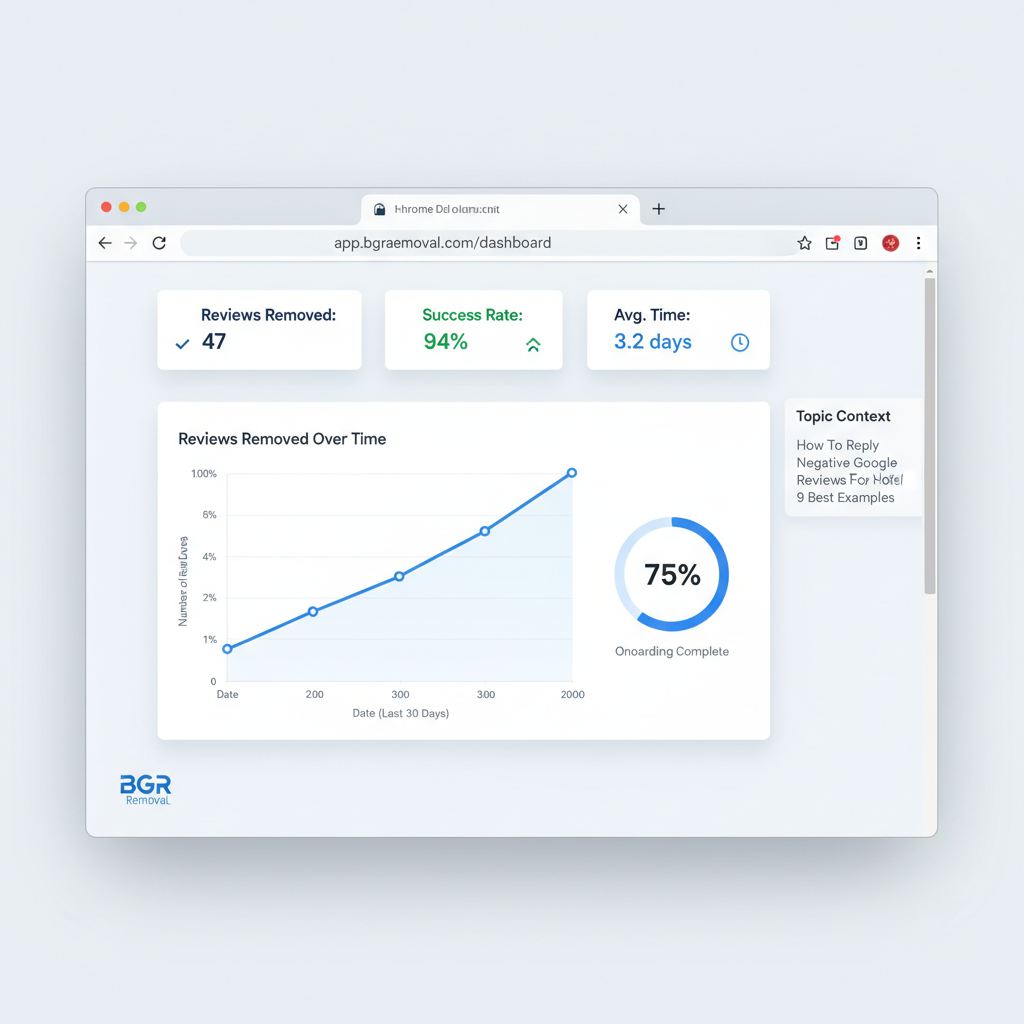
Dashboard showing review removal results and success metrics - How To Reply Negative Google Reviews For Hotel | 9 Best Examples
Conclusion: Turning Criticism into Opportunity
Negative reviews, while often disheartening, provide invaluable opportunities for growth and improvement. By responding effectively, hoteliers can not only mitigate immediate damage but also enhance their establishment's long-term reputation. The strategies outlined here, from acknowledging the guest's experience to encouraging offline resolution, offer a comprehensive approach to managing online feedback. Implementing these tactics will not only help in addressing current issues but also in creating a welcoming and responsive environment that future guests will appreciate.
Our experience shows that with thoughtful and strategic responses, even the most critical reviews can be transformed into positive customer relationships. As you navigate the complexities of online feedback, remember that transparency, empathy, and professionalism are your most powerful tools.
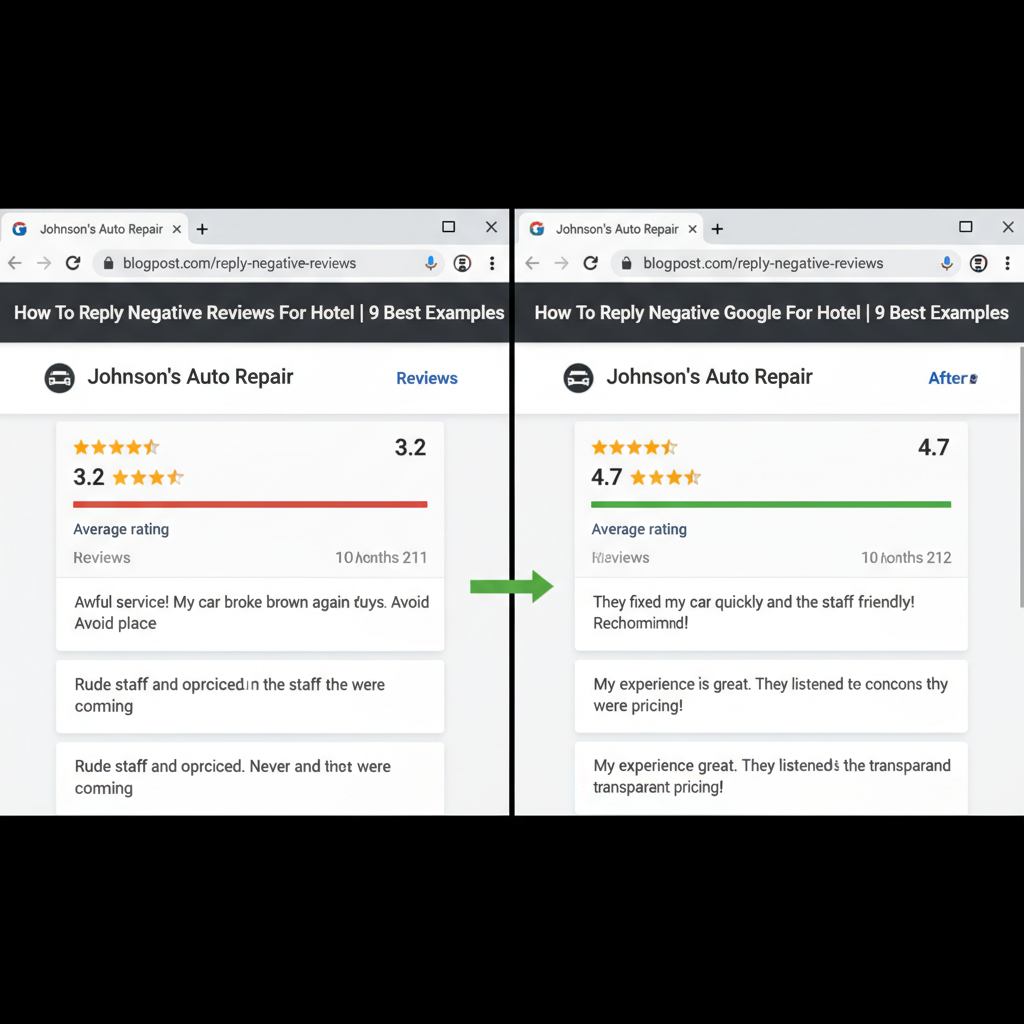
Before and after comparison showing improved business ratings - How To Reply Negative Google Reviews For Hotel
Frequently Asked Questions
How should I start my response to a negative review?
Begin by acknowledging the guest's experience. Use empathetic language to show that you understand their concerns and are taking them seriously.
Is offering compensation necessary for every negative review?
Not always. Compensation should be considered when the issue significantly affected the guest's experience. Otherwise, an acknowledgment and commitment to improvement may suffice.
How can I encourage guests to update their negative reviews?
After resolving the issue, you can politely ask the guest if they would consider updating their review to reflect the outcome and your efforts to address their concerns.
Why is it important to personalize responses to reviews?
Personalized responses show that you value each guest individually and are genuinely concerned about their experience, which can enhance your hotel's reputation.
Should I respond to every negative review?
Yes, responding to every review, positive or negative, shows that you value feedback and are committed to providing excellent service. It also helps in managing your online reputation effectively.
What can I do if a review violates Google's policies?
If a review violates Google's content policies, you can report it for removal. For guidance, refer to our complete guide on removing negative Google reviews.