Picture this scenario: A few months back, I was contacted by a bakery owner in New York who had stumbled upon a negative Google review from a few years ago that was unjustly affecting their reputation. This particular review, steeped in inaccuracies, was not just a thorn in the side but a potential business deterrent. Similar situations aren’t uncommon in my 8+ years of helping businesses manage their online reputations, I’ve encountered numerous business owners who stumble upon old reviews that still haunt their Google Business Profiles. If you’re reading this, chances are you’ve also grappled with an old review that seems to linger like a ghost of business past.
It’s a shared frustration: those reviews that somehow eluded initial detection and action, only to resurface now as a priority. The question is, can these entrenched reviews be removed after all this time? From my experience working with hundreds of businesses, I can confidently say yes under the right circumstances, old reviews can indeed be removed, although the process can be intricate. In this comprehensive guide, we'll delve into the nuances of Google's policies, explore strategic approaches to handle these reviews, and examine practical steps that can lead to their removal.
Understanding the ins and outs of Google’s review system is crucial for any business owner looking to maintain a pristine online presence. Throughout this blog, we'll explore real-life examples, dissect Google’s Prohibited and Restricted Content policy, and offer actionable insights on navigating this complex terrain. By the end, you'll be equipped with the knowledge and strategies to tackle those lingering reviews effectively. Let’s dive in and uncover how you can reclaim your business's online narrative.
Understanding Google's Review Policies
Google, in its quest to maintain transparency and authenticity, has established a set of guidelines known as the Prohibited and Restricted Content policy. This policy is designed to filter out reviews that violate content standards, including those that are deceptive, irrelevant, or hateful. A crucial first step in removing an old Google review is determining whether it violates any of these guidelines. For instance, does the review contain false information or offensive language? Is it a review from someone who didn’t actually experience your services?
From my experience, a common misconception is that time dilutes the validity of reviews. However, Google’s policies apply irrespective of the age of the review. For instance, a review that's four years old and includes hate speech is just as removable as one posted yesterday. This understanding is vital for businesses that have let old reviews slide, perhaps due to oversight or lack of immediate impact. It’s worth noting that Google uses a combination of machine learning and human review to assess flagged content, making the reporting process both robust and fair.
However, not all reviews will meet the criteria for removal. Google's stance emphasizes authentic interactions and experiences, meaning that disagreements over a service or product experience, if genuine, won’t qualify for removal. For those reviews that do fall under policy violations, a systematic approach to flagging them is required. This is where understanding Google’s review process can advantageously position a business to take appropriate action.
Google Maps search results showing local business ratings - Can Google Reviews Be Removed After Years? (Old Review Removal Guide)
Steps to Flag and Remove Old Google Reviews
Once you’ve determined that a review potentially violates Google’s policies, the next step is to flag it for removal. This process, while straightforward, benefits from meticulous attention to detail. Start by accessing your business's Google Business Profile, navigating to the Reviews section, and identifying the problematic review. Clicking on the ‘flag as inappropriate’ option initiates the reporting process, which sends the review to Google for evaluation.
In cases where businesses have an extensive number of reviews, leveraging a Google Reviews Management Tool vs. Flagging can streamline the process significantly. These tools can help manage and flag multiple reviews efficiently, ensuring that none slip through the cracks due to oversight. They also provide analytics that can be vital in understanding patterns over time, which is particularly helpful for identifying clusters of fake or inappropriate reviews.
One real-life case involved a client from the hospitality sector who discovered several old reviews from an ex-employee. These reviews contained misleading information and were detrimental to the business’s reputation. By systematically flagging these reviews and providing Google with context and evidence of the ex-employee's identity, the business was able to successfully appeal for their removal. Such cases underscore the importance of documentation and context when it comes to disputing reviews with Google.
While the flagging process is crucial, patience is equally important. The timeline for review and removal can vary, as detailed in our guide on Google's review removal timelines. Businesses should prepare for the possibility of follow-up submissions if the initial request doesn't yield results. Persistence, combined with clear and factual reporting, often leads to successful outcomes.
Alternative Approaches to Addressing Old Reviews
Beyond flagging, businesses can employ a range of strategies to mitigate the impact of old reviews. One effective method is to respond publicly to the reviews, providing context or clarifying any misinformation. This approach not only demonstrates engagement but also shows potential customers that the business is proactive in resolving issues and transparent about any past challenges.
In some instances, reaching out directly to the reviewer can prove beneficial. This approach requires tact and diplomacy, as the goal is to resolve any grievances and encourage the reviewer to update or remove their review voluntarily. A case that stands out involved a small Texas retail business that had been unwittingly impacted by an old, negative review from a disgruntled customer. By reaching out with a sincere apology and offering a resolution, the business owner was able to turn a negative experience into a positive, with the customer amending their review to reflect a more positive outcome.
Moreover, focusing on generating new positive reviews can dilute the impact of older negative ones. Encouraging satisfied customers to share their experiences can significantly boost your business’s overall rating. For insights on optimizing your Google Business Profile to attract positive feedback, refer to our comprehensive optimization guide.
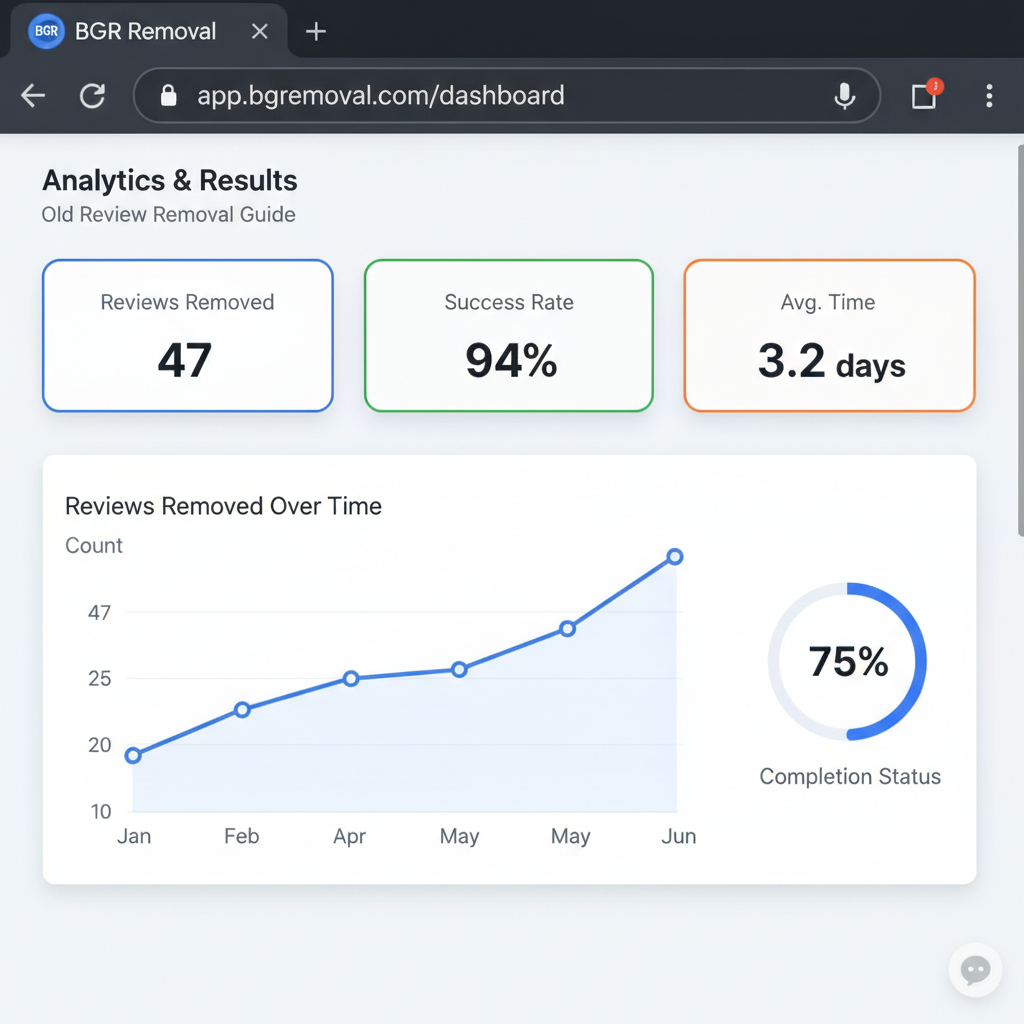
Dashboard showing review removal results and success metrics - Can Google Reviews Be Removed After Years? (Old Review Removal Guide)
The Role of Professional Reputation Management
For businesses facing persistent challenges with old reviews, professional reputation management services can be invaluable. These services, like those offered by our expert team, provide strategic oversight and leverage industry tools to address complex review issues. We’ve helped over 500 businesses navigate the intricacies of Google's review policies, using a tailored approach that aligns with each client’s unique needs.
Our experience shows that professional intervention can often accelerate the process of review removal and improve overall brand perception. With the ability to analyze review patterns and implement comprehensive strategies, reputation management experts ensure that businesses are not only reacting to reviews but actively shaping their online narratives.
For example, one of our clients in the real estate sector managed to reverse a downturn in their online reputation by employing our services. We identified a slew of outdated and misleading reviews, filed detailed reports to Google, and simultaneously launched a campaign to increase positive customer feedback. The result was a significant improvement in their online reputation and a corresponding uptick in business inquiries.
Conclusion: Reclaiming Your Online Narrative
While old Google reviews can feel like immovable fixtures on your business profile, the reality is that with a strategic approach and a dash of patience, they can be addressed effectively. The process involves a deep understanding of Google’s policies, meticulous flagging, and sometimes, direct engagement with reviewers. For businesses that find this daunting, professional reputation management services offer a reliable pathway to restoring and maintaining a favorable online image.
As a takeaway, focus on building a robust strategy that encompasses both handling old reviews and fostering positive new ones. This dual approach not only mitigates the impact of undesired reviews but also strengthens your brand’s credibility and trustworthiness. Remember, each review, whether positive or negative, is an opportunity for engagement and improvement. With the right strategies in place, you can confidently steer your business towards a resilient and positive online footprint.
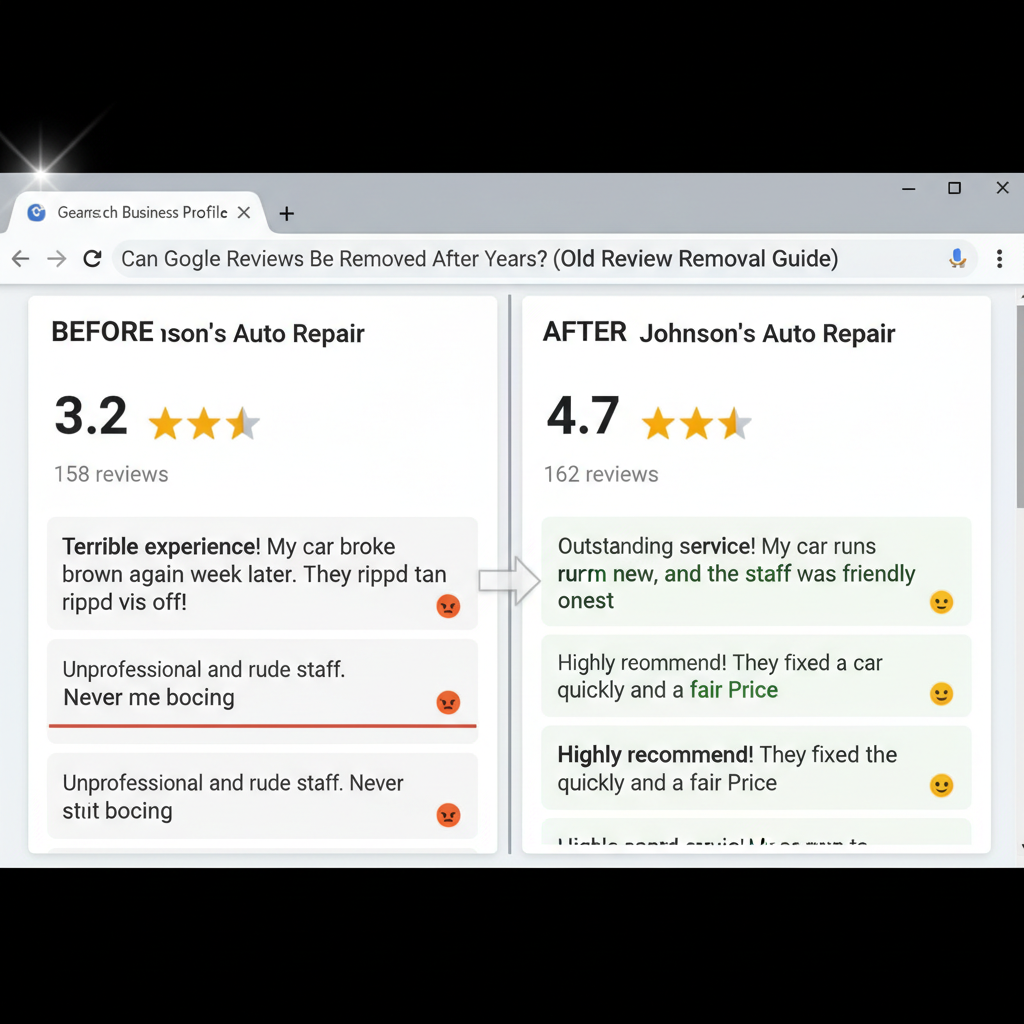
Before and after comparison showing improved business ratings - Can Google Reviews Be Removed After Years? (Old Review Removal Guide)
Frequently Asked Questions
Can I remove a Google review that is several years old?
Yes, you can remove a Google review that is several years old if it violates Google’s review policies. It must be flagged for review, and the process involves Google assessing the report for any policy infringements.
What types of old reviews can be removed?
Reviews that contain false information, hate speech, or are irrelevant to the business can be removed. You can learn more about which reviews qualify for removal in our article on types of Google reviews that can be removed.
Does the age of the review affect its removal?
No, the age of the review does not affect its eligibility for removal under Google's guidelines. If the review violates policies, it can be flagged irrespective of its age.
How long does it take Google to remove a flagged review?
The time frame for Google to act on a flagged review can vary. On average, it can take several days to weeks, depending on the complexity of the case and the volume of reviews Google is handling at the time.
Why might Google refuse to remove an old review?
Google may refuse to remove an old review if it does not violate their policies. If the review is a genuine account of a customer experience, even if negative, it will likely remain.
What should I do if my request to remove a review is denied?
If a removal request is denied, you can respond to the review publicly to provide your perspective. Additionally, consider reaching out to the reviewer directly or seek assistance from a professional reputation management service.
Can professional reputation management services help with old reviews?
Yes, professional reputation management services can provide strategies and tools to address old reviews effectively, boosting your business’s overall online reputation.