Picture this scenario: A small business owner in San Francisco called me in a panic. She had just noticed a slew of suspicious one star reviews on her Google Business Profile, all posted within a single afternoon. From my experience working with hundreds of businesses, I could immediately sense that these reviews were likely fake. Such situations aren't just frustrating; they can significantly impact a business's online reputation and, consequently, its bottom line. Over the past decade, our reputation management experts have assisted countless clients in navigating these murky waters of online reviews.
Understanding how to prove a Google review is fake can be the key to safeguarding your business's reputation. In today's digital age, where 94% of consumers read online reviews before making a purchase decision, the authenticity of these reviews is paramount. In this article, we'll delve into the intricacies of identifying fake reviews and provide a comprehensive evidence checklist to help you protect your business. You'll learn about specific red flags to watch for, how to gather evidence, and the steps to take to report these reviews effectively. Let's dive into the world of online reputation management and arm you with the tools necessary to maintain the integrity of your business's online presence.
Understanding the Impact of Fake Google Reviews
It's essential to grasp the profound impact that fake reviews can have on a business. A study from Harvard Business School found that a one-star increase in a Yelp rating could lead to a 5-9% increase in revenue. Conversely, fake negative reviews can diminish perceived quality and trustworthiness, deterring potential customers and slashing revenues. Google, a behemoth in the search engine world, heavily influences consumer decisions through its review platform. Therefore, it's critical to ensure that the reviews reflecting your business are genuine.
But what constitutes a fake review? Google's Prohibited and Restricted Content policy outlines several criteria: reviews that are not based on real consumer experiences, those promoting hate speech or offensive content, and reviews that contain spam or are off-topic. Understanding these guidelines is crucial for identifying which reviews can be contested and potentially removed.
When businesses are faced with the daunting task of tackling fake reviews, many are unsure where to start. This is where our comprehensive evidence checklist comes into play. By systematically gathering the right information, you can build a compelling case to present to Google, increasing your chances of having the offending reviews removed.
Google Maps search results showing local business ratings - How to Prove a Google Review Is Fake (Evidence Checklist)
The Evidence Checklist: Proving a Review is Fake
To prove a Google review is fake, you need a strategic approach backed by solid evidence. Here's a checklist that our team has refined over years of experience:
Profile Anomalies: Check the reviewer's profile for patterns multiple reviews posted on the same day, reviews that lack detail, or suspiciously similar feedback across different businesses.
Content Analysis: Scrutinize the language used. Fake reviews often use generic phrases or exaggerated claims. Cross-reference these with authentic reviews to spot inconsistencies.
Purchase Verification: If possible, verify whether the reviewer actually purchased a product or service from your business. This might involve checking your sales records or customer databases.
IP Address Check: Although more technical, IP analysis can reveal if multiple reviews originate from the same location, which is a red flag.
Time-Stamp Correlations: Look for clusters of reviews posted in a short time frame, which may indicate a coordinated attack.
Reviewer Behavior: Analyze the reviewer's behavior across platforms. Do they only leave negative reviews? Are they targeting a specific industry?
By focusing on these areas, you can build a robust case to present to Google. In our guide on how to remove malicious Google reviews, we further explore strategies for tackling this issue effectively.
Steps to Report Fake Reviews
Once you've gathered your evidence, the next step is to report the suspicious reviews to Google. Here's a detailed guide on the process:
Log into your Google Business Profile and navigate to the reviews section.
Identify the review you believe to be fake and click on the three vertical dots next to it.
Select the option to report the review. This will prompt you to provide a reason for the report.
Present your evidence clearly and succinctly. Include screenshots or reference numbers if applicable, to bolster your claim.
Submit the report and monitor the status. Google typically reviews such reports within a few days, but it may take longer depending on the complexity of the case.
For more in-depth coverage, visit our article on Google Review Removal Policy Explained: What Gets Deleted, which outlines the nuances of Google's review guidelines.
It's crucial to note that while reporting fake reviews can be effective, it is not foolproof. In some instances, Google may not remove the review if it doesn't meet their specific criteria for removal, as outlined in their official documentation. However, persistence and a well-documented case can significantly improve your chances of success.
Practical Tips for Preventing Fake Reviews
While it's important to address fake reviews after they occur, preventing them from happening in the first place can save you time and stress. Here are some proactive measures you can take:
Strengthen Customer Engagement: Foster positive relationships with your customers. Encourage satisfied clients to leave genuine reviews, which can help dilute the impact of any fake ones.
Monitor Online Presence: Regularly check your Google Business Profile for new reviews. Early detection can prevent fake reviews from influencing potential customers.
Educate Your Team: Ensure that your staff is aware of the importance of online reviews and trains them to spot suspicious activities.
Use Review Management Tools: Employ tools that can alert you to unusual review patterns. These tools can also automate some aspects of the review reporting process.
Our article on Google Reviews Management Tool vs. Flagging: Which Works Better? provides valuable insights into how these tools can complement manual efforts in managing your business's online reputation.
Conclusion: Protecting Your Business's Reputation
In the digital age, a business's online reputation can be its greatest asset or its most significant vulnerability. By understanding how to identify and prove fake reviews, you can take control of your business's narrative and ensure that it reflects the true quality of the products and services you provide. This evidence checklist serves as a practical guide to help you navigate the complexities of Google's review system and maintain the integrity of your online presence.
For continuous support and personalized assistance in managing your online reputation, visit our how our process works page to learn more about our comprehensive services. If you're facing persistent issues with fake reviews, don't hesitate to get a free quote from our expert team.
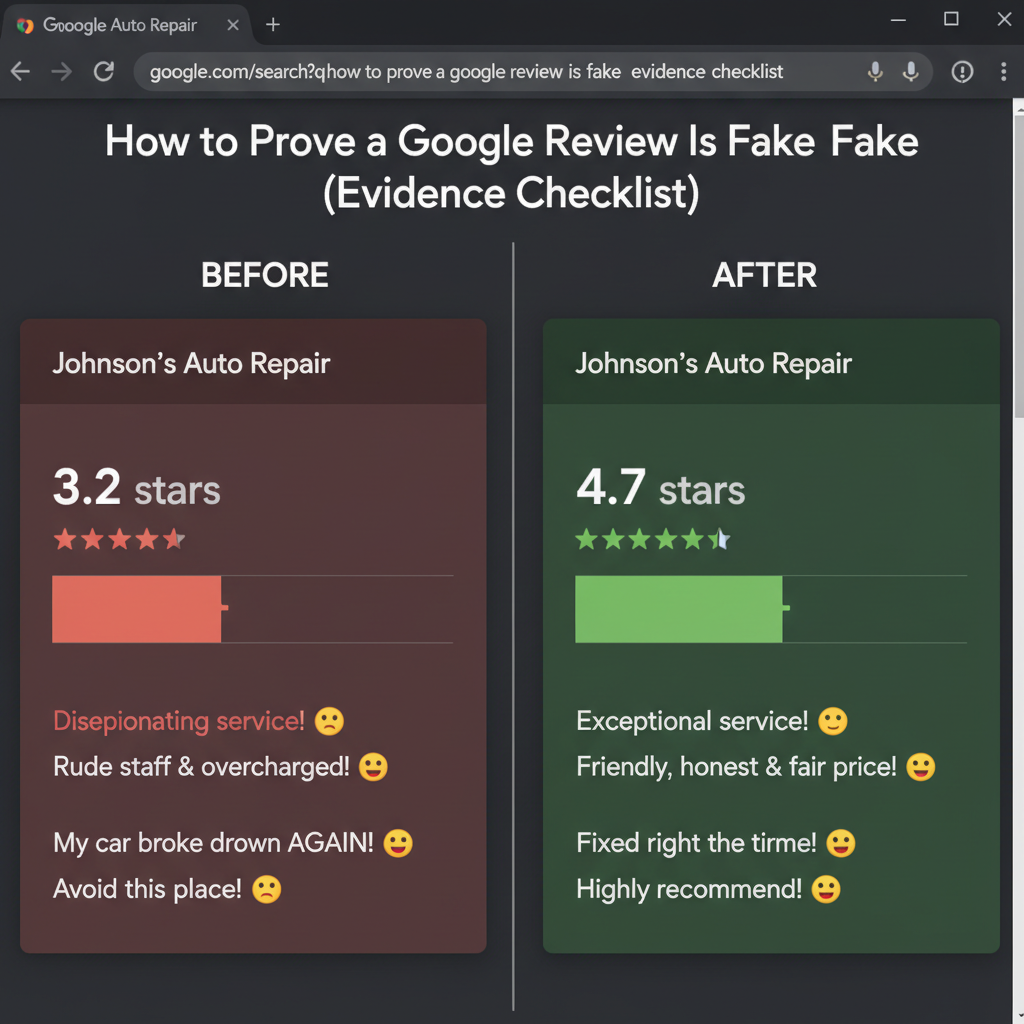
Before and after comparison showing improved business ratings - How to Prove a Google Review Is Fake (Evidence Checklist)
Frequently Asked Questions
How can I tell if a Google review is fake?
Fake reviews often exhibit patterns, such as similar wording across multiple reviews, lack of specific details, and anomalous posting behaviors like multiple reviews from the same location or timeframe.
What should I do if I receive a fake review?
Gather evidence using our checklist, then report the review through your Google Business Profile. Provide clear, concise evidence to support your claim for the best chances of removal.
How long does it take for Google to remove a fake review?
The review process can take anywhere from a few days to several weeks. For more detailed timelines, see our article on how long it takes Google to remove a review.
Can fake reviews be prevented?
While you can't completely prevent fake reviews, you can reduce their likelihood by engaging positively with customers, monitoring your profile, and using review management tools.
What if Google doesn't remove the review?
If Google denies your request, you can seek further assistance from reputation management experts, or explore alternative options like responding to the review professionally to mitigate its impact.