Picture this scenario: It's a bustling morning in New York City, and as I sip my coffee, an urgent call comes in from a business owner on the brink of a meltdown. She has just discovered that several one star reviews on her Google Business Profile are fabricated. The reviews, posted by a competitor, are already affecting her sales. This is a scenario I've encountered countless times over my decade long career in reputation management. The landscape of online reviews is precarious, and as of 2026, the Federal Trade Commission (FTC) has intensified its crackdown on fake reviews, making it more critical than ever for businesses to understand compliance requirements and avoid hefty penalties.
If you're a business owner, this situation might feel all too familiar. With the proliferation of online reviews, maintaining your business's reputation has become an increasingly complex task. The FTC's latest measures aim to protect consumers and ensure fair competition by targeting fake reviews. This guide will delve into the intricacies of the FTC's 2026 fake review crackdown, providing you with actionable insights to navigate this new regulatory environment. We'll explore the details of the FTC's guidelines, common pitfalls businesses face, and practical steps to ensure compliance. Understanding these elements is crucial to safeguarding your business's online presence and avoiding potential legal repercussions. Let's dive into the heart of this issue and explore what it means for your business.
Understanding the FTC's 2026 Fake Review Crackdown
The FTC has long been vigilant about the authenticity of online reviews, but 2026 marks a significant escalation in enforcement efforts. The commission's updated guidelines focus on curbing deceptive practices, such as posting fake reviews, incentivizing positive reviews without disclosure, and manipulating review platforms. The increased scrutiny stems from alarming statistics revealing that an estimated 10.7% of online reviews are fake, as highlighted in our recent article. This crackdown is part of a broader initiative to foster transparency and trust in digital marketplaces.
The FTC's guidelines are comprehensive, targeting not just the businesses that solicit fake reviews, but also the individuals and agencies who facilitate these deceptive practices. The commission now requires businesses to maintain a record of all reviews received and to disclose any incentives offered in exchange for reviews. Non-compliance can result in substantial fines and damage to a company's reputation. As a part of their strategy, the FTC collaborates with tech companies and uses advanced algorithms to detect suspicious review patterns, making it increasingly difficult for businesses to manipulate their ratings undetected.
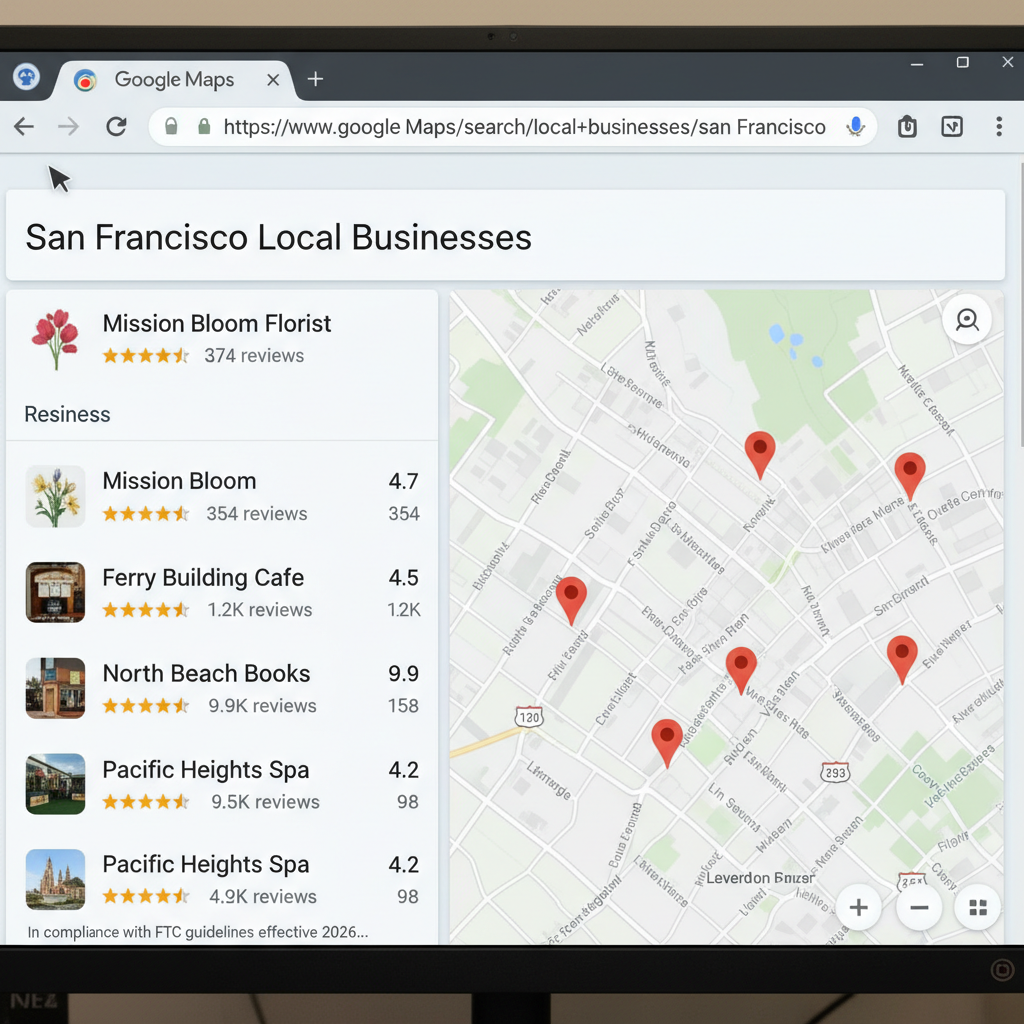
Google Maps search results showing local business ratings - The FTC's 2026 Fake Review Crackdown: Compliance Guide for Businesses
The Implications for Businesses
For businesses, the implications of the FTC's crackdown are profound. Not only do companies need to ensure that their reviews are genuine and transparent, but they also face the challenge of auditing their existing reviews for compliance. This process involves sifting through potentially thousands of reviews to identify and address any that might contravene the FTC's guidelines. The stakes are high not only in terms of potential penalties but also in terms of brand trust and consumer perception.
From my experience working with hundreds of businesses, I've seen firsthand how damaging fake reviews can be not just to a company's reputation but also to its bottom line. For instance, a client of ours, a tech startup, faced a significant setback when fake negative reviews led to a 20% drop in sales over a quarter. This was a wake-up call for them to adopt a more rigorous approach to review management, including utilizing tools and services that aid in identifying and removing fake reviews. You can explore more about these strategies in our comprehensive guide on removing malicious reviews.
Steps to Ensure Compliance with FTC Guidelines
Ensuring compliance with the FTC's guidelines requires a multifaceted approach. Here are some key steps businesses should take:
Implement Review Management Systems: Utilize sophisticated review management software that can help monitor incoming reviews for authenticity. This software often includes features such as sentiment analysis and pattern recognition, making it easier to spot anomalies.
Maintain Transparency: Clearly disclose any incentives offered for reviews. This includes free products, discounts, or any form of compensation. Transparency not only ensures compliance but also builds trust with your customers.
Educate Your Team: Ensure that your marketing and customer service teams are aware of the FTC’s guidelines and the importance of adhering to them. Regular training sessions can help staff recognize and report suspicious activity.
Conduct Regular Audits: Periodically review your online presence to ensure compliance. This includes checking for any unverified reviews that might have slipped through the cracks.
It's also worth noting that businesses should be vigilant about their competitors' actions. Engaging in unethical practices such as hiring agencies to post fake negative reviews on a competitor's profile can lead to severe consequences. Our analysis of fake Google reviews by industry provides insights into sectors most affected by these practices.
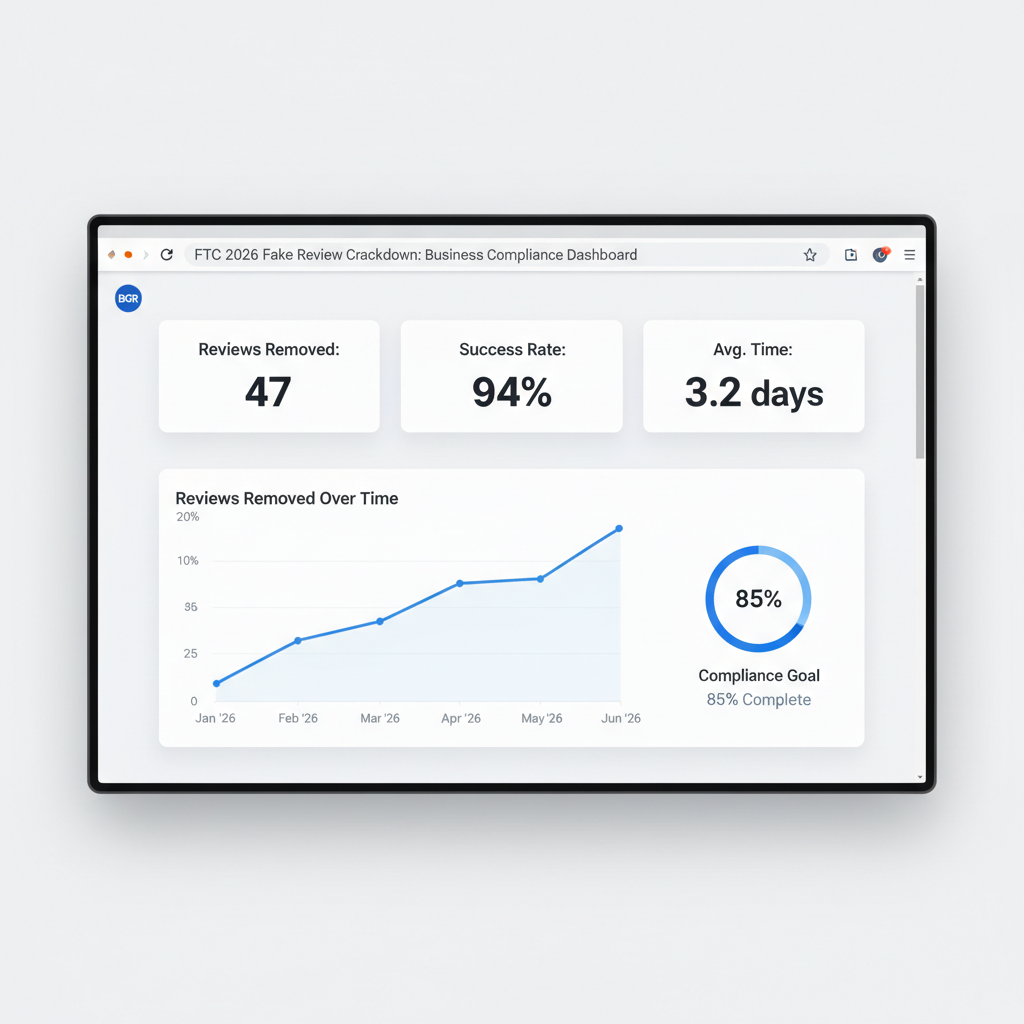
Dashboard showing review removal results and success metrics - The FTC's 2026 Fake Review Crackdown: Compliance Guide for Businesses
Legal Ramifications and Penalties
The legal landscape surrounding fake reviews is evolving rapidly. The FTC's increased enforcement capabilities mean that businesses caught violating guidelines may face hefty fines, legal action, and irreparable reputational damage. The penalties are not limited to monetary fines; businesses may also be required to issue public apologies or undertake corrective advertising campaigns.
One case that stands out involved a prominent fitness brand that was fined millions after it was discovered they had orchestrated a campaign of fake positive reviews to boost their online reputation. This case underscored the FTC's commitment to cracking down on deceptive practices and served as a cautionary tale for businesses across all sectors.
For those wondering whether legal action can be taken against Google for hosting fake reviews, our discussion on Section 230 and Google Reviews explains why this is not a feasible route. Instead, focusing on compliance and proactive reputation management is the most effective strategy.
Best Practices for Authentic Review Collection
Building a repository of authentic reviews is integral to maintaining compliance and enhancing your business's credibility. Here are some best practices to consider:
Encourage Organic Reviews: Provide customers with a seamless way to leave reviews after a purchase or service experience. Consider follow-up emails or in-app notifications as gentle reminders.
Engage with Reviews: Respond to both positive and negative reviews professionally. This not only shows that you value customer feedback but can also mitigate the impact of any negative reviews.
Leverage Customer Testimonials: Use video or written testimonials from satisfied customers as part of your marketing strategy. These can be shared on social media and your website to bolster credibility.
For detailed strategies on responding to negative reviews, you can refer to our comprehensive guide on handling bad reviews professionally. Remember, the key to success lies in authenticity and transparency, which are the cornerstones of trust in the digital age.
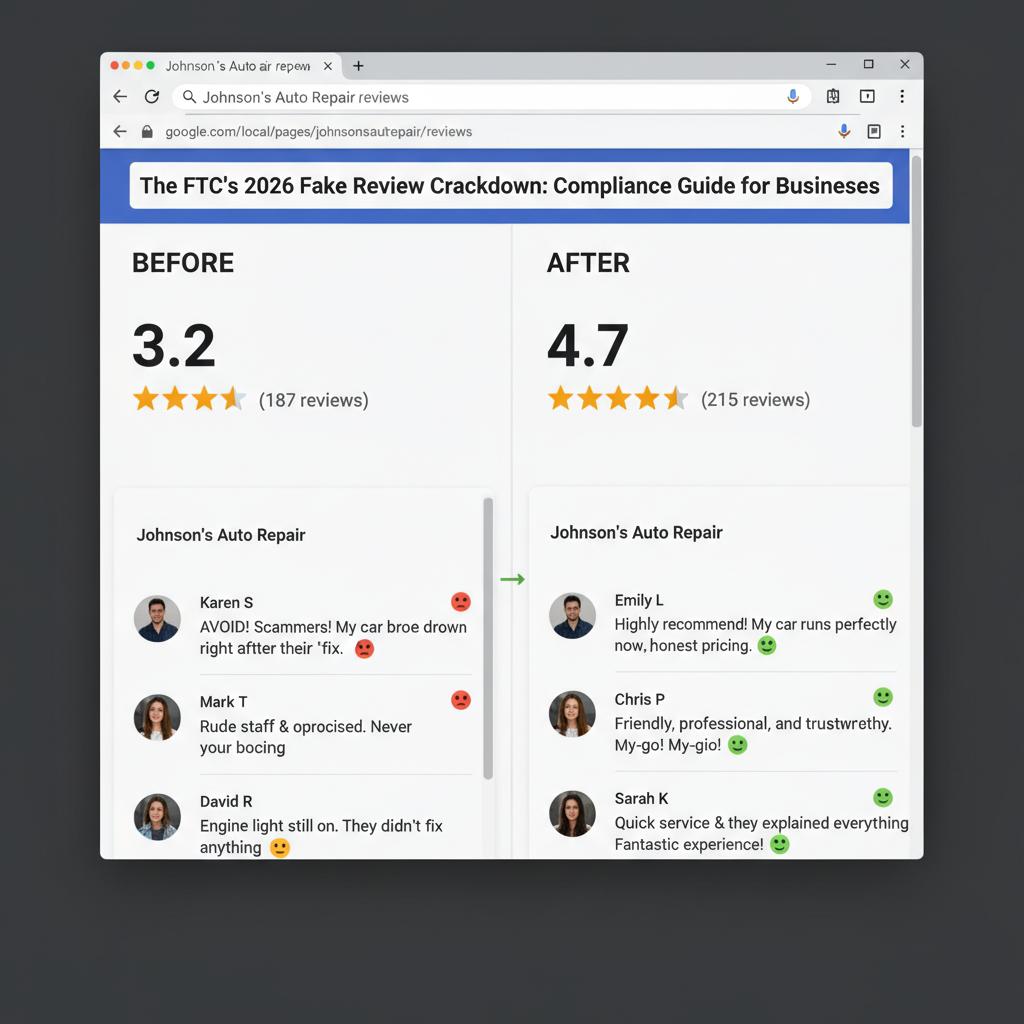
Before and after comparison showing improved business ratings - The FTC's 2026 Fake Review Crackdown: Compliance Guide for Businesses
Conclusion
The FTC's 2026 fake review crackdown represents a pivotal moment for businesses navigating the digital landscape. Compliance with these new regulations is not merely about avoiding fines; it's about building and maintaining trust with your customers. As we have explored, this requires a proactive approach to review management, transparency in practices, and a keen understanding of the legal framework governing online reviews.
Businesses that embrace these changes and prioritize genuine engagement with their customers will not only survive but thrive in this new era of digital accountability. Whether you're grappling with fake reviews or striving to enhance your online reputation, our negative review removal service offers expert insights and solutions tailored to your needs. As always, staying informed and vigilant is your best defense against the challenges posed by fake reviews.
Frequently Asked Questions
What are the main components of the FTC's 2026 guidelines on fake reviews?
The main components include banning fake reviews, requiring disclosure of incentives, and collaborating with tech companies to identify and address review manipulation.
How can businesses ensure compliance with the FTC's guidelines?
Businesses can ensure compliance by implementing review management systems, maintaining transparency about incentives, educating their teams, and conducting regular audits.
What are the consequences of violating the FTC's guidelines?
Consequences can include hefty fines, legal actions, reputational damage, and mandatory corrective advertising or apologies.
Can businesses take legal action against platforms like Google for hosting fake reviews?
According to Section 230, businesses cannot sue platforms like Google for hosting fake reviews. Instead, they should focus on compliance and proactive review management strategies.
What are some best practices for collecting authentic reviews?
Best practices include encouraging organic reviews, engaging with all reviews professionally, and leveraging genuine customer testimonials.
negative review removal servicerecent articlecomprehensive guide on removing malicious reviewsanalysis of fake Google reviews by industrydiscussion on Section 230 and Google Reviews FTC's endorsement guides Better Business Bureau's review verification Harvard Business Review