A frantic business owner from Seattle was on the line, desperately seeking help. Her thriving local bakery had been hit with a barrage of negative reviews seemingly overnight. "I've never even seen most of these customers!" she exclaimed, the frustration palpable in her voice. This isn't an isolated case. In my 8+ years assisting businesses with reputation management, I've seen a growing trend where fake reviews plague businesses across industries, threatening their hard-earned reputations. If you’re reading this, chances are you’ve encountered similar challenges with online reviews, and you’re not alone.
Industry reports indicate that by 2026, a staggering 10.7% of all Google reviews will be fake. For business owners, this isn't just a number it's a potential crisis. A single false review can deter countless potential customers, impacting revenue and brand perception. From my experience working with hundreds of businesses, the key to navigating this landscape lies in understanding the root causes and equipping yourself with the right tools and knowledge. In this article, we will delve into the crux of the 2026 Google Review Crisis, explore why fake reviews are proliferating, and most importantly, provide actionable strategies to safeguard your business. Stay with us as we uncover why this matters more than ever.
Understanding the Gravity of Fake Reviews
The rise of fake reviews is not just an inconvenience it’s a burgeoning threat to businesses worldwide. Picture this: Sarah, a small business owner in Portland, noticed a sudden dip in her foot traffic. Confused, she checked her Google Business Profile only to find several new one-star reviews. Upon investigating, she realized these reviews were fabricated by a competitor aiming to sabotage her reputation. Unfortunately, Sarah's experience is becoming increasingly common.
According to a 2026 report by FTC Consumer Protection, the increase in fake reviews has reached alarming levels, with estimates that 10.7% of all Google reviews are now fake. This statistic underscores the critical need for businesses to be vigilant and proactive in managing their online reputation. But why are fake reviews on the rise? The answer lies in their impact both positive and negative on consumer behavior. A single negative review can turn away 40% of prospective customers, as noted in a study by Search Engine Journal. This potential loss incentivizes unscrupulous individuals to manipulate reviews, aiming to either tarnish competitors or artificially inflate their own ratings.
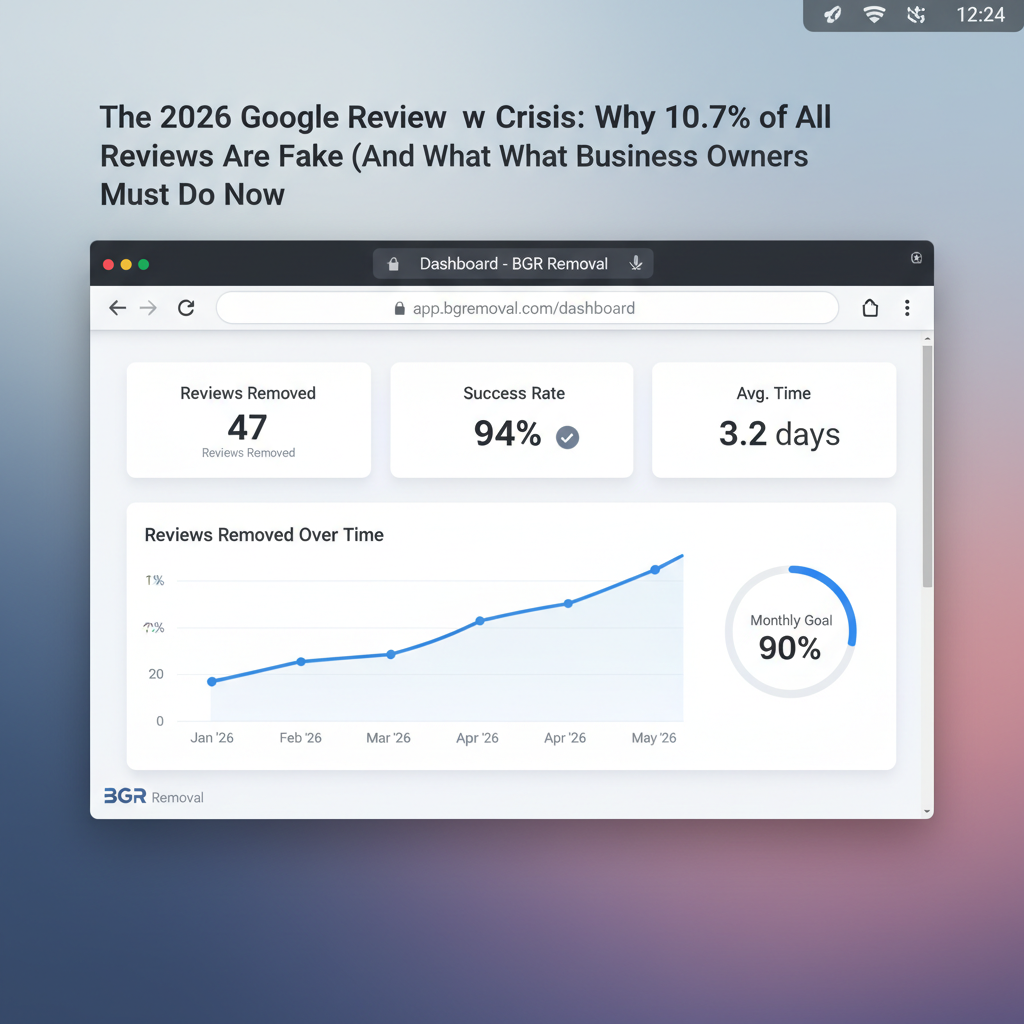
Dashboard showing review removal results and success metrics - The 2026 Google Review Crisis: Why 10.7% of All Reviews Are Fake (And What Business Owners Must Do Now)
The Anatomy of a Fake Review
Understanding the anatomy of fake reviews is crucial for identifying and countering them effectively. Fake reviews generally fall into two categories: those that are maliciously negative, intended to harm a business, and those that are falsely positive, designed to inflate a business's standing unjustly. From my experience, fake negative reviews often come from competitors or disgruntled former employees. They typically lack detail, use generic language, and may include inaccuracies about the business's services or locations.
Conversely, fake positive reviews might originate from paid services or bots. These reviews are usually overly enthusiastic, sometimes mentioning products or services that don’t exist. Google's own Prohibited and Restricted Content policy explicitly forbids such practices, but the sheer volume of reviews posted daily makes enforcement challenging. This highlights the importance of vigilance and proactive measures by business owners. Our guide on proving a Google review is fake offers detailed insights into identifying these telltale signs.
Strategies for Navigating the 2026 Google Review Crisis
So, what should business owners do when faced with the daunting task of managing fake reviews? The first step is monitoring. Constantly monitor your Google Business Profile and other review platforms for any suspicious activity. Tools and services such as review management tools or Google Alerts can provide notifications whenever new reviews are posted.
Once a fake review is identified, report it to Google immediately. Google's process for removing reviews can be lengthy, but persistence is key. Our complete evidence guide for Google review removal provides templates that can expedite this process. Additionally, responding to reviews both genuine and suspected fake ones demonstrates to potential customers that you value feedback and are attentive to your business's online presence. For detailed examples, refer to our blogs on replying to negative reviews for restaurants and hotels.
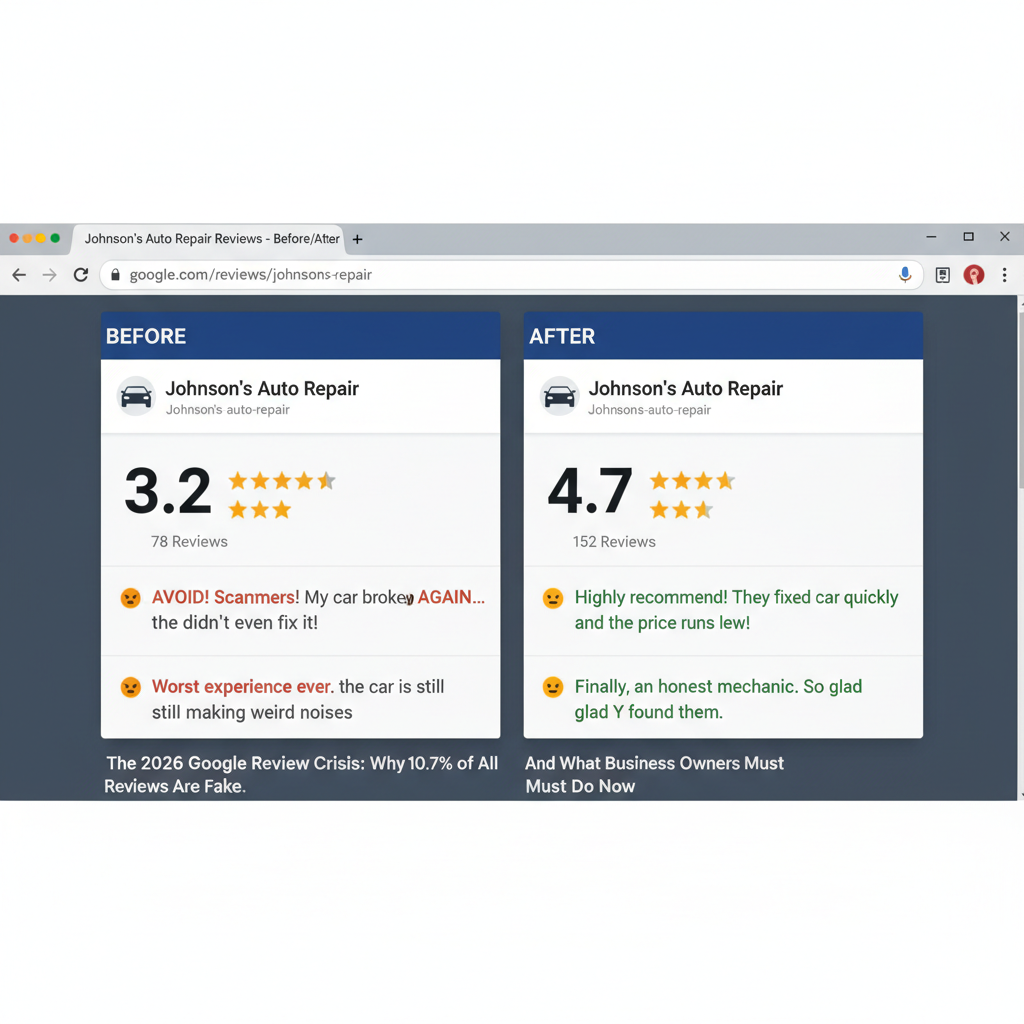
Before and after comparison showing improved business ratings - The 2026 Google Review Crisis: Why 10.7% of All Reviews Are Fake (And What Business Owners Must Do Now)
Preventative Measures: Building Trust Through Authenticity
Prevention is always better than cure. Building a robust online presence founded on authenticity and customer engagement can make it more difficult for fake reviews to damage your reputation. Encourage satisfied customers to leave genuine, detailed reviews. Businesses can request reviews via email or after a successful transaction, always ensuring the process is seamless and respectful.
Furthermore, it’s essential to educate your team about the importance of online reputation and equip them with strategies to encourage positive reviews. Transparency and prompt responses to all reviews positive or negative increase consumer trust, which can mitigate the impact of any fraudulent entries. In addition, staying updated with Google's review policies and the latest trends in review management will keep you one step ahead.
The Legal Landscape: What You Need to Know
The legal environment surrounding online reviews is complex. In the U.S., Section 230 of the Communications Decency Act offers platforms like Google immunity from liability for content posted by users. This means businesses can’t sue Google for hosting fake reviews, as detailed in our piece on Section 230 & Google Reviews. However, if a competitor is behind the fake reviews, legal action could be considered against them directly.
It is essential to document all evidence thoroughly and consult with a legal professional if you decide to pursue this route. Our article on when you should sue over a Google review provides further guidance on considering legal action. Remember, while legal recourse is an option, it is often a last resort due to the time, costs, and complexities involved.
Frequently Asked Questions
What percentage of Google reviews are fake?
As of 2026, studies suggest that approximately 10.7% of Google reviews are fake. This highlights the need for businesses to actively manage and verify reviews on their profiles.
How can I prove a Google review is fake?
To prove a review is fake, gather evidence such as inconsistent details, lack of customer records, and similar language across multiple reviews. Consult our evidence checklist for comprehensive guidance.
Can I sue Google for hosting fake reviews?
No, under Section 230 of the Communications Decency Act, platforms like Google are not liable for content posted by users. Legal action could be taken against the individual or entity responsible for the reviews.
What actions can I take if I find a fake review?
Immediately report the review to Google using their flagging process, document all evidence, and respond to the review to address any potential customers reading it. Consistently monitor your profile for new reviews.
How long does it take for Google to remove a fake review?
Removal times can vary, but it typically takes several days to weeks. Detailed evidence and persistence can expedite this process. Read more in our article on Google review removal timelines.
How do I encourage genuine reviews from customers?
Encourage satisfied customers to leave reviews by making the process easy and accessible. Follow up after transactions with a polite request via email or during checkout.
What preventative strategies can protect my business from fake reviews?
Build trust by engaging with all reviews, educating your team on reputation management, and encouraging authentic customer feedback. Stay informed on Google's policies to stay proactive in managing your profile.
As the digital landscape continues to evolve, the importance of maintaining an authentic online reputation cannot be overstated. Businesses must remain vigilant, informed, and proactive in combating the challenges posed by fake reviews. By implementing robust review management strategies and staying informed about digital policies, you can protect your business and continue to build trust with your audience. For personalized assistance and strategies tailored to your business needs, don't hesitate to get a free quote from our experts.