The caller, a well-known restaurateur from New York, was distraught. Overnight, his Google Business Profile was bombarded with a series of scathing reviews that seemed to come out of nowhere. He was convinced they were fake but felt lost on the next steps. It's a situation I've encountered numerous times in my decade long career in reputation management. Any business that relies heavily on its online presence knows the crippling effect a single negative review can have, let alone a flood of them.
For many business owners, the knee-jerk reaction is to consider legal action, but is this the right path? The complexities of suing over a Google review go beyond just the legal costs they involve intricate considerations of digital evidence, jurisdiction, and the potential for unintended consequences. From my experience working with hundreds of businesses, I know that understanding when legal recourse is appropriate is crucial for maintaining your reputation without sacrificing resources or credibility.
In this article, we'll explore the circumstances that may justify suing over a Google review and delve into the legal, ethical, and practical considerations involved. We'll draw on real-world examples and discuss alternative strategies for handling defamatory reviews. By the end, you'll have a clearer understanding of when litigation might be the right choice and how to pursue it effectively if it is. Let's navigate this complex terrain and uncover actionable insights that could save your business.
Understanding the Impact of Negative Google Reviews
Before diving into the circumstances under which you might sue, it's essential to grasp the profound impact of Google reviews on a business's reputation. According to a survey by BrightLocal, 87% of consumers read online reviews for local businesses, with 49% trusting them as much as personal recommendations. This reliance on digital word-of-mouth underscores why any negative review, particularly one that's fake or defamatory, can be devastating. Fake reviews not only mislead potential customers but can also skew the perception of your brand, affecting sales and long-term growth.
From my experience, businesses in highly competitive industries like hospitality and retail are particularly vulnerable. A single negative review can push a business lower in search rankings, reducing visibility at a time when visibility is everything. For instance, I worked with a boutique hotel in Miami that saw a 25% drop in bookings following a series of fake reviews. Our efforts helped them recover, but the incident highlighted the need for vigilance and a proactive approach to review management.
For more insights into how fake reviews affect different industries, check out our detailed analysis in Most Fake Google Reviews Getting by Industry in 2026.
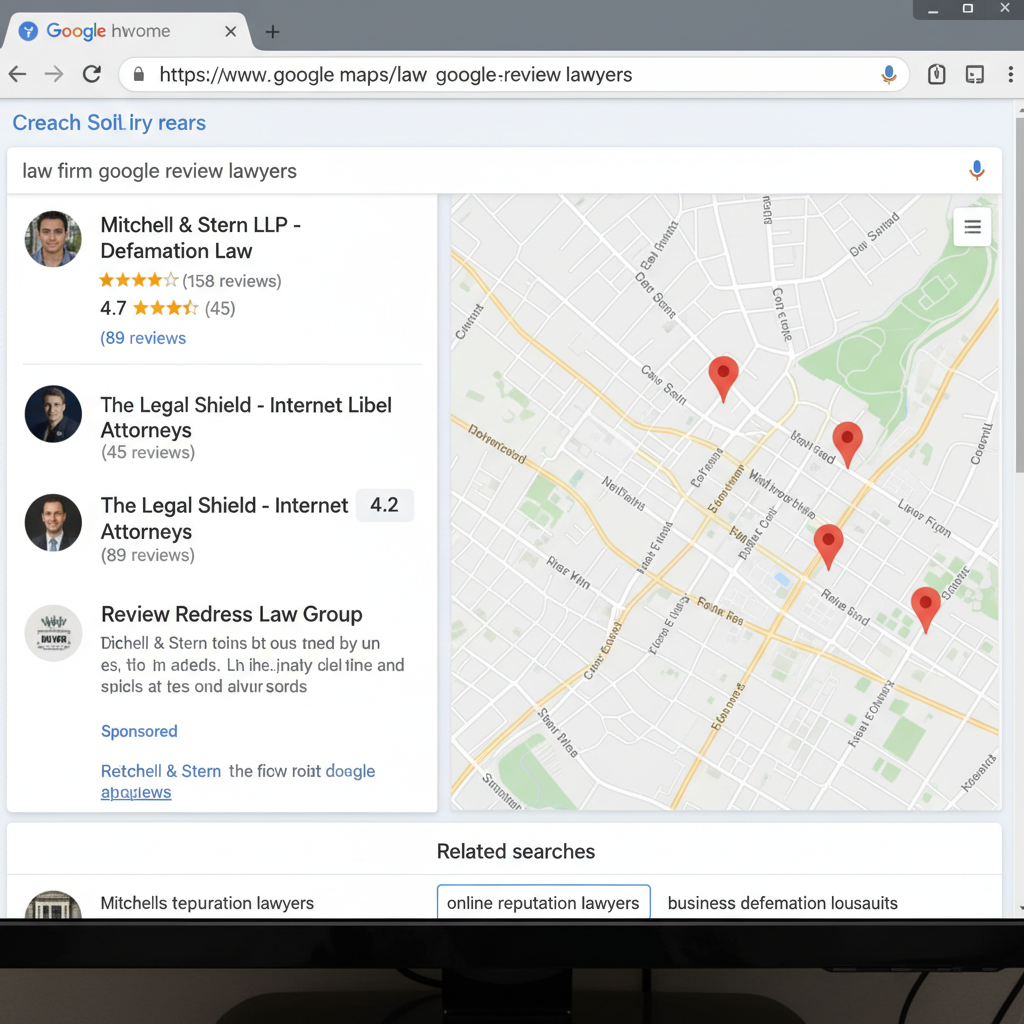
Google Maps search results showing local business ratings - When Should You Sue Over a Google Review?
When Legal Action Might Be Justified
Legal action should be considered carefully and is typically seen as a last resort. There are specific scenarios where suing over a Google review might be justified:
Defamation: If a review contains false statements that harm your reputation, it may be considered defamatory. For example, if a review falsely claims your restaurant serves unsafe food, this could be grounds for a lawsuit.
Libelous Content: When a review includes statements that are not only false but intended to damage your business, you might have a case. This often requires proving the reviewer had malicious intent.
Identity Issues: If you can prove that a competitor or ex-employee posted the review using a fake identity, this might warrant legal action.
It's crucial to gather solid evidence before proceeding. Documentation and a clear timeline of events are essential. For a comprehensive checklist on proving a review is fake, see our article How to Prove a Google Review Is Fake (Evidence Checklist).
Legal Considerations and Challenges
Even if you have a strong case, suing over a Google review involves navigating several legal complexities. Firstly, the burden of proof lies with the plaintiff, meaning you must provide indisputable evidence that the review is both false and damaging. This can include digital forensics, witness testimony, and expert affidavits. Additionally, jurisdiction issues can arise since Google reviews are published globally. Determining the appropriate legal venue can complicate proceedings.
Moreover, the Streisand Effect—a phenomenon where attempting to suppress information only increases its visibility—poses a significant risk. By bringing a lawsuit, you might inadvertently draw more attention to the negative review. Public perception could also turn against you, especially if the lawsuit is perceived as an attempt to silence criticism rather than address falsehoods.
Engaging a legal expert with experience in digital defamation cases is advisable. They can help you weigh the potential benefits against the risks and costs. In some instances, resolving the issue through Google's review removal process might be a more straightforward and effective approach. You can learn more about Google's policies in our guide on Google Review Removal Policy Explained: What Gets Deleted.
Alternatives to Legal Action
Before pursuing litigation, consider these alternative strategies:
Contact the Reviewer: A polite, direct message to the reviewer can sometimes resolve misunderstandings or issues.
Flag the Review: Use Google's built-in tools to report reviews that violate their Prohibited and Restricted Content policy. While this doesn't guarantee removal, it's a necessary first step.
Enhance Your Reputation: Encourage satisfied customers to leave positive reviews, which can dilute the impact of the negative one.
Engage a Reputation Management Service: These services can help navigate complex cases and provide long-term strategies for maintaining a positive online presence.
Our Google Reviews Management Tool vs. Flagging article offers further insights into managing difficult reviews.

Dashboard showing review removal results and success metrics - When Should You Sue Over a Google Review?
Real-Life Case Studies
Consider the case of a small tech startup in San Francisco. They were targeted by a series of negative reviews, which they suspected were orchestrated by a disgruntled former employee. After collecting substantial evidence, they contacted the employee directly, leading to the removal of the reviews without the need for legal action. Conversely, a law firm in Chicago opted to sue after a fake review claimed their services were fraudulent. The court's ruling in their favor not only resulted in the review's removal but also acted as a deterrent for further malicious actions.
These cases demonstrate the importance of a tailored approach, where the specifics of each situation dictate the best course of action. For businesses considering this path, a consultation with legal experts is invaluable.
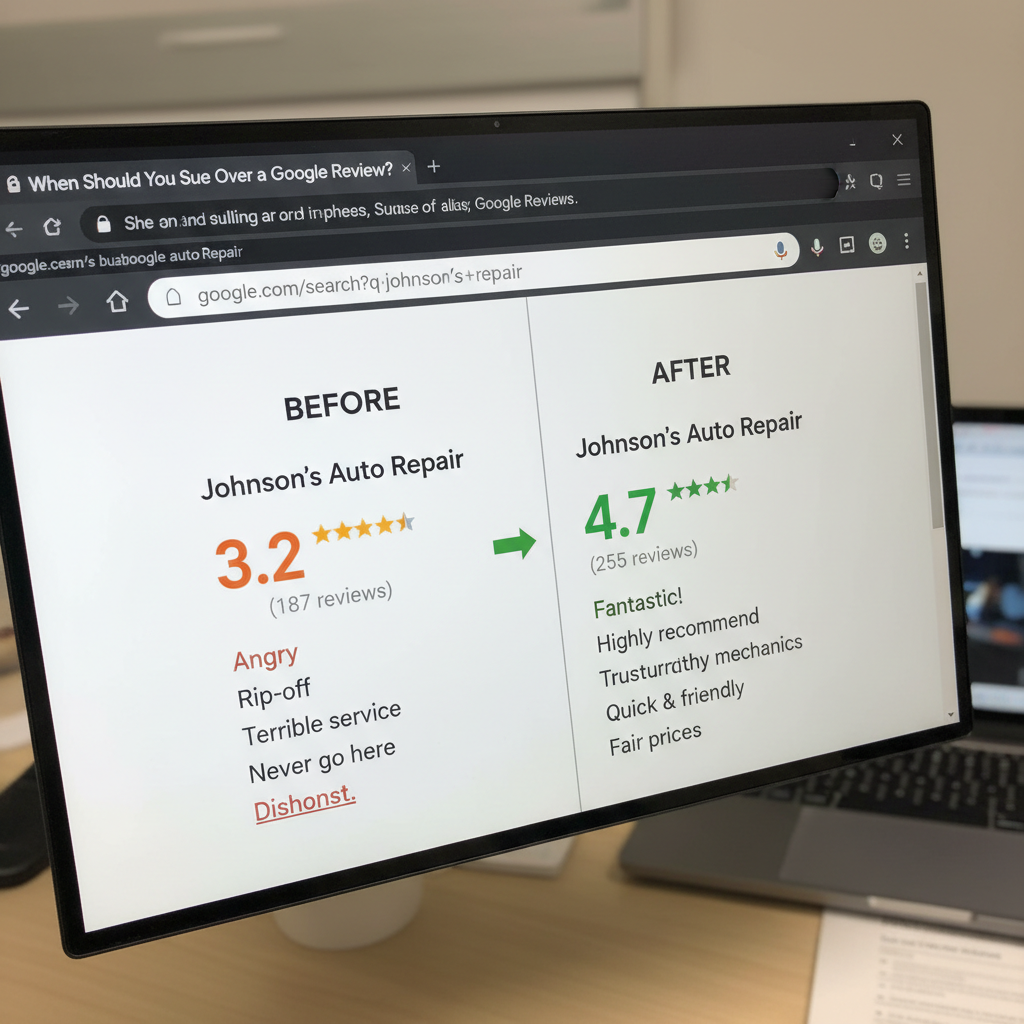
Before and after comparison showing improved business ratings - When Should You Sue Over a Google Review?
Conclusion: Weighing Your Options
Suing over a Google review is a significant step that requires careful consideration. While there are circumstances where legal action is justified, it's often more beneficial to explore alternative remedies first. From my extensive experience, businesses that approach these situations with a clear understanding of the potential outcomes are better positioned to protect their reputations and resources effectively.
Ultimately, the decision to sue should be made with a full awareness of the legal landscape, the potential for public relations fallout, and the overall impact on your business operations. If you're facing a similar dilemma, consider contacting our team for professional advice or to get a free quote on our services. Your reputation is one of your business's most valuable assets—protect it wisely.
Frequently Asked Questions
What constitutes defamation in a Google review?
Defamation involves false statements that harm your reputation. In a Google review, this could be a false claim about your business practices or products that can be proven untrue with evidence.
Can I sue the reviewer anonymously?
While initial filings might protect your identity, anonymity is challenging to maintain throughout legal proceedings as transparency is required in court cases.
How much does it cost to sue over a Google review?
The costs can vary widely depending on the complexity of the case, the need for expert witnesses, and legal fees. It's advisable to consult with a legal expert to understand potential expenses.
How long does it take to resolve a lawsuit over a Google review?
Lawsuits can take months to years to resolve, depending on the legal system's efficiency and the case's complexity. Alternative resolution methods might be quicker.
Is it better to attempt removal through Google first?
Yes, initiating removal through Google's system is often more efficient and can resolve the issue without legal intervention. See our article on How To Remove Malicious Google Reviews In 2026 for more details.