Jennifer had spent nearly a decade transforming her quaint bistro in the heart of San Francisco into a local favorite. I remember when she reached out to me, her voice tinged with frustration. A scathing one-star review had just appeared on her restaurant's Google Business Profile, threatening to tarnish her hard-earned reputation. This scenario is all too familiar for many restaurateurs. In an industry where 94% of diners make decisions based on online reviews, according to a study by BrightLocal, managing these reviews is crucial. From my experience working with hundreds of businesses, a well-crafted response to a negative review can turn a potential setback into an opportunity for growth. In this article, I'll share nine proven examples that demonstrate how you can effectively respond to negative reviews and maintain your restaurant's reputation. This isn't just about damage control; it's about demonstrating your commitment to customer satisfaction and turning critics into advocates.

Google Maps search results showing local business ratings - How To Reply Negative Google Reviews For Restaurants | 9 Best Examples
Understanding the Impact of Negative Reviews
Before diving into examples, it's essential to understand why negative reviews carry so much weight. The hospitality industry, particularly restaurants, thrives on word-of-mouth, and in today's digital age, online reviews are the new word-of-mouth. A single negative review can deter potential diners and, if left unaddressed, can even impact your restaurant's search engine ranking. According to Search Engine Journal, Google reviews are a significant factor in local SEO, meaning they can affect how prominently your restaurant appears in search results. It's not just about appeasing an unhappy customer; it's about safeguarding your business's visibility and appeal.
Negative reviews often focus on issues such as service quality, food temperature, or even miscommunication with staff. Our guide on generating positive reviews shows that while you cannot please every customer every time, your response can demonstrate your commitment to quality and customer satisfaction. This approach not only appeases the reviewer but also showcases your professionalism to potential customers who are reading reviews to gauge their dining decisions.
Best Practices for Responding to Negative Reviews
Responding to negative reviews effectively requires a blend of empathy, professionalism, and strategic communication. First and foremost, acknowledge the issue raised by the customer. This demonstrates that you take their feedback seriously. Next, apologize for their experience not necessarily for the issue itself if unwarranted, but for their dissatisfaction. Then, offer a solution or invite them to discuss their experience further, which can sometimes mitigate their concerns offline. For instance, offer a direct line of communication or a visit for a more personalized resolution. According to the Better Business Bureau, such responses help build trust and can encourage the reviewer to update or even remove their negative feedback.
It's crucial to keep your tone positive and customer-focused, avoiding any defensive language or dismissive remarks. This approach often surprises business owners who initially feel attacked by negative reviews. However, a calm and empathetic response can transform an unhappy customer into a loyal one. For more insights, check out our detailed guide on review response best practices.
Example Responses to Negative Google Reviews
1. Addressing Service Delays
"Dear [Customer Name], thank you for your feedback. We apologize for the delay you experienced during your visit. We strive to serve all our diners promptly, and it's clear we fell short this time. Our team is reviewing our service protocols to ensure a faster dining experience. We'd love another opportunity to serve you better. Please reach out to us at [contact information] to discuss further."
2. Handling Food Quality Complaints
"Hi [Customer Name], we're sorry to hear that your meal did not meet expectations. We take pride in our cuisine, and your experience is not our standard. We appreciate your input and are discussing with our kitchen staff to address these concerns promptly. We'd be grateful if you’d allow us to make it right. Please contact us directly at [contact information]."
3. Responding to High Prices Concerns
"Hello [Customer Name], thank you for your feedback regarding our pricing. We aim to offer quality meals with the freshest ingredients, which sometimes reflects in our costs. Your feedback is valuable, and we'll consider it as we strive for transparency and value. We would love to discuss this with you directly at [contact information]."
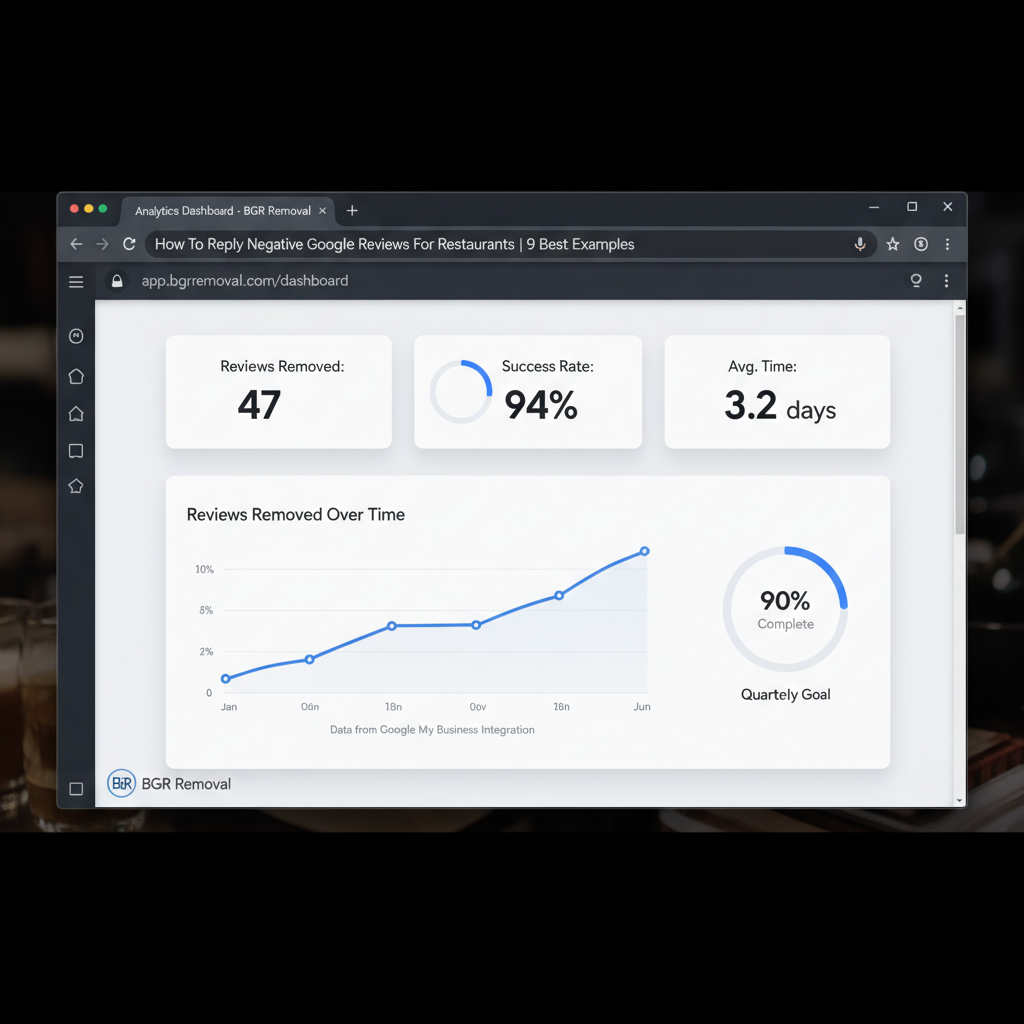
Dashboard showing review removal results and success metrics - How To Reply Negative Google Reviews For Restaurants | 9 Best Examples
4. Apologizing for a Reservation Mix-Up
"Dear [Customer Name], we sincerely apologize for the inconvenience with your reservation. There was a miscommunication on our part, and we're actively working to prevent future occurrences. Please accept our apologies and a complimentary meal on your next visit. Contact us directly at [contact information] to arrange this."
5. Tackling Cleanliness Issues
"Hi [Customer Name], thank you for bringing your concerns to our attention. Cleanliness is a top priority for us, and I'm sorry we missed the mark. We are reviewing our cleaning schedules and procedures to ensure a spotless environment. We hope to welcome you back to experience our improvements. Reach out to us at [contact information] for a complimentary visit."
6. Clarifying Menu Changes
"Hello [Customer Name], we appreciate your feedback on our menu changes. We aim to refresh our offerings while maintaining beloved classics. Your input is valuable in shaping our menu, and we’re discussing internally how to incorporate your suggestions. Please join us soon to try some of our new dishes, and feel free to contact us at [contact information] for any queries."
7. Addressing Noise Complaints
"Dear [Customer Name], we're sorry to hear that the noise level affected your dining experience. We strive to create a comfortable atmosphere for all guests and are evaluating better noise management solutions. We hope to provide a quieter ambiance on your next visit. Please reach out to us directly at [contact information] for a follow-up."
8. Responding to Staff Behavior Concerns
"Hi [Customer Name], we are very sorry to hear about your experience with our staff. This is not reflective of our service standards. We're addressing this internally to ensure it doesn’t happen again. We hope you'll give us another chance and reach out at [contact information] to discuss this further."
9. Apologizing for Incorrect Orders
"Hello [Customer Name], thank you for your feedback about your order. We apologize for the mix-up and any inconvenience this caused. We're reviewing our order processes to prevent this in the future. Please contact us at [contact information] for a resolution and a complimentary meal."
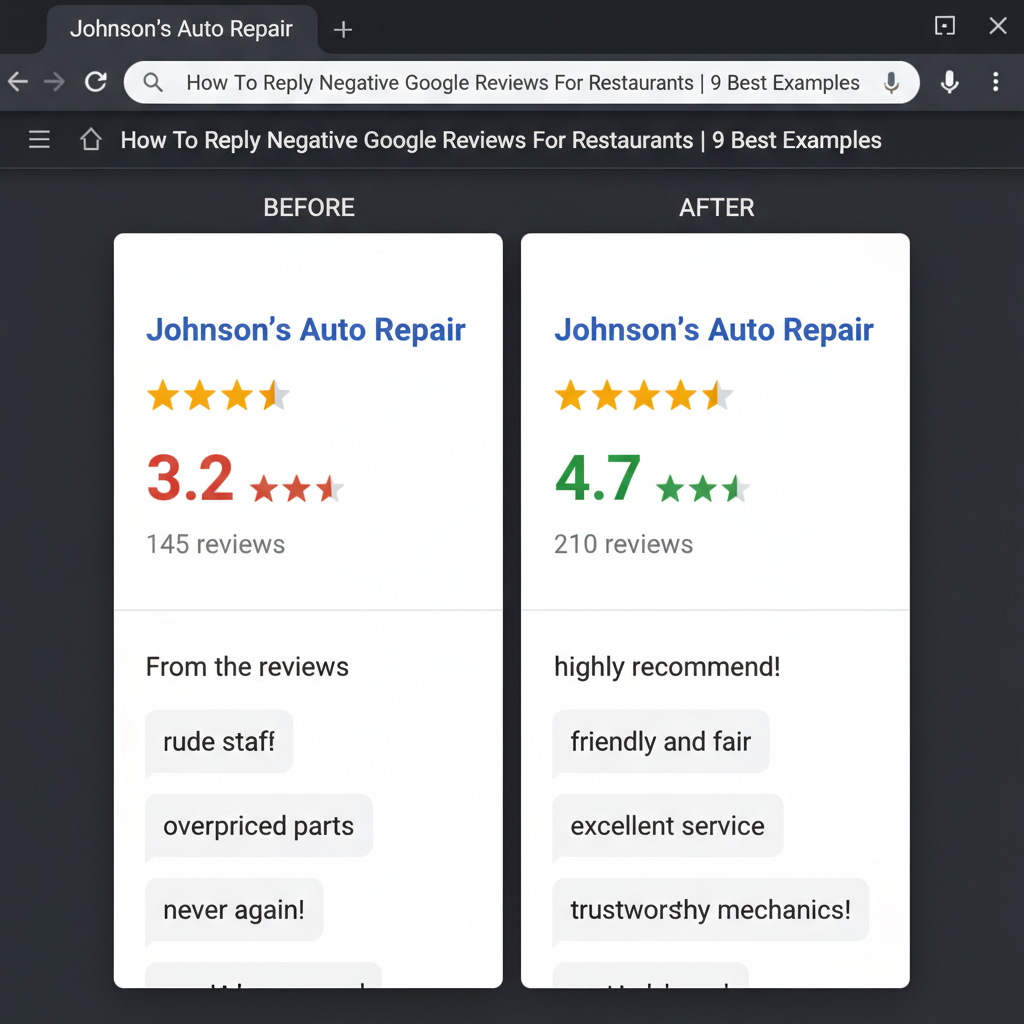
Before and after comparison showing improved business ratings - How To Reply Negative Google Reviews For Restaurants | 9 Best Examples
How Responding to Negative Reviews Can Improve Your SEO
Engaging with reviews, especially negative ones, can boost your restaurant's local SEO and ranking on Google. By responding to reviews, you signal to Google’s algorithms that your business is active and customer-focused, which can enhance your visibility. In fact, Google Search Central suggests that maintaining an active interaction with customers through reviews can improve your search engine ranking. For more information on optimizing your Google Business Profile, explore our comprehensive guide on the subject.
Additionally, by using targeted keywords naturally in your responses, you can further leverage these interactions for SEO benefits. This practice aligns with our insights from the impact of reviews on Google Maps ranking, where active engagement is key.
Conclusion
Effectively responding to negative reviews is not just about resolving individual complaints; it is a powerful strategy for enhancing your restaurant's reputation and visibility online. Each response is an opportunity to demonstrate your commitment to quality and customer satisfaction. By adopting the examples and strategies outlined, you can not only repair relationships with dissatisfied customers but also attract new ones by showcasing your business's dedication to service excellence. Remember, in the digital age, your response to criticism is as crucial as the service you provide.
Frequently Asked Questions
How should I respond to a false negative review?
It's best to remain calm and professional. Acknowledge their experience and invite them to discuss further offline. If the review violates Google's guidelines, consider reporting it. For more on this, read our article on Google's review removal policy.
Can negative reviews impact my restaurant’s ranking on Google?
Yes, negative reviews can affect your local SEO ranking. However, actively engaging with reviews both positive and negative can help mitigate some of the impacts. Visit our blog on SEO ranking factors for more insights.
What should I avoid when responding to negative reviews?
Avoid being defensive or dismissive. Instead, empathize with the reviewer, apologize for their experience, and offer a resolution. This approach often leads to better outcomes and customer retention.
How quickly should I respond to negative reviews?
Aim to respond within 24-48 hours. Prompt responses show customers that you value their feedback and are committed to resolving their concerns.
Can I ask a customer to remove their negative review after resolving their issue?
While you can politely request a reviewer to update their feedback, never pressure them to remove it. Building a genuine relationship is more beneficial in the long run.
Are there specific tools recommended for monitoring reviews?
Yes, tools like Google Alerts, ReviewTrackers, and Yext can help you stay on top of new reviews. Learn more in our review monitoring tools article.
Why should I respond to positive reviews?
Engaging with positive reviews strengthens customer relationships and encourages more patrons to leave feedback. It reflects a proactive and appreciative business culture.