Just yesterday, a small business owner from Los Angeles reached out to me in sheer desperation. Her family-run restaurant a labor of love for over two decades had been hit by a series of malicious one-star reviews overnight. It was a blow that could potentially tarnish their hard-earned reputation and deter future customers. For many business owners, negative Google reviews can feel like an insurmountable challenge, a digital shadow that looms over their online presence. In my experience working with hundreds of businesses like hers, negative reviews can not only affect your brand image but also significantly impact your local search rankings and customer trust.
Having navigated this digital landscape for over a decade, our reputation management experts at BGR Removal have removed thousands of negative reviews, helping businesses reclaim their online narratives. Today, we'll delve into the intricacies of handling negative Google reviews understanding what can be removed, strategic approaches to mitigation, and best practices to protect your business reputation. This is crucial because, in a world where 94% of consumers read online reviews before making a purchasing decision, safeguarding your digital reputation is more critical than ever. As we unravel the complexities, you'll discover actionable insights to manage and ideally prevent negative reviews from derailing your business growth.
Understanding Google's Review Policies
In the realm of online reviews, Google's Prohibited and Restricted Content policy serves as the foundational guideline that governs what constitutes acceptable reviews. According to Google's documentation, reviews that fall under the categories of spam, fake content, off-topic reviews, or those containing offensive language and personal attacks are subject to removal. This means that, as a business owner, understanding these policies is paramount in identifying which reviews you can contest for removal.
One case that stands out is a client from New York, whose competitor left a slew of defamatory and false reviews to skew public perception. By meticulously documenting evidence of these violations, we successfully petitioned Google to remove the offending content. It's important to remember that the process isn't instantaneous, and results aren't guaranteed, but by adhering to Google's guidelines and providing substantial evidence, removal requests can often be successful. For a more detailed exploration of what types of reviews can be removed, see our guide on removing fake Google reviews.
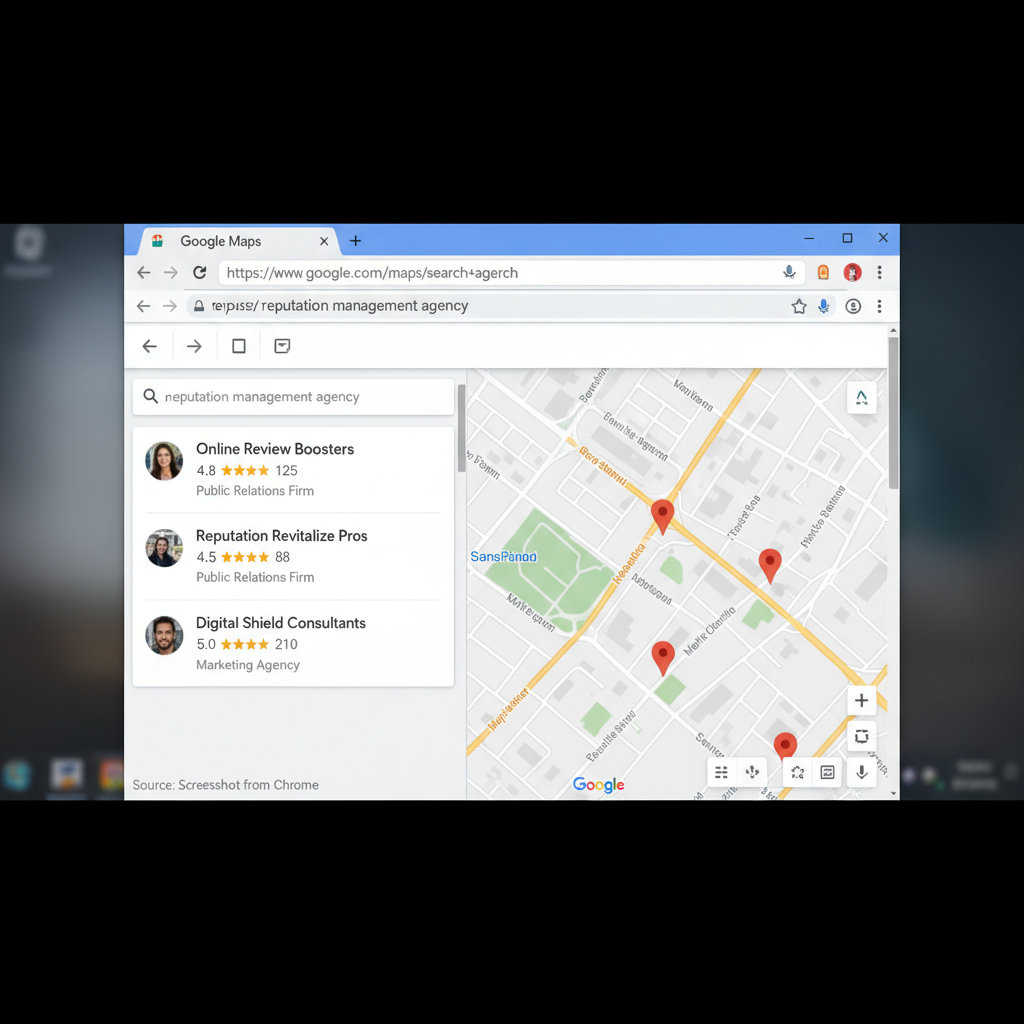
Google Maps search results showing local business ratings - how to stop negative google reviews
Steps to Address Negative Reviews
Addressing negative reviews requires a strategic approach. First, it's essential to respond professionally to each review, demonstrating your commitment to customer satisfaction. Crafting a thoughtful response can often turn a negative experience into an opportunity for redemption, showcasing your willingness to improve and address concerns. In fact, our templates for responding to negative reviews can serve as an invaluable resource for navigating these interactions effectively.
Next, assess whether the review violates any of Google's policies. If you suspect it does, you can flag the review directly through your Google Business Profile. Keep in mind, Google's review team will evaluate the flagged content and decide if it warrants removal based on their guidelines. This process can be supported by providing Google with documented evidence that supports your claim.
Additionally, consider implementing a reputation management strategy that includes soliciting positive reviews from satisfied customers. This can help dilute the impact of negative reviews and improve your overall rating. We recommend exploring our post on generating positive reviews for strategies to encourage customer feedback.
Proactive Measures to Prevent Negative Reviews
Proactivity is a cornerstone of effective reputation management. One of the most effective ways to avoid negative reviews is by delivering exceptional customer experiences consistently. This means training staff to handle customer inquiries and complaints adeptly, ensuring that service is not only satisfactory but exceptional. Remember, a happy customer is less likely to leave a negative review and more likely to spread positive word-of-mouth.
Monitoring your online reputation is another critical component. Tools like Google Alerts or third-party review monitoring services can help you keep track of new reviews so that you can address issues promptly. For more on how to track your online reputation efficiently, check out our article on review monitoring tools.
Finally, actively manage your Google Business Profile by keeping it up-to-date with current information and engaging content. This not only enhances your business's visibility but also builds trust with existing and potential customers. For a comprehensive guide on optimizing your profile, refer to our Google Business Profile Optimization Guide.
Case Studies: Turning Negative Into Positive
Consider the story of Marcus, a dentist in Miami, who faced a backlash due to a single negative review that criticized his clinic's service. Rather than ignoring the feedback, Marcus used it as a catalyst for improvement. After responding promptly and professionally to the review, he implemented changes suggested by the customer. This not only resulted in the reviewer updating their review to reflect the positive changes but also bolstered customer loyalty and trust.
Another example involves a boutique hotel in San Francisco that faced an onslaught of negative reviews following a renovation. By proactively reaching out to affected guests and offering them a complimentary stay to experience the revamped facilities, the hotel was able to transform dissatisfaction into delight, ultimately leading to a slew of positive reviews that improved their online ratings significantly.
These cases illustrate the power of transforming negatives into positives, underscoring the importance of adaptability and customer engagement in reputation management.
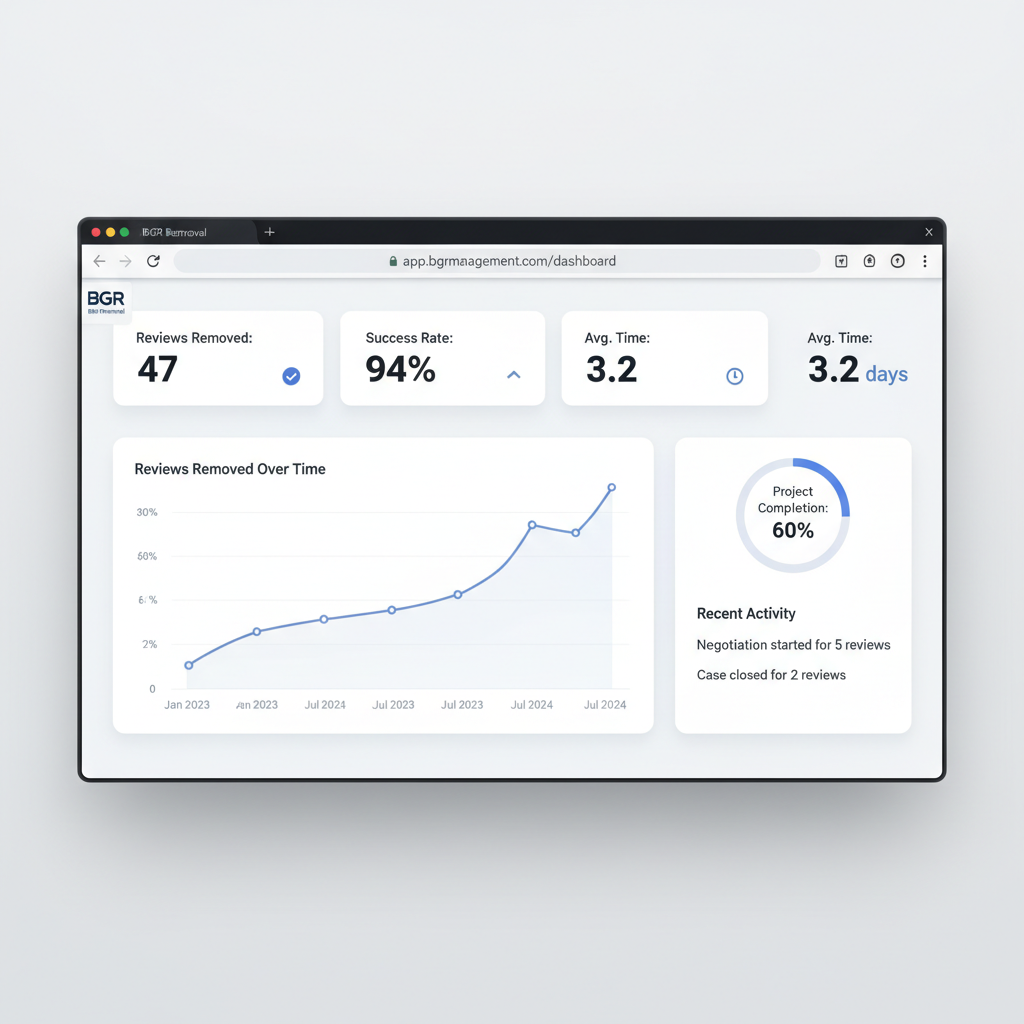
Dashboard showing review removal results and success metrics - how to stop negative google reviews
Conclusion: Navigating the Complexities of Online Reviews
In conclusion, managing negative Google reviews is a multifaceted endeavor that requires diligence, strategy, and empathy. While it's impossible to prevent every negative review, understanding Google's policies, responding effectively, and fostering positive customer experiences can significantly mitigate their impact. By implementing proactive strategies and leveraging resources available, you can navigate these challenges and protect your business's reputation. For further insights on managing your online reputation, explore our comprehensive guide on online reputation management.
Remember, the digital landscape is dynamic, and staying informed about changes in review policies and best practices is essential to maintaining a positive online presence. In most cases, businesses that prioritize customer satisfaction and actively manage their online reputation see long-term benefits that extend beyond mere review ratings.
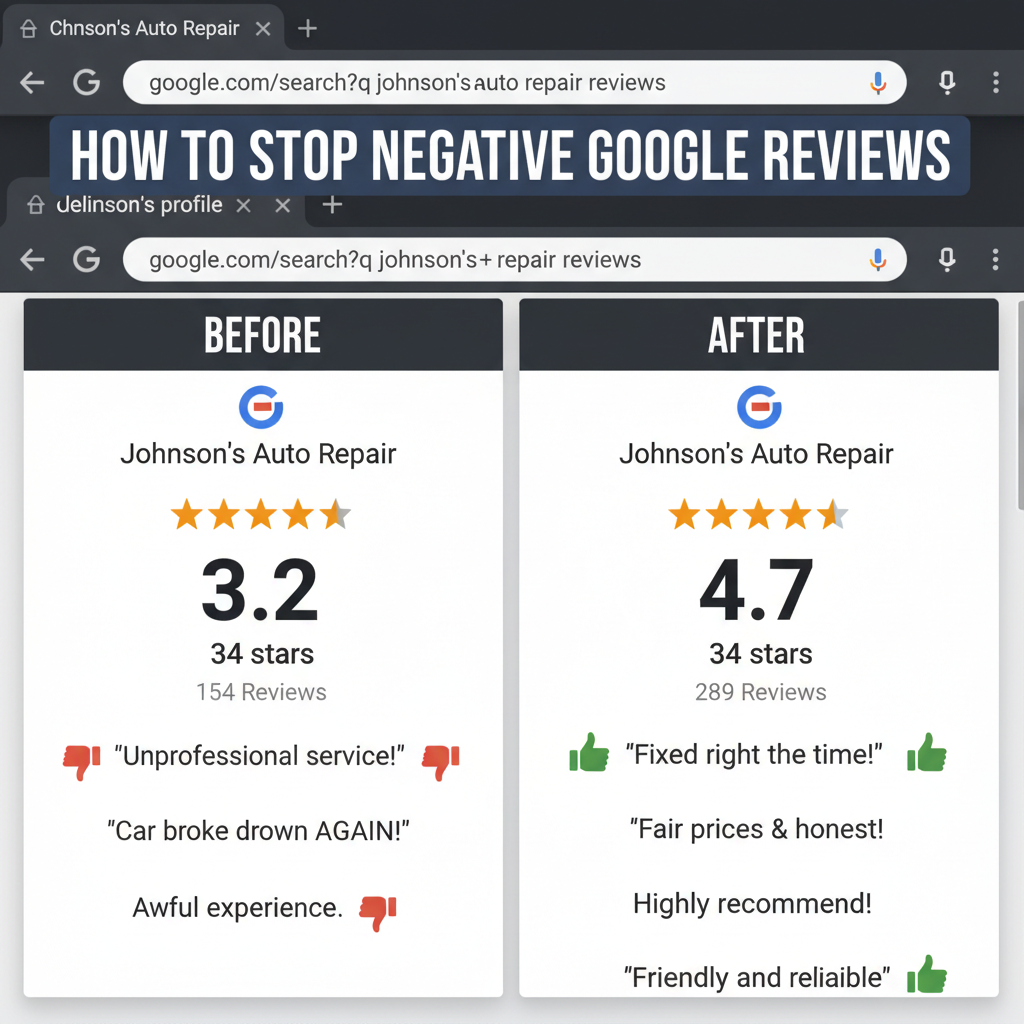
Before and after comparison showing improved business ratings - how to stop negative google reviews
Frequently Asked Questions
How can I identify fake reviews?
Fake reviews often contain generic language, lack specific details about the product or service, and may include exaggerated praise or criticism. Monitoring patterns, such as multiple reviews from the same IP address or sudden spikes in review activity, can also help identify suspicious activity.
Can I delete a negative review myself?
No, as a business owner, you cannot delete reviews directly. However, you can report reviews that violate Google's guidelines for removal consideration. Google will assess the flagged reviews and determine if they should be removed based on their policies.
How do I respond to a negative review?
Respond to negative reviews promptly, professionally, and empathetically. Acknowledge the issue, apologize if necessary, and offer a solution or invite the reviewer to discuss the matter privately. This demonstrates your commitment to customer satisfaction and can help mitigate the impact of the review.
What if a competitor is posting negative reviews?
If you suspect that a competitor is posting fake reviews, gather evidence and report the reviews to Google. You may also consider seeking legal advice if you believe these actions constitute defamation or unfair competition.
How many positive reviews do I need to offset a negative one?
The impact of a negative review varies depending on your overall review count and rating. Generally, a few positive reviews can help improve your rating, but the quality and authenticity of new reviews are crucial. For a deeper understanding, see our article on offsetting negative reviews.